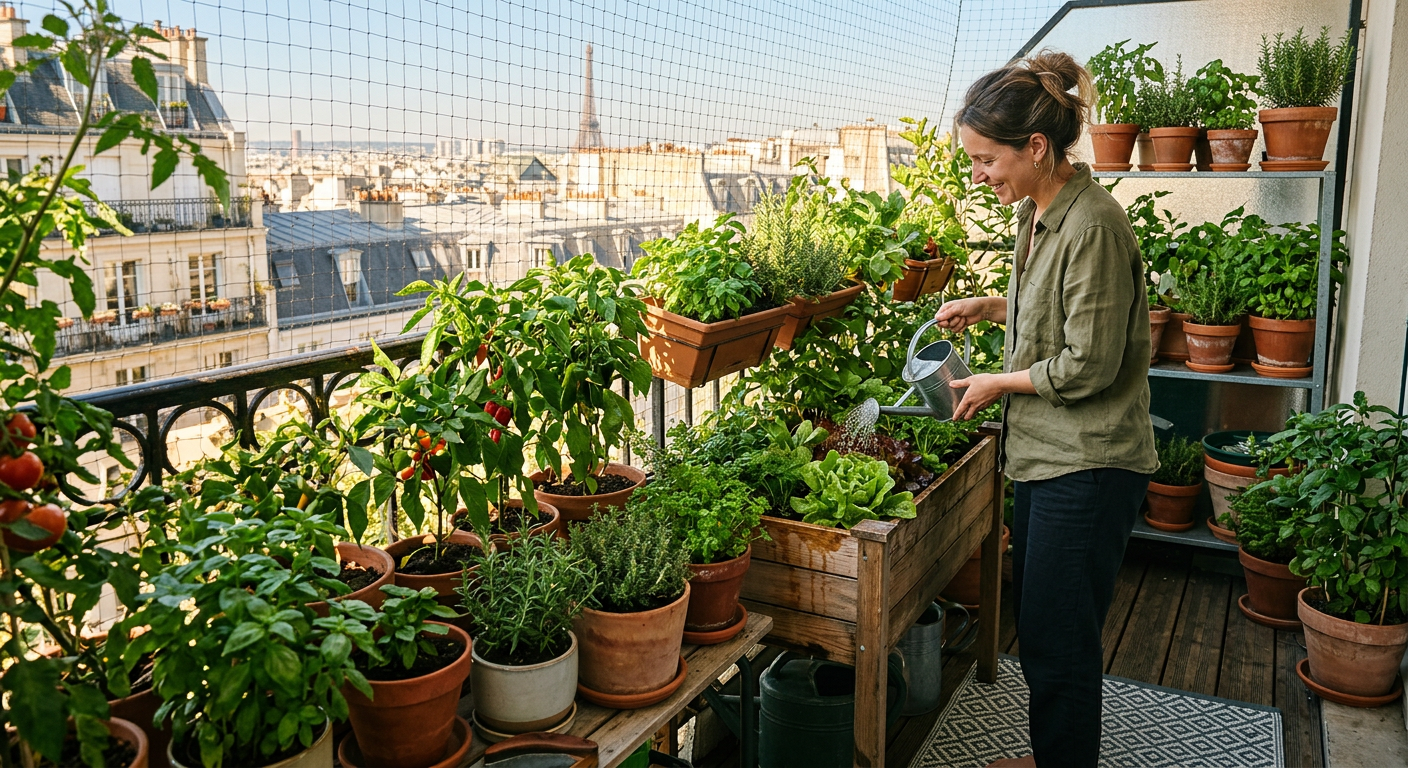
I can still smell the damp potting mix we spilled on the living room floor of our third-story apartment. We’d hauled two giant bags up the stairs, convinced this was the year we’d be “urban homesteaders.” I had this glorious vision of plucking ripe, red tomatoes from our tiny 5×8 foot balcony, but by August all we had was one sad, green-shouldered tomato and a bad case of blossom end rot. That failure was the best thing that ever happened to our homesteading journey.
🎯 Quick Answer: To start urban homesteading on a small balcony, focus on vertical space with stacking planters and trellises. Choose high-yield, small-footprint crops like herbs and salad greens over space-hogs like large tomatoes. The goal is to build skills and supplement your food, not replace the grocery store.
🔑 Key Takeaways
* Assess Your Space: Before buying anything, check your balcony’s weight limit, sun exposure (real hours, not just a guess), and your building’s rules.
* Go Vertical: Your most valuable real estate is vertical. Use railing planters, wall-mounted trellises, and stacking pots to multiply your growing area.
* Choose Plants Wisely: Focus on value and yield per square foot. Herbs, cut-and-come-again lettuces, and radishes are winners. Heirlooms can wait.
* Close the Loop: Start a small worm bin (vermicomposting) to turn kitchen scraps into incredible fertilizer. It’s odorless and perfect for small spaces.
* Skill Up: Homesteading isn’t just about growing. Learning to dry herbs, make simple ferments, or sprout seeds are skills that fit any size home.
* Manage Expectations: You won’t be fully self-sufficient from a balcony. Celebrate every single leaf you grow and every meal you supplement.
—
Know Your Balcony Before You Begin
Before you spend a single dollar, you need to play detective. We learned this the hard way. We assumed our east-facing balcony got “full sun.” We were wrong.
It got four hours of absolutely scorching morning sun, which was enough to fry our delicate lettuce starts but not enough to ripen a Brandywine tomato. We wasted a whole season—and about $75 on fancy seeds and soil—because we didn’t observe first.
How to do a Balcony Audit
Failing to do this audit is the first step towards a balcony full of dead plants and disappointment. Do the boring work first.
This next step is where you can literally triple your growing space.
—
Vertical Victory: How to Maximize a Small Footprint
Once you know your space, it’s time to think up, not out. This is the absolute key to how to start urban homesteading on a small balcony successfully.
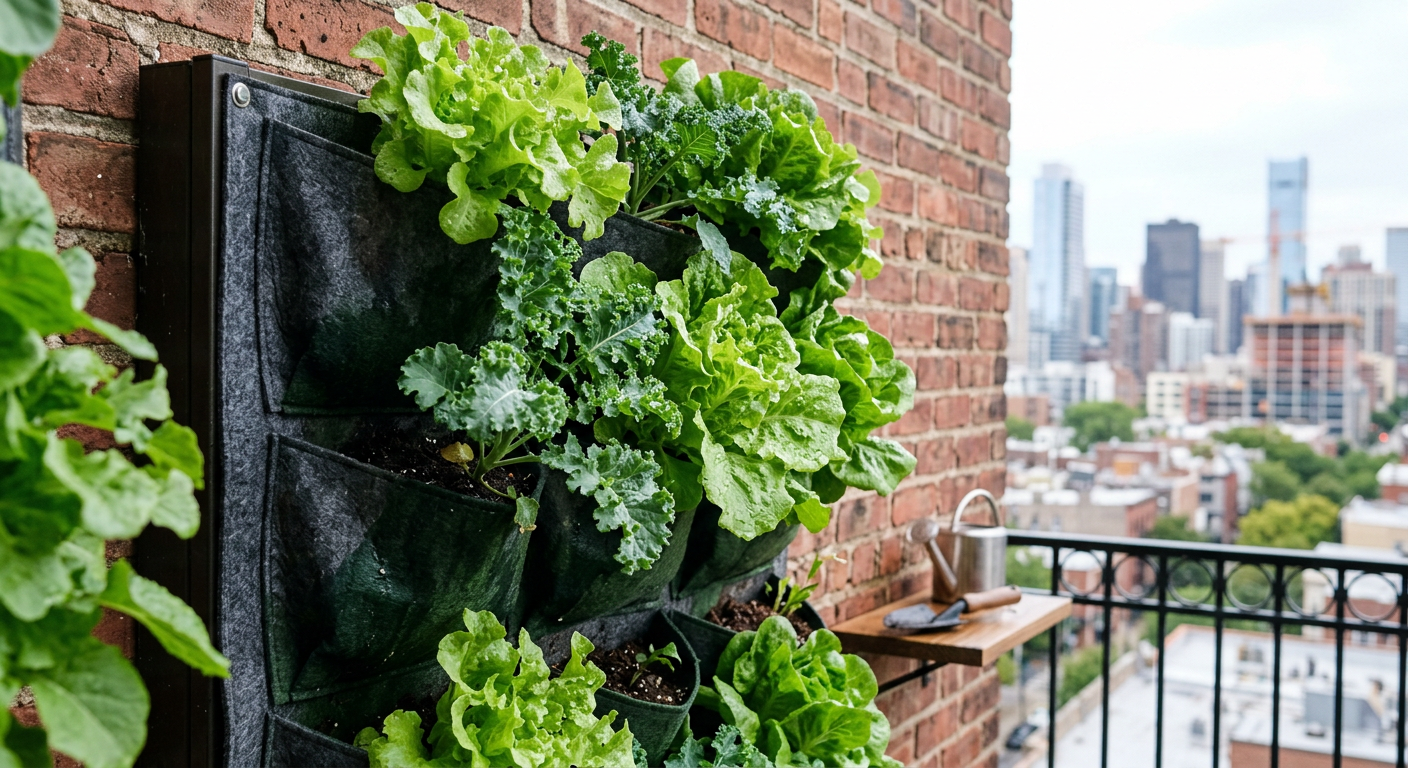
I’ll never forget the day my husband came home with a discarded shipping pallet. I thought he was nuts. He stood it on its end against the balcony wall, stapled some landscape fabric inside to create pockets, and for about $20 in supplies, we created a vertical garden that held 12 separate plants—mostly lettuce and herbs. It changed everything.
Your Vertical Toolkit
* Railing Planters: The easiest win. They use space that is otherwise completely wasted. We used simple coco-liner planters for flowers and herbs. Cost: $15-30 each.
* Stacking Pots: These are brilliant for strawberries or herbs. A single pot’s footprint can hold 3-5 tiers of plants. Look for brands like Mr. Stacky.
* Trellises: A simple lattice against the wall is perfect for vining plants like peas, beans, or even a small-variety cucumber. It guides them upward and keeps them from sprawling.
* Shelving Units: A cheap, rust-resistant metal shelving unit can hold dozens of small pots for starting seeds or growing microgreens.
Don’t just put three pots on the floor. That’s a patio, not a homestead. Think like an engineer and use every available Z-axis.
Now that you have the space, what on earth should you grow in it?
—
Choosing Your Crops: Be a Ruthless CEO
That first year, my heart was set on growing heirloom tomatoes. They’re the iconic homesteading plant, right? I spent months babying that one plant in a giant, expensive pot. My total harvest was three tomatoes. Three.
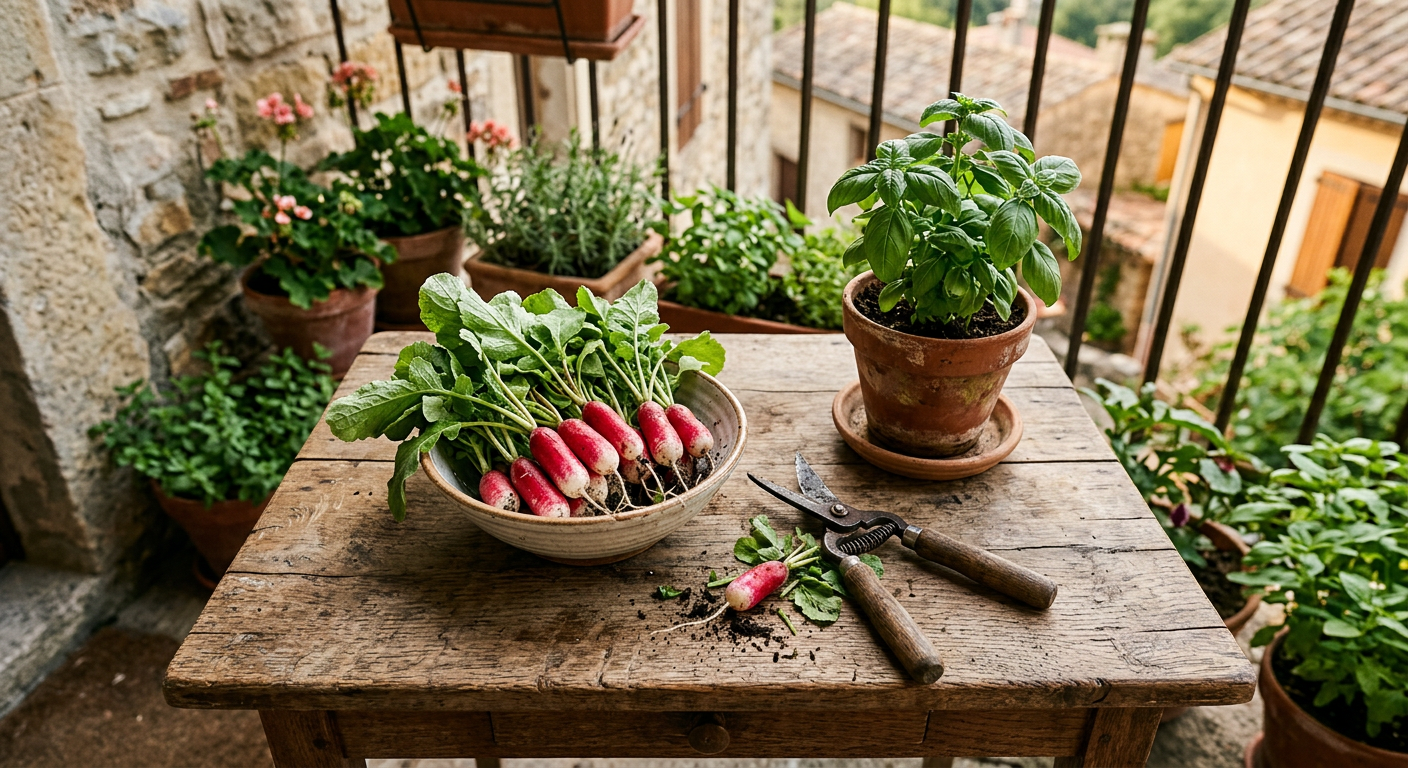
Next to it, in a pot half the size, I had a mix of basil and oregano. We harvested from it every other day for four months. It saved us at least $50 in fresh herbs from the store.
Which one was the better “homestead” plant? It wasn’t the tomato.
You have to be the ruthless CEO of your balcony. Your currency is square inches. Your goal is return on investment (ROI). It’s all about shifting your mindset, which is something we cover a lot in our HomesteadOS system.
High ROI Balcony Crops
* Cut-and-Come-Again Greens: Mesclun mix, arugula, leaf lettuce. You can harvest the outer leaves, and the plant keeps producing for weeks. Infinitely better than a single head of lettuce.
* Herbs, Herbs, Herbs: Especially perennial herbs. Chives, mint (in its own pot!), oregano, thyme. They are expensive to buy fresh and incredibly easy to grow. We have a whole guide on the best perennial herbs that work well in containers.
* Radishes: They go from seed to plate in as little as 25 days. The satisfaction is immense, and you can succession plant them all season.
* Bush Beans: They don’t need a huge trellis and are very productive for their size.
Stop dreaming about pumpkins. Start getting excited about having fresh chives for your eggs every single morning.
But growing is only half the battle. You need to close the loop.
—
The Balcony Ecosystem: Composting & Skills
Real homesteading is about creating systems, not just hobbies. Even on a balcony, you can create a tiny, closed-loop system.
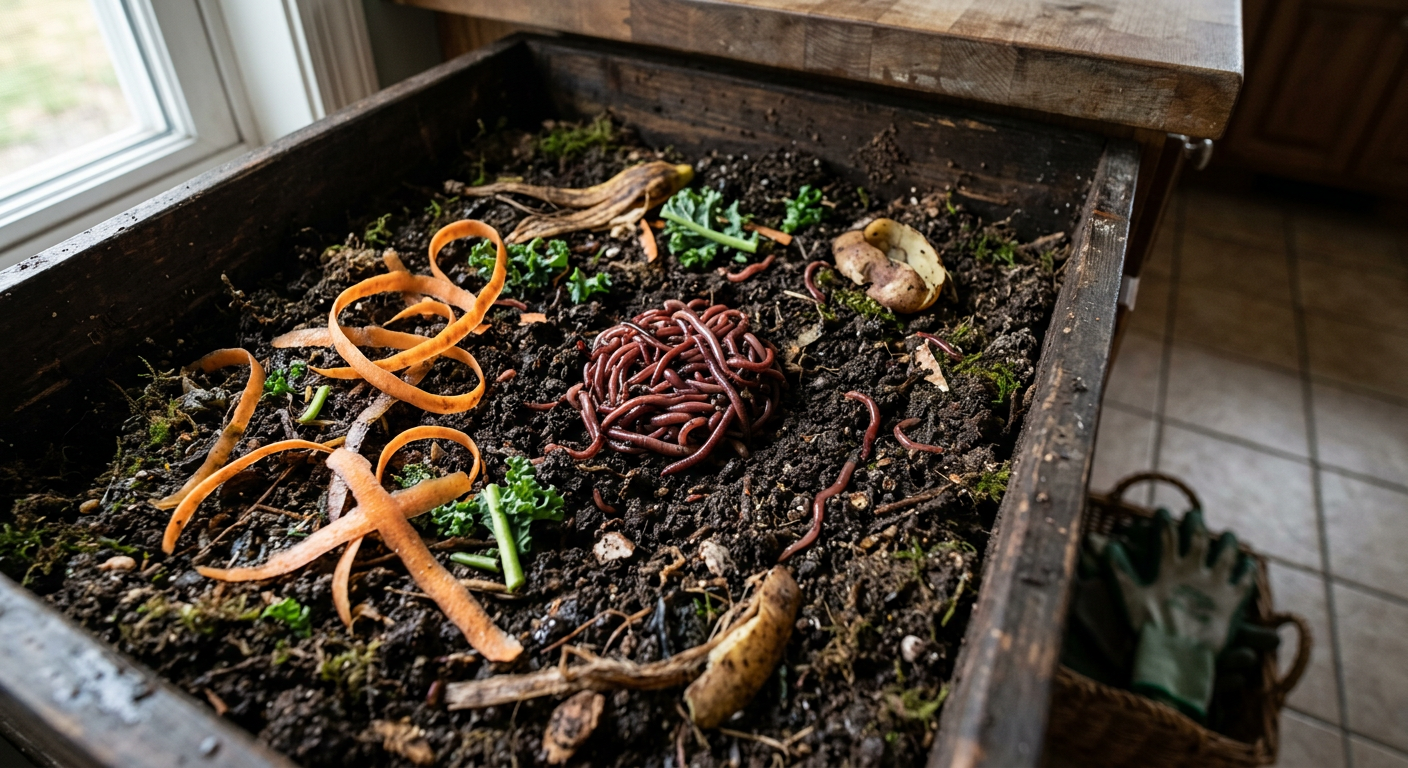
The game-changer for us was vermicomposting—a worm bin. I was so hesitant. Worms? In our apartment? But a proper bin is completely odorless and takes up about one square foot of shady space.
We bought a Worm Factory 360 for around $120 and a pound of red wigglers for $30. We feed them our coffee grounds, vegetable peels, and shredded junk mail. They turn it into the most incredible black gold fertilizer I’ve ever seen. No more buying bags of fertilizer. We were creating our own.
This is also where you practice other homesteading skills. Instead of just growing basil, learn to dry it for winter. Instead of growing mint, learn to make mint tea or simple syrup. These are some of the most essential homesteading skills beginners need, and they require zero acres.
Every time you turn a “waste” product (kitchen scraps) into a resource (fertilizer), you are homesteading. 🔥
Keep reading — this is where most people mess up.
—
💡 Pro Tips
These are the things we learned through pure trial and error. Mostly error.
* Water Correctly. Water the soil, not the leaves. Water deeply in the morning so the plants have time to dry out, which prevents fungus. We spent $15 on a simple moisture meter, and it was a godsend.
* Saucers Are Not Optional. A single overflowing pot can stain the concrete and make your downstairs neighbor furious. Get saucers big enough to catch a full watering.
* Invest in Potting Mix. Don’t just use dirt from the ground. It’s too heavy, compacts easily, and has pests. Buy a quality potting mix designed for containers. It’s worth the money.
* Feed Your Plants. Container plants are entirely dependent on you for nutrients. The worm castings are amazing, but a regular feeding with a balanced liquid organic fertilizer every 2-3 weeks during peak season is crucial.
Start Small. Please, don’t try to plant 20 different things your first year. Pick 3-5 plants and learn to grow them well*. Success builds momentum.
—
⚠️ Beginner Mistakes to Avoid
I cringe when I see new gardeners making these same mistakes we did. Save yourself the heartache.
* Ignoring a Pest Problem. One aphid is a warning. Ten aphids is an issue. A hundred is an infestation. On a balcony, things can get out of hand FAST. Check your plants daily and act immediately (a simple soap spray often works).
* Overcrowding Seedlings. The seed packet says thin to 6 inches apart for a reason. If you let ten radish seedlings compete in a tiny pot, you’ll get ten tiny, useless roots instead of one big, crunchy one. Be ruthless and snip the weak ones.
* Forgetting to Secure Things. A sudden thunderstorm can turn your beautifully arranged pots into a disaster. We once had a railing planter get ripped off in a storm. Use zip ties or wire to secure anything that could become a projectile.
* Wingin’ It. Just buying stuff without a plan is a recipe for failure. Getting a solid plan in place first for what to plant where and when is crucial. We built the HomesteadOS dashboard to help new homesteaders avoid these exact pitfalls and map out their seasons.
—
Frequently Asked Questions
H3: How do I know if my balcony can support the weight of a garden?
This is critical. You absolutely must check your lease or building management for specific load capacity limits. As a very general, non-professional guideline, most concrete balconies are designed to hold 40-60 lbs per square foot. To be safe, use lighter-weight fiberglass or fabric pots, use a soilless potting mix, and spread the weight out rather than clumping it all in one corner.
H3: What can I realistically grow with only 3-4 hours of sun?
Don’t despair! This is prime real estate for shade-tolerant crops. Think leafy greens like spinach, kale, and various lettuces. Many herbs thrive in part-sun, including mint, chives, parsley, and cilantro. You can also grow root vegetables like carrots and radishes, though they may mature a bit slower.
H3: How do I deal with pests like aphids or spider mites on a balcony?
Prevention is key. Healthy, properly watered plants are less susceptible. Check under leaves regularly. If you see pests, act fast. Often, a strong spray of water from a bottle is enough to dislodge them. For more persistent pests, an insecticidal soap spray (you can buy it or make your own with a few drops of Castile soap in water) is a safe and effective option.
H3: Is it cheaper to grow my own food on a balcony?
Honestly? At first, no. Initial setup costs for good pots, soil, and maybe a shelving unit can be $100-$200. The real savings come from growing high-value items you’d otherwise buy expensive and organic. A $3 packet of basil seeds can give you $50+ worth of fresh basil over a summer. The value is in the fresh, nutrient-dense food and the skills you build.
—
It Starts with a Single Pot
That first failed tomato taught me more about homesteading than any book could have. It taught me to observe, to be realistic, and to find joy in a single, perfectly crisp radish instead of a fantasy of self-sufficiency.
Urban homesteading on a small balcony isn’t about acreage; it’s about attitude. It’s a declaration that you want to be more connected to your food, even if it’s just one pot at a time. So go for it. Buy one pot, some good soil, a packet of lettuce seeds, and begin.
And for more stories from our journey and tons of practical tips, we’d love for you to follow our page on Facebook. We’re all in this together.
What’s the ONE thing you’re most excited to try growing on your balcony? Drop a comment below!
📚 More From Our Homestead
- Start Homesteading with No Land? Here’s How We Did It
- Rural vs Urban Homesteading: A Real-World Guide
- How to Start Homesteading in a Suburban Backyard
- Homestead Budget: Plan From Scratch & Thrive!
- How to Start Urban Homesteading Small Balcony: 5 Steps
Ready to Start Your Homestead Journey?
Free guides, checklists, and tools to help you build your dream homestead.
Leave a Reply