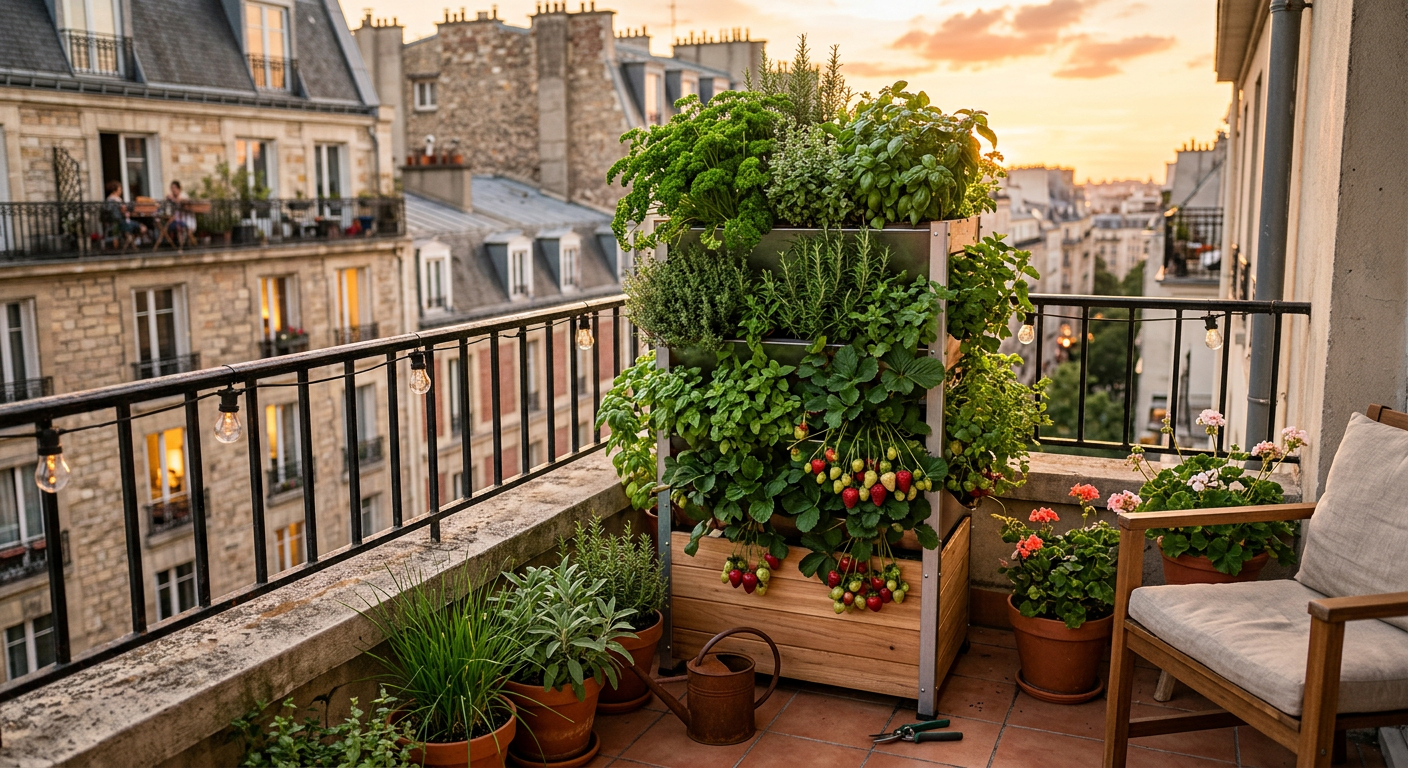
I can still feel the grit of potting soil under my nails, kneeling on the cold concrete of our third-floor apartment balcony. It was maybe 40 square feet, tops. That first year, we spent $50 on cheap plastic planters and tried to grow tomatoes that just… sat there, sad and green, until the first frost claimed them. It felt like a failure, another sign that our homesteading dream was just that—a dream.
🎯 Quick Answer: Vertical gardening systems for small apartments are a game-changer, letting you grow up when you can’t grow out. Tiered towers like the GreenStalk and simple wall-mounted fabric pockets are the most effective because they maximize a tiny footprint, turning a sterile balcony or sunny window into a productive food source.
🔑 Key Takeaways
- Space is a mindset. Vertical systems transform unused wall or corner space into a mini-farm.
- Not all systems are equal. Tiered towers are great for fruiting plants, while pockets work best for herbs and greens.
- Weight is a REAL factor. A fully watered 5-tier tower can weigh over 150 pounds. You have to plan for that.
- Plant choice is critical. Don’t try to grow sprawling squash. Focus on compact, high-yield plants like lettuce, herbs, strawberries, and bush beans.
- Start small. Master one system with a few plants before you turn your entire balcony into a jungle. One of our neighbors went all-in and got overwhelmed in a month.
—
Why We Went Vertical (And Why You Should, Too)
After that first failed tomato season, we knew we couldn’t just keep buying wider pots. We had no more floor space. The only space left was up. That’s the obvious reason for using vertical gardening systems in small apartments. But it’s not the only one.
I quickly learned that getting plants off the ground had other perks. Our strawberries, which were constantly being devoured by slugs on my parents’ farm, were perfectly safe four feet in the air on our balcony. Air circulation was better, which meant less powdery mildew on the cucumber leaves. And honestly, it was easier on my back not having to bend all the way to the floor to water or harvest.
This is the first step in learning to start homesteading with no land. You learn to see resources where others see limitations. That tiny, overlooked balcony became our first real homestead classroom.
Moving your garden skyward solves more problems than just square footage.
—
Our Top Vertical Gardening Systems for Small Apartments
We’ve tried a few, and we’ve watched friends in the city try even more. Here’s the honest breakdown of what’s worked for us and what hasn’t.
The Tiered Tower: Our Workhorse
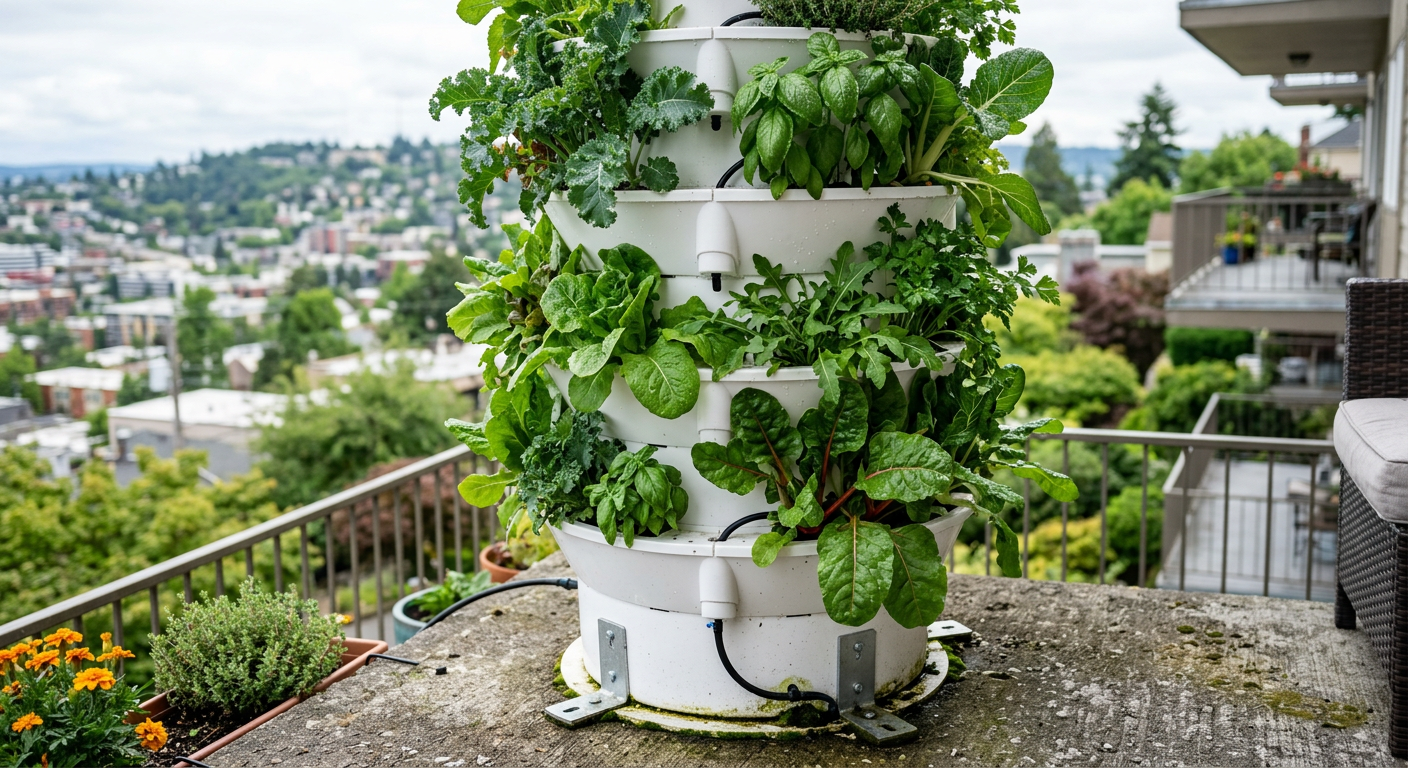
This is the king of balcony gardens. We saved up and bought a 5-Tier GreenStalk Original for about $160. It felt like a massive investment at the time, but it paid for itself in one season of salads and strawberries. It has a patented watering system where you pour water in the top, and it trickles down to every single pocket. Genius.
* Best For: Strawberries, lettuce, spinach, beets, carrots, bush beans, and even smaller pepper varieties.
* My Story: The first time I harvested enough mixed lettuce greens from our tower to make a salad for two, I almost cried. It was a Tuesday night. The lettuce was crisp and so flavorful – nothing like the bagged stuff. It was real food we grew ourselves, surrounded by city noise. That’s a feeling you can’t buy.
Wall-Mounted Fabric Pockets: The Herb Haven
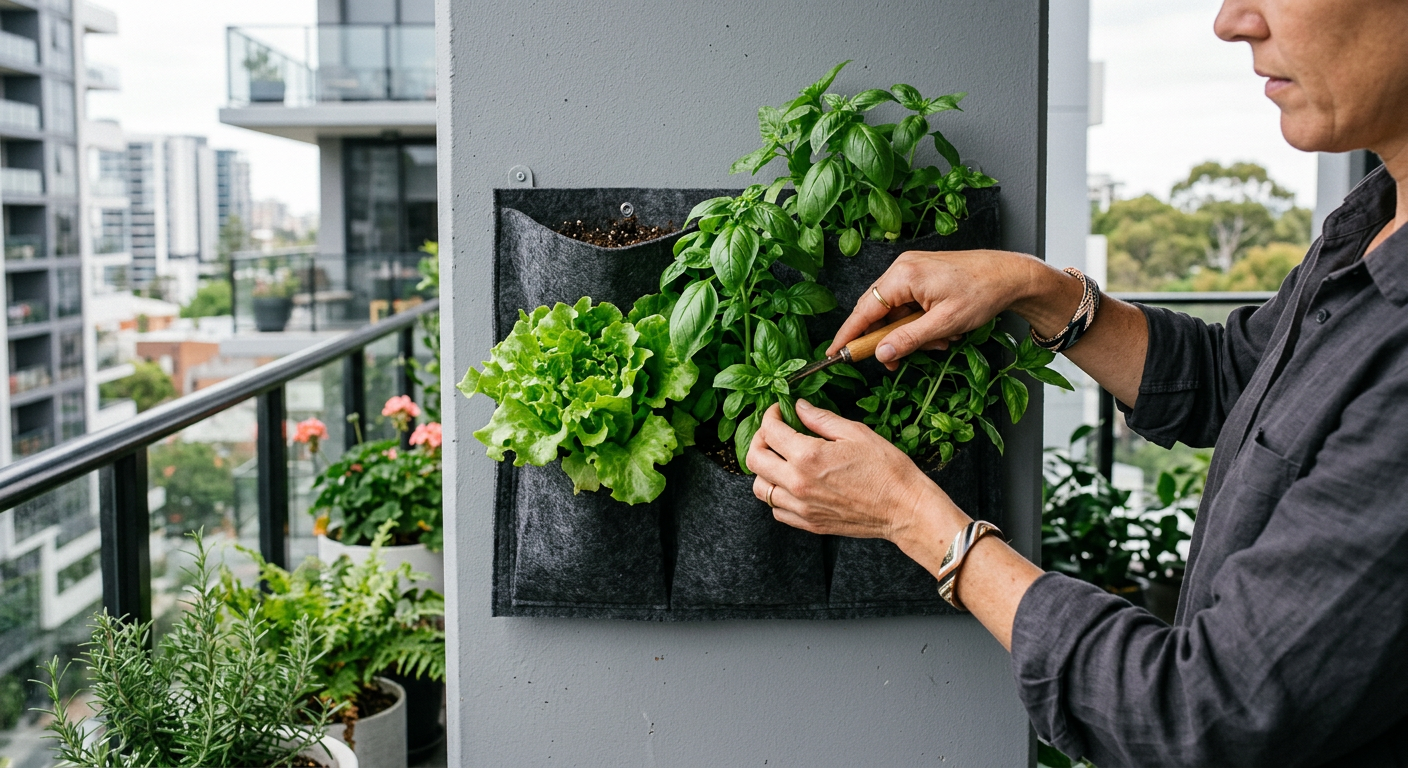
These are exactly what they sound like: heavy-duty fabric sheets with pockets sewn onto them. You can get them for as little as $20 on Amazon. You just hang it on a sunny wall or railing and fill the pockets with soil.
* Best For: Herbs, herbs, and more herbs. Their shallow roots are perfect for the smaller pockets. Think basil, thyme, oregano, mint (be careful, it spreads!), and chives. It’s a great way to grow some of the best perennial herbs for your homestead, even in a small space.
* Word of Warning: These dry out FAST, especially on a hot, windy day. You really need to check the soil moisture daily. We lost a whole row of basil one July weekend because we forgot.
The DIY Ladder Planter: A Budget-Friendly Start
Feeling handy? You can build one of these. We made our first one from an old wooden step ladder we found on the curb. We just added some pine boards to create shelves for pots. The total cost was about $15 for screws and sealant.
* Best For: Holding individual pots of various sizes. This gives you more flexibility than a fixed-pocket system. Perfect if you’re homesteading on a budget.
* How We Did It: We simply cut 1×6″ boards to fit across the ladder rungs and steps, creating flat surfaces. It wasn’t pretty, but it was functional. It let us grow a determinate (bush) tomato plant in a bigger pot next to smaller pots of marigolds to deter pests. Getting a solid plan together before you start buying tools or materials is crucial, which is where a dedicated homestead management platform like Homestead OS can be a lifesaver, even for small-scale projects.
Keep reading — this is where most people mess up.
No matter which system you choose, the real secret is what you put in it.
—
What Can You Actually Grow in Apartment Systems?
Forget the pictures of giant zucchini and sprawling pumpkins in vertical gardens. That’s marketing. For vertical gardening systems in small apartments, you need to be strategic. The goal is maximum yield in minimum space.
Here’s our go-to list:
* Leafy Greens: Loose-leaf lettuce, spinach, kale, arugula. These are cut-and-come-again, so you can harvest from them for weeks.
* Herbs: Basil, mint, parsley, cilantro, chives, thyme, and oregano are almost foolproof.
* Strawberries: Ever-bearing varieties will give you a steady trickle of berries all summer. The taste of a sun-warmed strawberry you grew yourself is pure joy.
* Root Veggies (in deeper pockets): We’ve had great success with short varieties of carrots (like ‘Paris Market’), radishes, and even small beets in our GreenStalk tower.
* Legumes & Fruits: Bush beans (not pole beans!), peas, and determinate (bush) varieties of cherry tomatoes and peppers.
One summer, we lived almost entirely off salads made from our balcony. A mix of red and green lettuce, a handful of spicy arugula, chopped chives, and a few sliced cherry tomatoes. That’s a success.
Choosing the right plants from the start is half the battle.
—
Nitty Gritty Details: Soil, Water, and Light
This is where the dream meets the dirt. You can have the best system in the world, but if these three things aren’t right, you’ll get nothing.
🌱 Soil Matters (A Lot)
You can’t just use dirt from your local park. I tried. It compacts into a brick and your plants suffocate. You need a high-quality, lightweight potting mix. We use Pro-Mix, but any brand with plenty of perlite or vermiculite (the little white specks) for drainage and aeration will work.
It’s lighter, which is critical for balcony weight limits, and it holds moisture without becoming waterlogged. According to the Penn State Extension, this balance is key for healthy root development in containers.
💧 The Watering Challenge
Vertical gardens dry out faster than in-ground beds. The top tiers, exposed to more sun and wind, will dry out quickest. We learned to water our wall pockets every single day in the summer. For our tiered tower, we water deeply from the top reservoir every 3-4 days.
My best advice: don’t guess. Stick your finger two inches into the soil. If it comes out dry, it’s time to water. Investing in tools that make these daily chores easier is always worth it. Finding a system to track everything, from your watering schedule to your harvest logs, is what separates a hobby from a real productive system. We manage our entire homestead now, from garden to livestock, using the tools and trackers inside Homestead OS.
☀️ Don’t Fake the Sun
Most food plants need at least 6-8 hours of direct sunlight. No exceptions. Before you spend a dime, spend a day tracking the sun across your balcony or window. If you only get 3-4 hours of direct sun, you’ll be limited to shade-tolerant greens like spinach and lettuce.
If you have a corner with no sun, don’t give up—get a grow light. We used a simple clip-on LED grow light (I think it was a SANSI bulb) for our indoor herb garden one winter. It cost about $30 and kept us in fresh basil until spring.
Get these three things right, and you’re already ahead of the game.
—
💡 Pro Tips
Location First, System Second: We once bought a beautiful railing planter system… only to realize our balcony railing was an odd shape and it wouldn’t fit securely. Always measure and check your space before* you buy.
* Don’t Skimp on Potting Mix: I know it’s tempting to buy the cheapest $5 bag. Don’t. Good soil is the foundation of your garden. You’ll spend more money on sad, dying plants if you start with poor soil.
* Rotate Your Tower: If you have a tiered tower, give it a quarter turn every few days so all the plants get equal sun exposure. We learned this the hard way when one side of our tower was lush and the other was pale and leggy.
* Start with Easy Wins: Grow lettuce and herbs first. Seriously. They grow fast and give you a quick, rewarding harvest. This builds your confidence for tackling things like tomatoes next season.
⚠️ Beginner Mistakes to Avoid
* Ignoring Weight Limits: I can’t say this enough. Soil and water are HEAVY. Check your balcony’s weight limit. A 5-tier tower can easily top 150 lbs. Two of those, plus you, might be pushing it.
* Overcrowding: The tag says 6″ spacing for a reason. If you cram too many seeds or seedlings into one pocket, they will compete for light and nutrients, and none of them will thrive. We did this with carrots and got a bunch of green tops with no carrot underneath.
* Forgetting HOA/Landlord Rules: Before you drill a single hole to hang a wall planter, check your lease or HOA rules. Some have strict rules about what you can hang on railings or walls.
* Planting Vining Plants in Small Pockets: Don’t plant an indeterminate ‘Brandywine’ tomato in a 1-gallon pocket. It wants to be 8 feet tall! Stick to bush or determinate varieties that are bred for small spaces.
—
Frequently Asked Questions
How much do vertical gardening systems for small apartments cost?
We’ve spent anywhere from $15 on a DIY project to $160 on a high-quality tiered tower like the GreenStalk. You can start with simple fabric pockets for around $20-$30. The biggest cost after the system is good quality potting soil, which can be $15-$25 per large bag.
Can you have a vertical garden without direct sunlight?
For most food, no. You need 6+ hours of direct sun. However, if you have a bright spot with no direct sun, you can successfully grow leafy greens like lettuce, spinach, and many herbs. For deep shade or indoors, you absolutely need a full-spectrum LED grow light.
What is the best system for a tiny balcony?
For a truly tiny, narrow balcony, I’d recommend wall-mounted fabric pockets or railing planters. They use zero floor space. If you have a corner with a 2-foot by 2-foot area, a tiered tower garden is by far the most productive option per square foot.
How do you water a tall vertical garden?
It depends on the system. For towers like the GreenStalk, you just pour water into the top reservoir and it self-distributes. For wall pockets or stacked crates, you have to water each pocket/pot individually, starting from the top and letting the excess drain down.
—
This journey doesn’t start with 40 acres and a barn. It starts with one seed in a pot on a windowsill. It starts with the decision to create instead of just consume. Growing food in our apartment taught us more about self-reliance than any book ever could.
It taught us to be resourceful and to find abundance in small spaces. That’s a skill every homesteader needs, whether you’re on the 13th floor or 13 acres. For more stories from our journey and tons of practical tips, follow our homestead on Facebook.
What’s the one thing you’d love to grow in your own small space?
Drop a comment below — I read and reply to every one!
📚 More From Our Homestead
- Selling Garden Produce at a Farmers Market (Our First Year)
- Homestead Water Independence Planning: Our Guide
- Housing for Meat Rabbits: Don’t Make Our Mistakes
- Homesteading for Beginners on One Acre: The Ultimate Guide
- Build a Cheap Chicken Coop: My $87 Plan That Works
Ready to Start Your Homestead Journey?
Free guides, checklists, and tools to help you build your dream homestead.
Leave a Reply