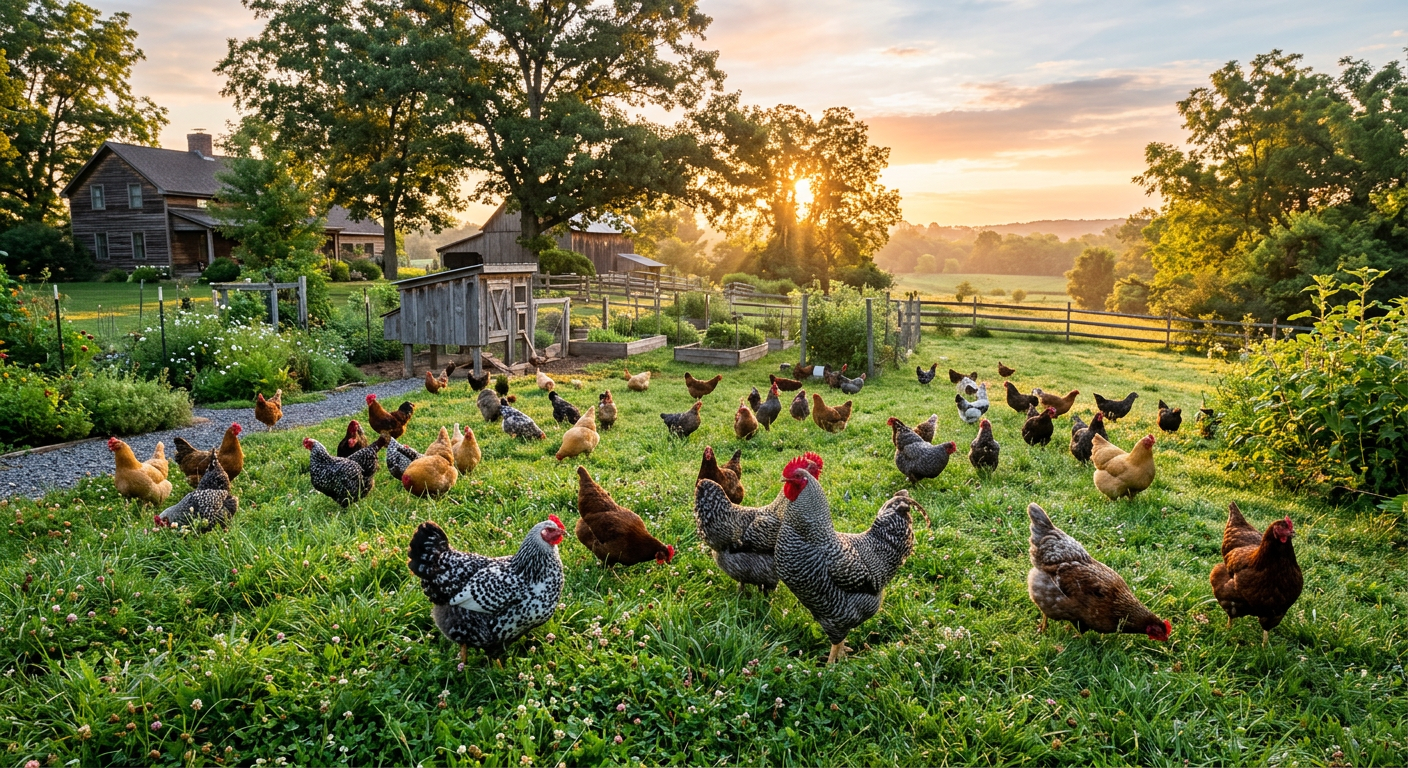
Tag: chickens

  • Urban Homesteading with Kids: Start Smart Today!

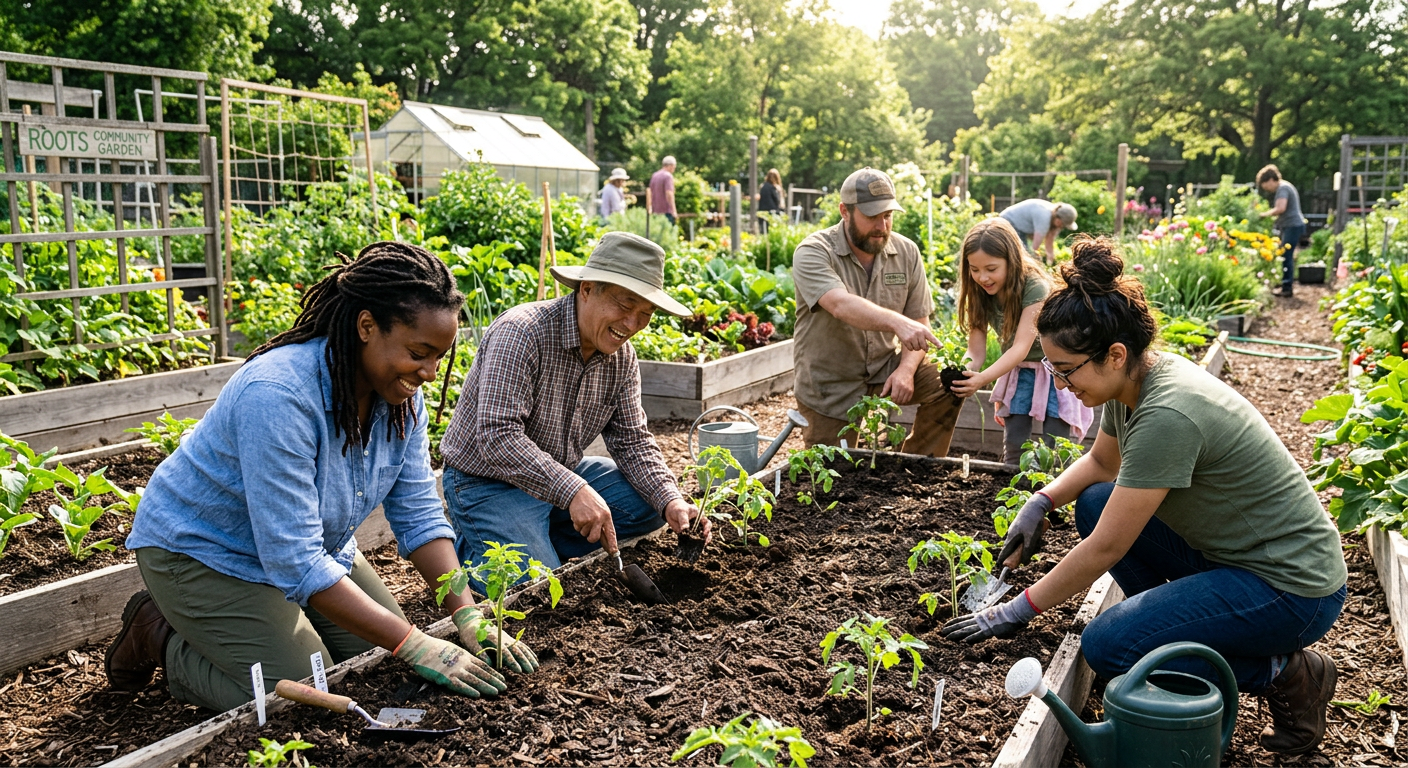
    Hey there, fellow dreamers! My heart races a little every time I hear someone talk about bringing a bit of the farm to the city, especially when they ask, “How to get started urban homesteading with kids?” It warms my soul because that’s exactly where our journey began, right in our cozy suburban backyard! We might have visions of sprawling acres, but the truth is, a surprising amount of self-sufficiency can happen on a small patch of land, even with little hands eager to “help” (and, let’s be honest, sometimes “rearrange” your meticulously planted rows!).

    When we first dipped our toes into urban homesteading, our kids were tiny — 3 and 5 years old. My husband, Mark, and I knew we wanted to teach them where food truly comes from, beyond a grocery store shelf. We wanted to slow down, connect with nature, and build a more resilient life, right in our neighborhood. The key for us was starting small, involving the kids every step of the way, and accepting that perfection wasn’t the goal. Muddy boots, crooked carrots, and a few escaped chickens became part of our charm. If you’re looking to cultivate a little bit of country in your city life and want to know how to get started urban homesteading with kids, you’ve come to the right place. We’ll walk through our family’s experiences, sharing the ups, downs, and invaluable lessons we’ve learned.

    Why Urban Homesteading with Kids is a Game-Changer

    Honestly, I can’t imagine our family life without our homesteading adventures. It’s not just about growing food; it’s about growing people. For us, having our children involved from day one transformed mundane tasks into magical discoveries. They’ve learned patience waiting for seeds to sprout, responsibility caring for our animals, and the incredible satisfaction of eating something they helped grow or harvest.

    * Connection to Nature: Even in the city, there’s immense joy in observing a worm, understanding the life cycle of a plant, or watching a bee pollinate a flower. Our kids spend hours outside, eyes wide with wonder.

    * Practical Skills: From planting seeds to harvesting vegetables and even helping with animal chores, they’re developing skills that many kids today just don’t get. They know how to identify edible plants, understand composting, and have a healthy respect for hard work.

    * Healthy Eating Habits: When they’ve seen a tomato grow from a tiny flower, they’re far more likely to eat it! Our kids eat an astonishing variety of fruits and vegetables, and I truly believe urban homesteading is why.

    * Family Bonding: These shared projects, whether it’s building a raised bed or collecting eggs, become cherished memories. We’re working towards a common goal, learning and laughing together.

    Starting Small: Your First Steps to Urban Homesteading with Kids

    One of the biggest mistakes beginners make is trying to do too much, too fast. We certainly felt that pull! But trust me, a few small, consistent wins build momentum. Think about what truly excites your family and your kids.

    1. Plan Your Garden Together

    Before you even think about digging, sit down as a family and dream! What do you all want to grow? Let the kids draw pictures of their ideal garden. When we planned our first significant urban garden, we gave each child a small corner of a raised bed to choose one thing they wanted to grow. Our daughter, Lily, insisted on cultivating “super sweet peas” (which she then ate straight off the vine!), while our son, Finn, was obsessed with finding the biggest pumpkin seed.

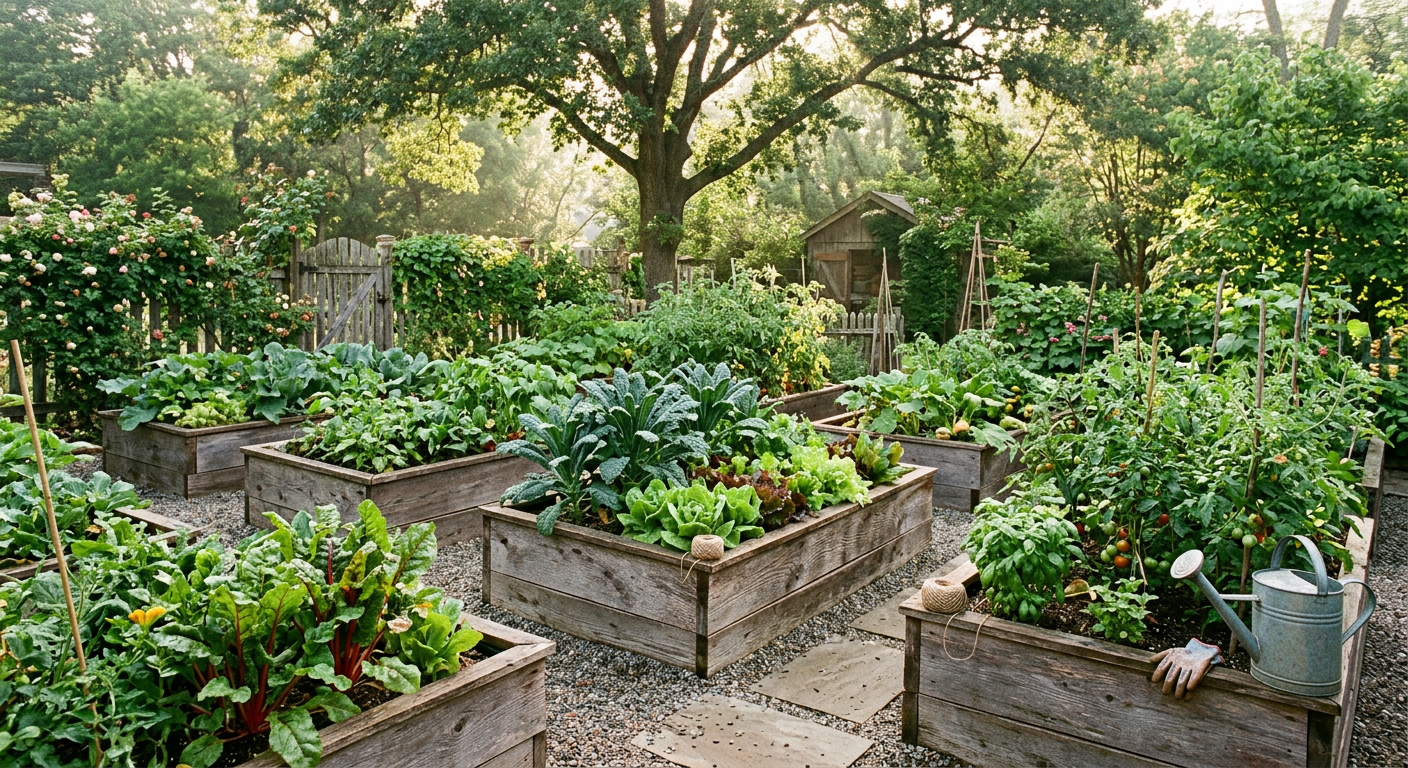
    Consider your space: Do you have a sunny balcony? A small backyard? Raised beds are fantastic for urban spaces because they offer better drainage, fewer weeds, and you can control the soil quality. We started with two 4×8 foot raised beds – a manageable size for a family of four. You can find simple plans online, or purchase kits. Our first two beds cost us about $150 in lumber and another $200 for good quality organic soil, which felt like a significant investment then, but paid for itself in fresh produce many times over. Learn more about planning your garden in our post, How to Start a Small Backyard Vegetable Garden: Beginner Guide.

    2. Choose Kid-Friendly Plants (and Tasks!)

    Gardening needs to be fun and engaging, especially when you’re figure out how to get started urban homesteading with kids. Here are some plants and tasks that are great for little helpers:

    * Seeds that are easy to handle: Peas, beans, squash, corn. Avoid tiny seeds like carrots for their first go, unless you pre-seed them on a paper strip.

    * Fast growers: Radishes (harvest in 3-4 weeks!), bush beans, lettuce. Quick success keeps interest high.

    * Edible flowers: Nasturtiums (peppery!) and calendula are beautiful and safe for kids to pick and taste.

    * Herbs: Mint, basil, and chives are incredibly rewarding and smell amazing! We’ve got a whole post about Best Perennial Herbs for Cold Climate Homesteads if you’re looking for hardy options.

    Kid-friendly tasks:

    * Watering (with a small watering can, supervision optional but recommended to avoid over-watering!)

    * Harvesting (cucumbers, cherry tomatoes, berries, peas are great for little hands)

    * “Helping” with weeding (teach them what’s a weed and what’s not!)

    * Mixing soil with compost

    Incorporating Small Livestock: When You’re Ready

    For many, the thought of urban chickens is the cornerstone of how to get started urban homesteading with kids. We waited a full year before getting chickens, making sure our garden was established and we felt confident in our capacity. Check your local ordinances first – this is crucial! Many cities allow a small number of hens (roosters are usually a no-go due to noise).

    Urban Chickens: Our Family’s Feathered Friends

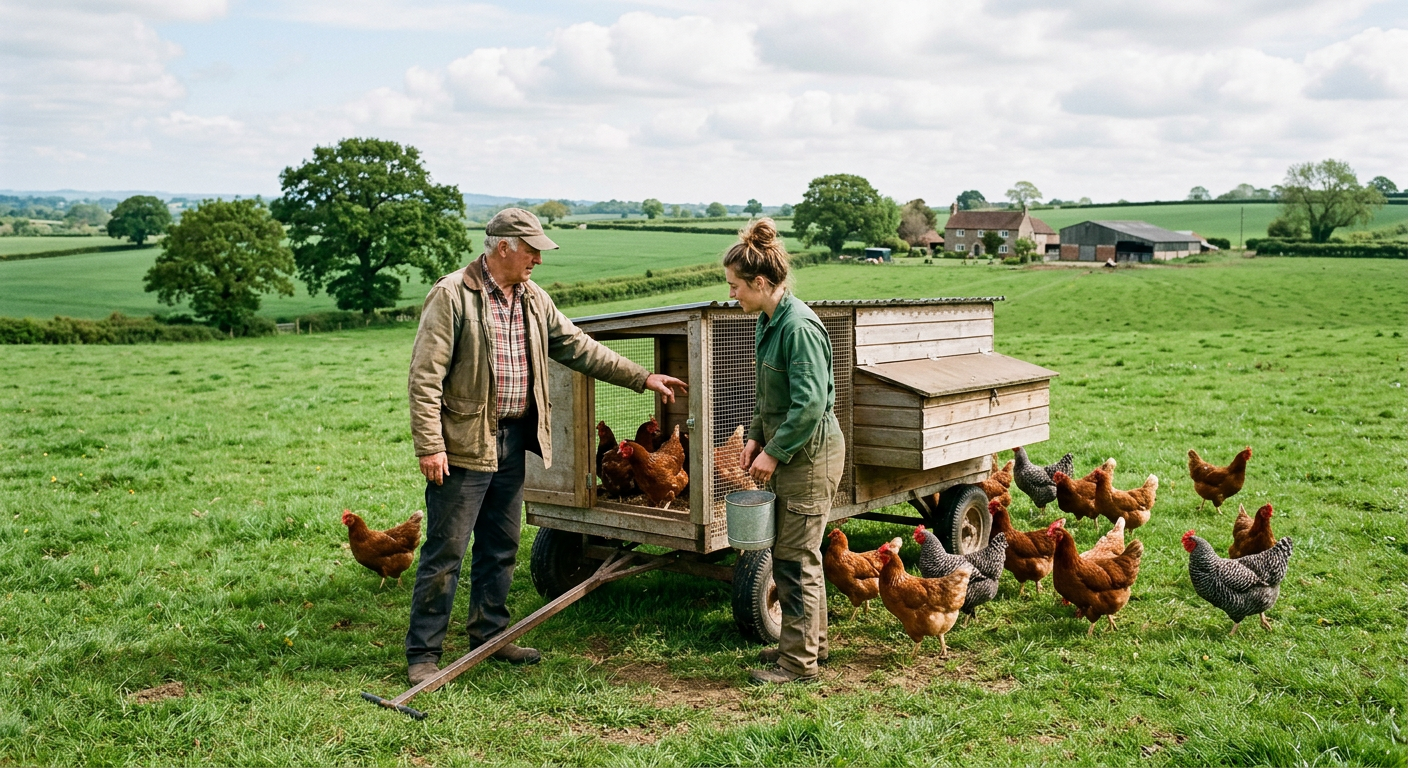
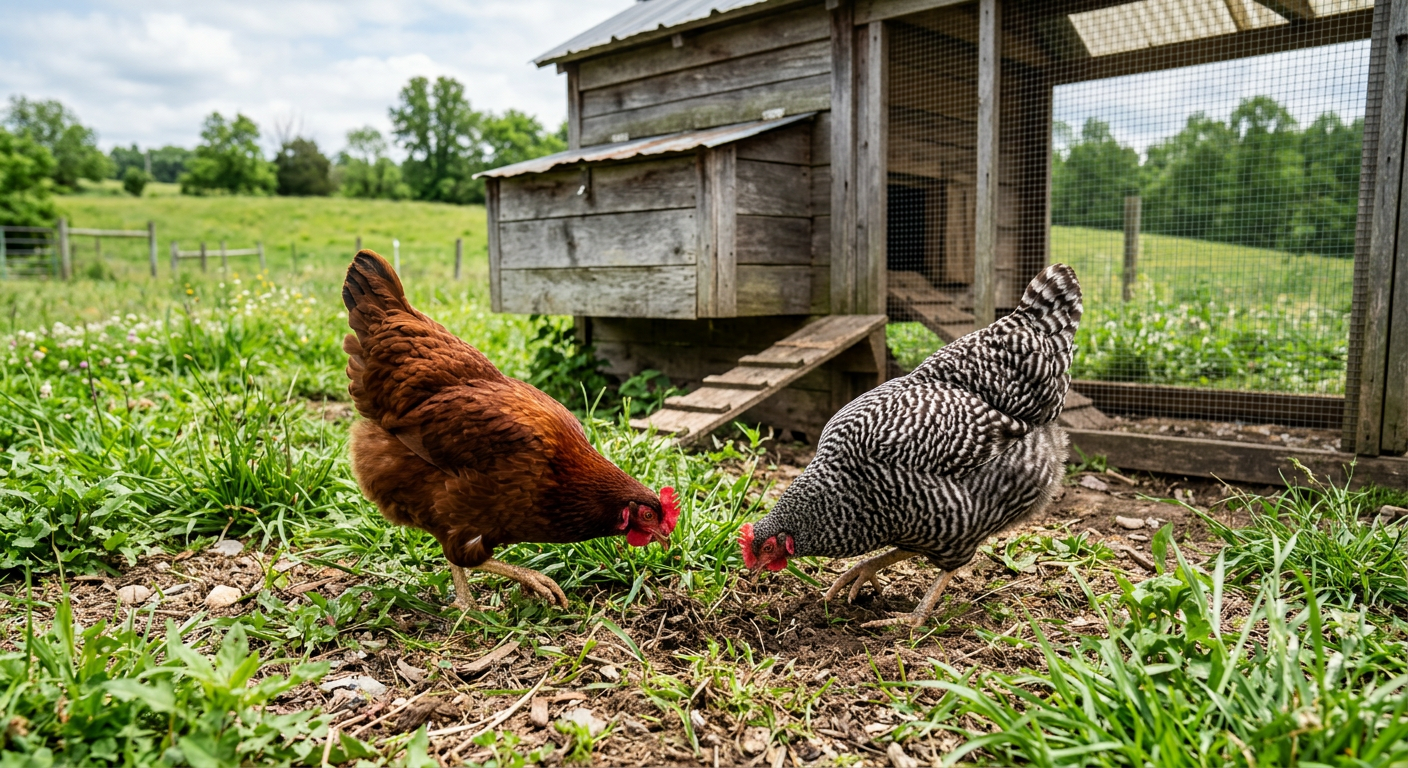
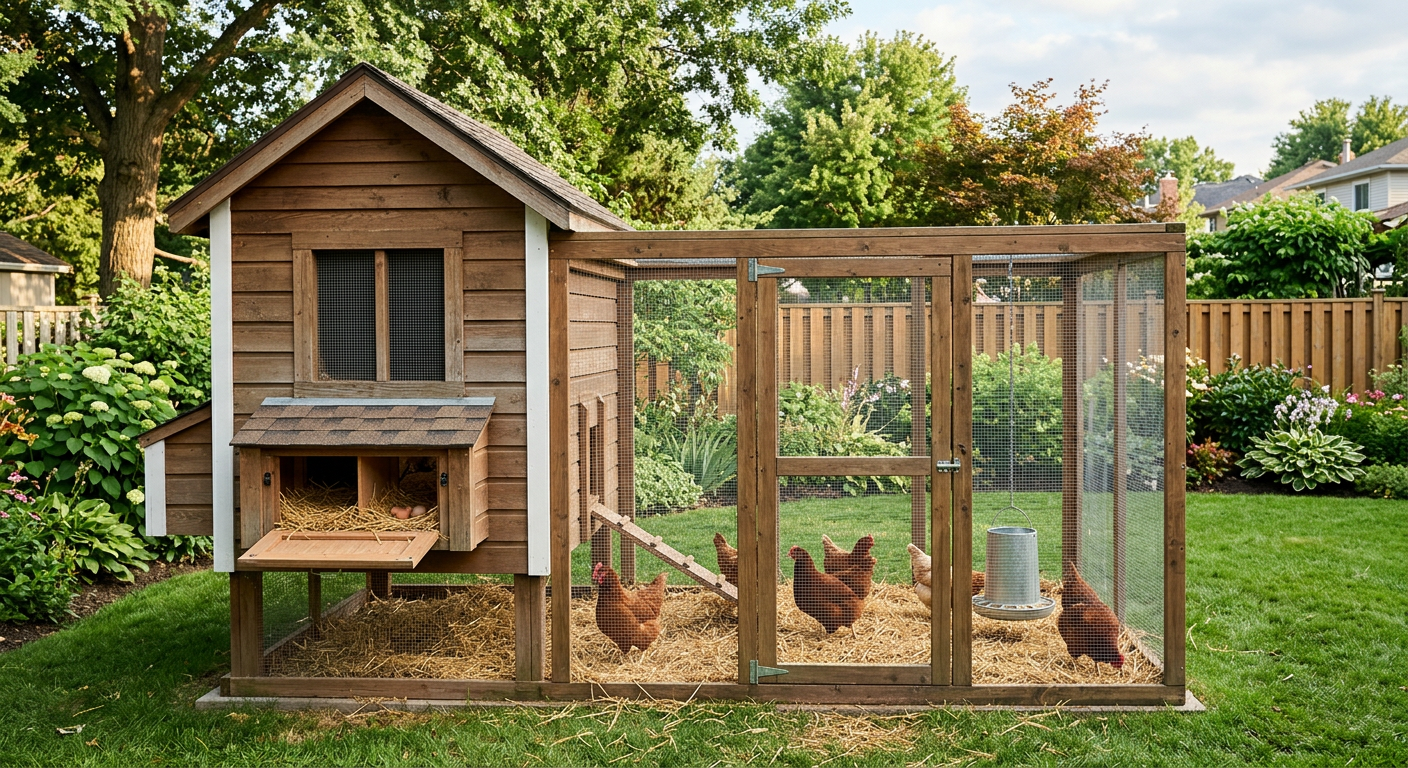
    We started with three Rhode Island Reds, which cost us about $5 each as chicks. We built a small coop ourselves from reclaimed palets and some new lumber (around $150 total), and bought a bag of organic feed for about $25. Our kids absolutely adored the chicks, holding them gently and watching them grow. Collecting eggs became the highlight of their day!

    Tips for urban chickens and kids:

    * Build a secure coop: Predators are everywhere, even in the city. We added a run with mesh buried a foot deep to deter digging predators.

    * Teach gentle handling: Chickens are hardy but can get stressed. Supervise interaction, especially at first.

    * Daily chores: Assign small responsibilities like filling the waterer or scattering scratch grains. Our kids learned valuable consistency.

    * Egg safety: Teach them how to collect eggs carefully and inspect them.

    Beyond Chickens: Thinking Small and Sustainable

    If chickens aren’t feasible, consider other small animals:

    * Worm Composting (Vermiculture): Not livestock in the traditional sense, but red wigglers are incredible decomposers! We have a small worm bin under our kitchen sink. It cost us about $30 for the bin and worms, and the kids love feeding them kitchen scraps. Plus, you get fantastic “worm castings” for your garden.

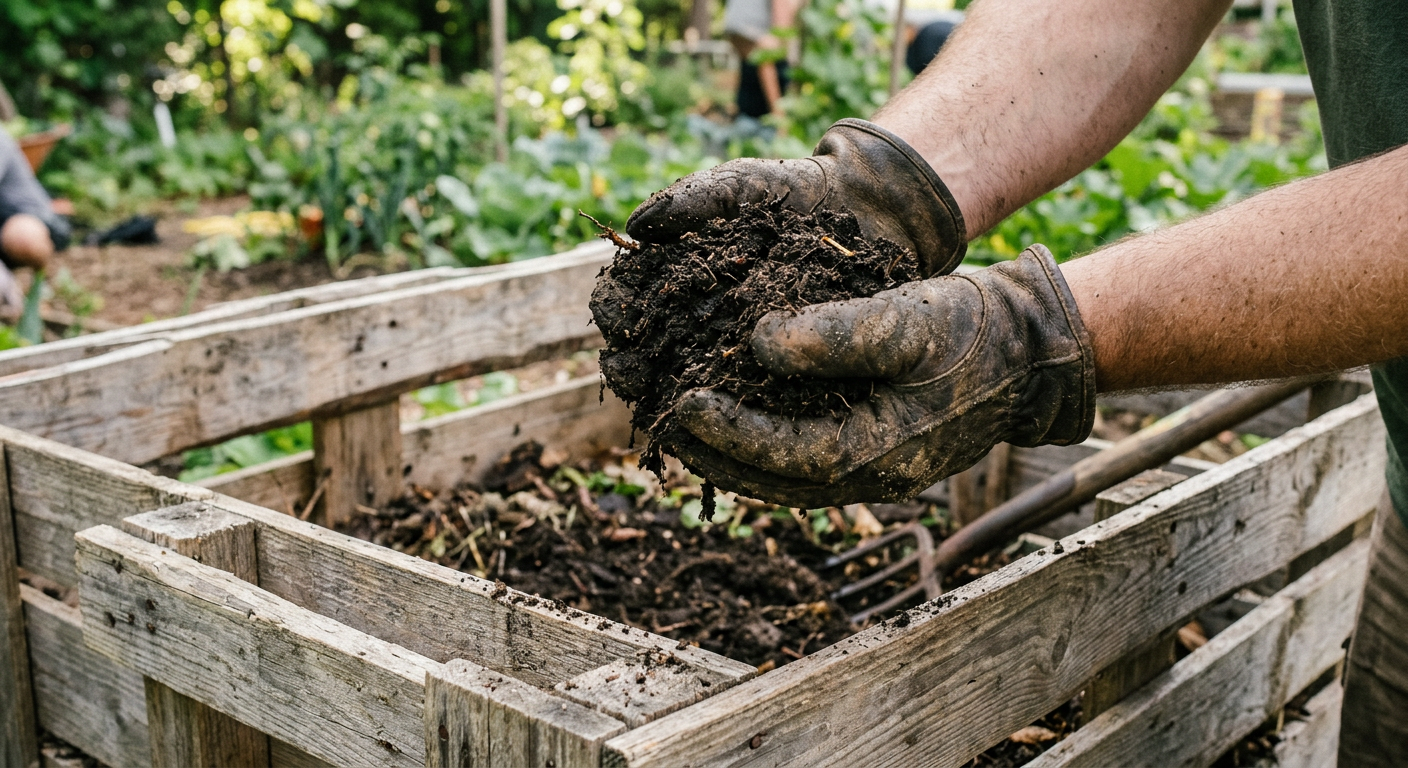
    * Composting: Even without worms, a simple backyard compost pile or tumbler is an easy way to reduce waste and create nutrient-rich soil. Our kids take great pride in adding their apple cores and banana peels.

    Maximizing Your Small Space for Urban Homesteading with Kids

    Don’t let a small footprint discourage you! Urban homesteading is all about creativity. We live on a standard city lot, about 0.15 acres, but we’ve squeezed a lot into it.

    Vertical Gardening Solutions

    When you can’t go out, go up! Vertical gardens are a lifesaver. We use stacked planters for herbs, hanging baskets for strawberries, and a vertical wall planter for lettuce. This technique significantly increased our yield without taking up precious ground space.

    Edible Landscaping

    Replace ornamental shrubs with edible ones! Think blueberry bushes, dwarf fruit trees (they can even be grown in large pots!), or perennial herbs like oregano and thyme as ground cover. We planted a dwarf apple tree that gives us about 30-40 apples a year – perfect for pies. Our kids love watching the fruit develop. For more ideas on efficient layouts, check out Your First Homestead Layout: Simple Steps for Beginners.

    Water Conservation

    Water is a precious resource. We installed a 50-gallon rain barrel that connects to our gutter, costing about $100. It’s amazing how much water it collects for our garden, and the kids love checking its level. This is a simple yet impactful step towards sustainability. Learn more from our post on Best Small Scale Rainwater Systems for Off-Grid Living.

    Lessons Learned (and Laughed About) While Urban Homesteading with Kids

    Our journey hasn’t been without its share of hilarious mishaps and learning curves. I remember one summer when our zucchini patch absolutely exploded. We had so much zucchini, we were leaving it on neighbors’ doorsteps in the dead of night like garden ninjas!

    * Patience is a Virtue: Growing food teaches incredible patience. Kids learn that things don’t happen instantly.

    * Expect Imperfection: Not every seed will sprout. Pests will attack. Animals will get into things. It’s all part of the process. “Failure” is just a step towards learning.

    * Involve Them in Everything: Even the less glamorous tasks, like turning the compost pile (our kids call it “feeding the stink heap”), can be fun if approached with the right attitude.

    * Celebrate Small Wins: The first sprout, the first egg, the first perfectly ripe tomato. Make a big deal out of these moments!

    * Flexibility is Key: Kids’ interests change. Some days they’ll be super engaged; other days, not so much. Don’t force it. Let it be a natural part of family life.

    At the end of the day, how to get started urban homesteading with kids isn’t about perfectly manicured gardens or maximum yields. It’s about the journey, the discovery, and the invaluable life lessons you impart. It’s about raising independent, resourceful, and nature-loving humans capable of contributing to a more sustainable future.

    FAQ: Urban Homesteading with Kids

    Q: What’s the absolute best first step for urban homesteading with kids?

    A: My top recommendation is to start a small, easy-to-manage vegetable garden together. Choose 3-5 quick-growing, kid-friendly plants like radishes, bush beans, or cherry tomatoes. Give them their own small patch or pot to be solely responsible for. Success in this small venture will build their confidence and enthusiasm for more!

    Q: How much space do you really need for urban homesteading?

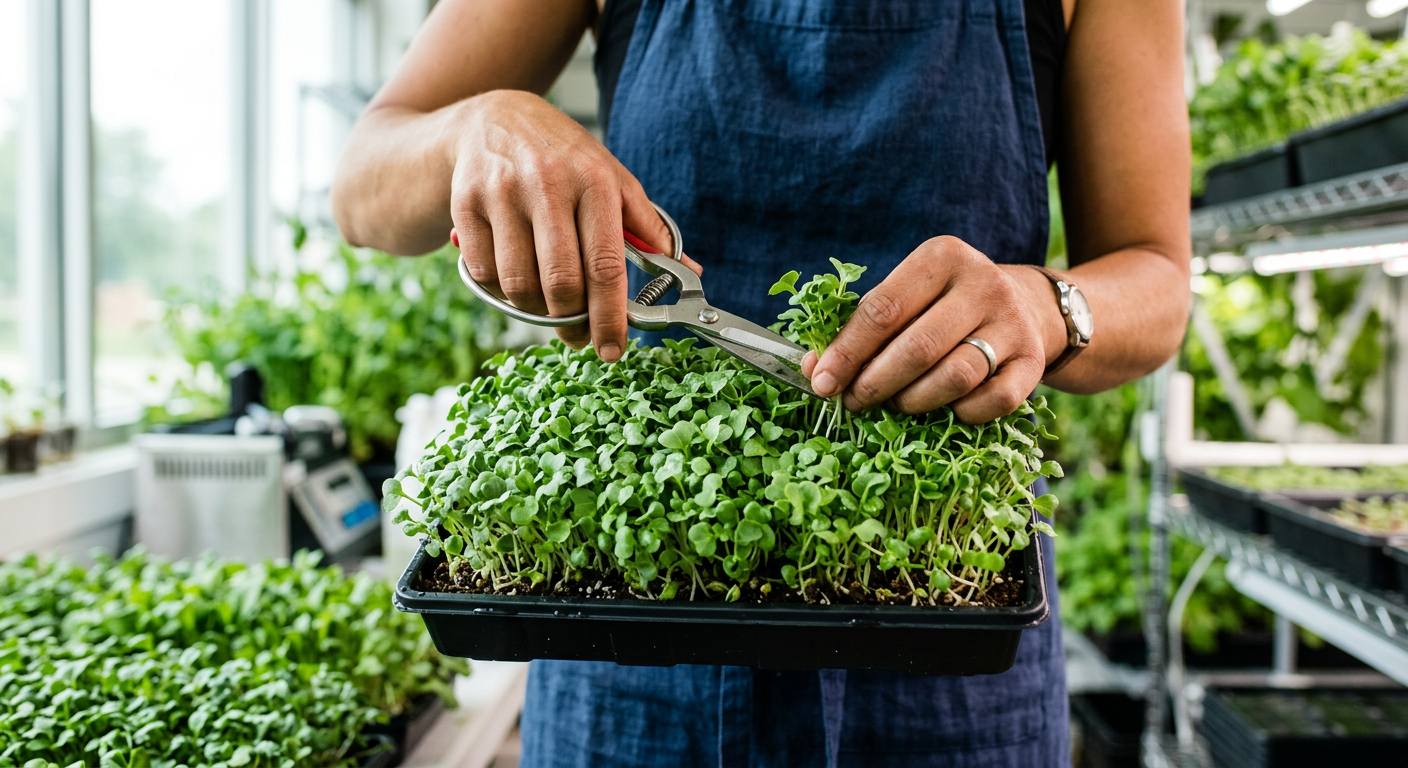
    A: Surprisingly little! We’ve seen incredible things done on balconies, patios, and small backyards. Even a sunny windowsill can yield herbs and microgreens. The key is to think vertically with planters and trellises, and prioritize plants with high yields per square foot.

    Q: Are chickens too much work for an urban setting with kids?

    A: Chickens do require daily care, but it’s very manageable, especially with a good coop setup. Our kids quickly took over egg collection and helping with water and feed. The benefits – fresh eggs, pest control, and endless entertainment – often outweigh the work. Just make sure to check your city’s regulations first!

    Q: What are some cost-saving tips for starting an urban homestead?

    A: Start with seeds instead of plant starts, hunt for free compost or use your own kitchen scraps, build raised beds from reclaimed materials (like pallets), and look for local plant swaps. We’ve saved a ton by using DIY solutions. Check out Essential Homesteading Tools to Buy First? Our Top Picks! for smart initial investments.

    Q: How do you keep kids from getting bored with gardening chores?

    A: We make it a game! “Who can find the biggest weed?” “Let’s count how many cherry tomatoes we can pick!” We also give them their own kid-sized tools and specific, age-appropriate tasks. Most importantly, we celebrate every harvest and use what we grow in meals, so they see the direct benefit of their hard work. You can explore more ideas on how to keep kids engaged on your homestead at usehomesteados.com.

    If you’re eager to build a more self-sufficient, connected life with your family, start small, embrace the mess, and dive into urban homesteading with kids. It’s truly one of the most rewarding adventures you’ll ever embark on. Have questions or want to share your own urban homesteading stories? Drop a comment below, or explore more of our family’s journey and practical tips right here at usehomesteados.com!


    📚 More From Our Homestead

    Ready to Start Your Homestead Journey?

    Free guides, checklists, and tools to help you build your dream homestead.

    Explore Free Resources →

  • Crack the Code: Preserving Eggs Long-Term (No Fridge Needed!)

    Crack the Code: Preserving Eggs Long-Term (No Fridge Needed!)

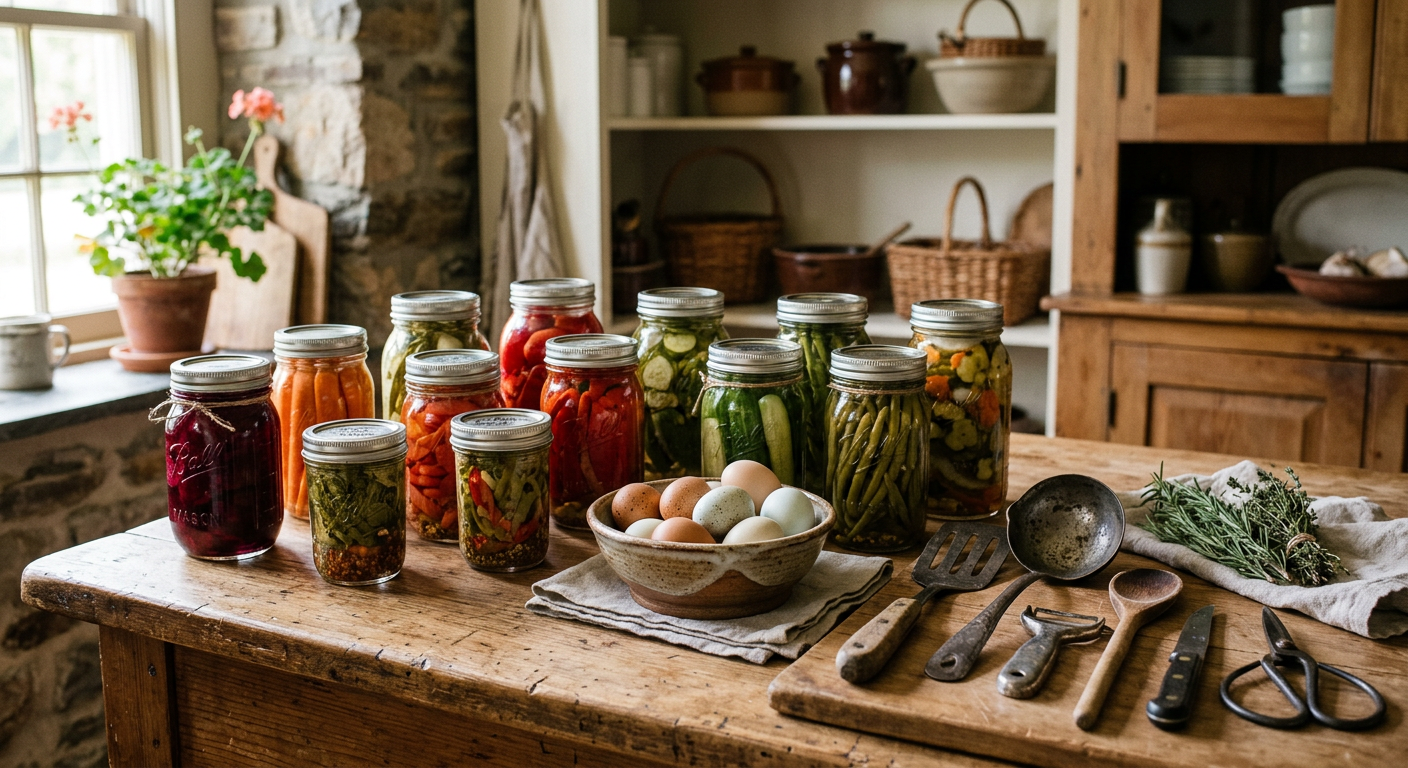
    Oh, the joys of homesteading! There’s nothing quite like gathering fresh eggs from your happy hens every morning. But if you have a decent-sized flock, you quickly run into a wonderful “problem”: too many eggs! We certainly did. When our first batch of Rhode Island Reds started laying, it felt like Christmas every day, but soon our fridge was overflowing with dozens of beautiful, pastel-colored eggs. We knew we needed a better solution than just eating them all or giving them away, especially if we wanted to be more self-sufficient. That’s when we started researching how to preserve eggs for long term storage without refrigeration – and let me tell you, it’s a game-changer for any homesteader or backyard chicken keeper!

    When we first dove into this, it felt a little overwhelming. There are so many methods out there, from ancient practices to modern twists. But after years of experimenting on our own homestead, we’ve settled on a few reliable techniques that genuinely work. These aren’t just theoretical; they’re methods we use regularly to ensure we always have a pantry full of fresh eggs, even during winter when our girls slow down their laying. So, grab a cup of coffee, and let’s chat about how you can stop relying solely on your fridge to keep your precious eggs fresh!

    Why Bother Preserving Eggs Without Refrigeration?

    Before we jump into the ‘how-to,’ let’s touch on the ‘why.’ For us, it boils down to several key reasons:

    * Self-Sufficiency: Reducing our reliance on the electrical grid, especially for something as fundamental as food storage, is a core homesteading principle. If the power goes out, our preserved eggs are still good!

    * Dealing with Abundance: Chickens lay seasonally. In spring and summer, you might be swimming in eggs, while in winter, production drops significantly. Preserving allows you to level out that supply curve.

    * Preparedness: Having a shelf-stable food supply is always smart. Knowing we have months’ worth of eggs stored away brings a huge sense of security.

    * Saving Money: Buying eggs can get pricey. By maximizing our flock’s output and storing the surplus, we significantly cut down on our grocery bill.

    The Magic of the Bloom (and Why Store-Bought Eggs are Different)

    Before we dive into methods for how to preserve eggs for long term storage without refrigeration, it’s crucial to understand a little bit about fresh eggs. When a hen lays an egg, it’s covered in a natural protective layer called the “bloom” or “cuticle.” This bloom is incredible! It’s porous, but it acts like a natural seal, preventing bacteria from entering the egg and moisture from escaping. This is why farm-fresh, unwashed eggs can sit on your counter for weeks without refrigeration.

    However, most commercially produced eggs in the US are washed and then sanitized, which removes this natural bloom. To compensate, they’re often sprayed with a thin mineral oil coating, but it’s not as effective as the natural bloom. Plus, once the bloom is gone, refrigeration becomes essential to slow bacterial growth. For our purposes, we’re always talking about fresh, unwashed eggs straight from the nesting box.

    Method 1: Water Glassing Eggs (Our Top Pick for Longest Storage!)

    Water glassing is an ancient method that we absolutely swear by. It sounds fancy, but it’s surprisingly simple and incredibly effective for how to preserve eggs for long term storage without refrigeration for 6-18 months, or even longer! We’ve successfully water glassed eggs and used them over a year later with fantastic results. The key ingredient? Pickling lime (also known as calcium hydroxide).

    What You’ll Need:

    * Fresh, unwashed eggs: As fresh as possible, ideally within 24-48 hours of being laid. No cracks, blemishes, or poop! You’ll want to gently brush off any debris, NEVER wash them with water.

    * Food-grade pickling lime (calcium hydroxide): Not to be confused with garden lime (calcium carbonate). We typically buy a 1 lb bag for about $10-15, which lasts us a very long time.

    * Filtered (non-chlorinated) water: Chlorine can degrade the bloom.

    * Airtight container: Glass jars (half-gallon or gallon size work great), food-grade buckets, or ceramic crocks with lids.

    * Optional: A long spoon or tongs for placing eggs.

    Step-by-Step Water Glassing:

  • Prepare your solution: Mix 1 ounce (by weight, about 2 tablespoons) of pickling lime per quart of non-chlorinated water. Stir until the lime is mostly dissolved. It will look milky, and some sediment might settle at the bottom – that’s normal. For a gallon container, you’d use 4 ounces of lime to 4 quarts of water.
  • Add your eggs: Gently place your fresh, unwashed eggs into your clean, airtight container, pointy end down. This keeps the yolk centered and the air sac at the top. We usually layer them in carefully to avoid cracking. Don’t crowd them too much, but fill most of the space.
  • Pour in the solution: Slowly pour the pickling lime solution over the eggs, ensuring they are completely submerged. You’ll want at least an inch of solution above the top layer of eggs.
  • Seal and store: Seal the container tightly with a lid. Store in a cool, dark place like a pantry, basement, or root cellar. Consistent temperatures are best. We keep ours in our cool pantry, which stays around 55-65°F (13-18°C).
  • Using Water Glassed Eggs:

    When you’re ready to use them, carefully remove an egg. You’ll notice a chalky, slick residue. Crucially, wash the egg thoroughly with water and soap right before you crack it. This removes the lime solution. If you try to crack it unwashed, the lime can get into your food and taste unpleasant. We’ve used these eggs for everything from scrambling to baking and haven’t noticed any difference in taste or texture from fresh eggs.

    Method 2: Oiling Eggs (A Good Medium-Term Solution)

    Oiling eggs is another straightforward technique for how to preserve eggs for long term storage without refrigeration, typically extending their freshness for 3-9 months. It works by creating an artificial barrier over the naturally porous shell, essentially mimicking and enhancing the bloom, preventing moisture loss and bacterial entry.

    What You’ll Need:

    * Fresh, unwashed eggs: Again, fresh, clean, and unblemished is key.

    * Food-grade mineral oil: Odorless, tasteless, and food-safe. A quart bottle costs about $8-15 and will last you for hundreds of eggs.

    * Container for storage: Egg cartons, mesh baskets, or any container where eggs won’t bump into each other. You could also store them pointy end down in a bucket of sawdust or sand after oiling.

    Step-by-Step Oiling:

  • Gently clean eggs (dry method): Brush off any debris with a dry cloth or soft brush. Do not wash with water.
  • Coat with mineral oil: Pour a small amount of mineral oil into a shallow bowl. Dip each egg into the oil, ensuring it’s completely covered. Alternatively, you can put on gloves and rub a small amount of oil all over each egg. You want a thin, even coat.
  • Remove excess oil: Place the oiled egg on a wire rack for a few minutes to allow any excess oil to drip off.
  • Store: Once the oil has set (it shouldn’t be dripping), store the eggs pointy end down in egg cartons in a cool, dark place. We find our pantry works well, similar to our water-glassed eggs.
  • Using Oiled Eggs:

    Just use them as you would any other fresh egg! No special washing needed before cracking, as mineral oil is food-safe. You won’t notice any difference in taste or cooking performance.

    Method 3: Fermenting Eggs (A Savory, Shorter-Term Option)

    While not strictly for long-term storage in the same vein as water glassing, fermenting eggs offers a unique and delicious way to preserve them for several weeks to a few months. This method uses a brine solution to lacto-ferment the eggs, similar to making pickles or sauerkraut. They take on a distinct tangy flavor, making them fantastic for salads, charcuterie boards, or as a savory snack.

    What You’ll Need:

    * Hard-boiled eggs: Yes, these need to be cooked first! Peel them carefully.

    * Non-chlorinated water: Enough to cover your eggs.

    * Pickling salt (or sea salt): Avoid iodized salt.

    * Whey or a starter culture (optional but recommended): A tablespoon of raw sauerkraut juice or whey from yogurt/kefir can kickstart fermentation.

    * Flavorings: Garlic, dill, peppercorns, mustard seeds, chili flakes – get creative!

    * Clean glass jar: Mason jars work great.

    Step-by-Step Fermenting:

  • Prepare the brine: For every 2 cups of water, dissolve 1-2 tablespoons of salt. Heat slightly to dissolve, then let cool completely. Add your starter culture if using.
  • Pack the jar: Place peeled, hard-boiled eggs into your clean jar. Add your desired flavorings.
  • Pour brine: Pour the cooled brine over the eggs, ensuring they are fully submerged. You might need a fermentation weight or a small Baggie filled with brine to keep them under the liquid.
  • Ferment: Seal the jar loosely (to allow gases to escape) and leave at room temperature (65-75°F or 18-24°C) for 3-7 days. You’ll see tiny bubbles form, indicating fermentation. Taste test after 3 days to determine if they’re tangy enough for you.
  • Refrigerate: Once fermented to your liking, move the jar to the refrigerator. They will continue to ferment slowly but will last for 1-2 months, sometimes longer.
  • Our Experience: What We’ve Learned Over the Years

    When we started out, we tried oiling first because it seemed the easiest. It worked great for short to medium-term storage, maybe 3-4 months consistently. It’s a fantastic method if you just need to extend the life of a few dozen eggs. It costs us pennies per egg to oil them, and about 15-20 minutes for a few dozen.

    But for true long-term storage, especially if you’re serious about self-sufficiency, water glassing is where it’s at. We dedicate a corner of our pantry to several gallon jars of water-glassed eggs. This past winter, when our hens went on a laying strike, these eggs were a lifesaver. We were still eating “fresh” eggs in February that had been laid in July! It saved us about $5-8 per dozen we would have had to buy from the store.

    One small tip we’ve learned over time: always label your containers with the date you started the preservation and the method. Trust me, a few months down the line, you’ll be glad you did! We’ve also found that happy, healthy chickens lay better eggs for preservation. Good nutrition and clean living conditions make for stronger shells and better bloom. If you’re just starting your flock, learning about how to start a small backyard vegetable garden: beginner guide can help you grow some greens for your hens, which they love! And remembering essential tasks like regular cleaning of coop waterers and feeders helps with overall flock health. For beginners, getting a handle on 10 beginner homesteading tips to start your self-sufficient journey today can provide a solid foundation for all aspects of homesteading, including caring for your layers.

    We also use Homesteados.com as a resource for planning our homestead’s needs, especially when it comes to figuring out how much of something, like feed or bedding, we’ll need for our chickens. It’s a great tool to keep everything organized and ensure we’re on track with our self-sufficiency goals. You can explore their other helpful features over at usehomesteados.com.

    Important Considerations for Preserving Eggs

    * Only use truly fresh, unwashed eggs: This cannot be stressed enough. Store-bought eggs (unless specifically marketed as unwashed farm eggs) will not work.

    * Handle with care: Avoid jostling or cracking eggs. A tiny hairline crack can introduce bacteria.

    * Temperature stability: A cool, dark place with consistent temperature is ideal. Fluctuations can degrade preservation quality.

    * Discarding bad eggs: While rare with proper methods, if an egg from storage looks or smells off, discard it immediately. When in doubt, throw it out.

    Frequently Asked Questions About Preserving Eggs

    Q1: Can I preserve store-bought eggs using these methods?

    No, unfortunately not. Store-bought eggs have typically been washed, which removes their natural protective bloom. Once that bloom is gone, refrigeration is necessary. These preservation methods rely on that intact bloom on farm-fresh, unwashed eggs.

    Q2: How can I tell if a preserved egg is still good?

    The float test is your best friend! Place the egg in a bowl of water. A fresh egg (and most successfully preserved eggs) will lay on its side or sink to the bottom. If it stands on its pointy end, it’s older but still likely good. If it floats to the top, it’s spoiled and should be discarded. Also, always check for any off smells when cracking open a preserved egg.

    Q3: Do water-glassed eggs taste different from fresh eggs?

    In our experience, no! We’ve used water-glassed eggs for scrambling, frying, baking, and making quiches, and honestly, we can’t tell the difference. The texture, yolk color, and flavor remain remarkably consistent with fresh eggs, especially when stored correctly.

    Q4: How long does water glassed eggs last without refrigeration?

    Properly water-glassed eggs, stored in a cool, dark, consistent environment (like a pantry), can last anywhere from 6 months to over 18 months, and some homesteaders report success even beyond that! We typically aim to use ours within a year.

    Q5: What’s the cheapest way to preserve eggs?

    For sheer cost-effectiveness and long-term storage, water glassing is incredibly cheap. A 1 lb bag of pickling lime costs around $10-15 and will preserve hundreds of dozens of eggs over its shelf life, making the cost per egg almost negligible. Mineral oil is also quite affordable for the quantity of eggs it can preserve.

    There you have it – our tried and true methods for how to preserve eggs for long term storage without refrigeration! It’s a skill that has brought us immense satisfaction and food security on our homestead. No more worrying about wasting those precious eggs or having an empty fridge in winter. Give one of these methods a try and see the magic for yourself! If you’re looking for more ways to stock your homestead pantry, click around and explore other resources like our guide to essential homesteading tools to buy first: our top picks! to help you get started on your self-sufficient journey!


    📚 More From Our Homestead

    Ready to Start Your Homestead Journey?

    Free guides, checklists, and tools to help you build your dream homestead.

    Explore Free Resources →

  • Your First Homestead Layout: Simple Steps for Beginners

    Your First Homestead Layout: Simple Steps for Beginners

    When we first officially bought our little slice of heaven and decided to dive headfirst into homesteading, my head was spinning! I pictured rows of thriving gardens, happy chickens clucking, and maybe even a goat or two. But how do you get from that dreamy vision to a functional, productive space? That’s the million-dollar question, isn’t it? If you’re wondering how to plan a homestead layout for beginners, trust me, I’ve been exactly where you are. It felt like trying to solve a giant jigsaw puzzle without all the pieces.

    After years of trial, error, and a lot of moving things around, we’ve learned a ton about what works and what really doesn’t. Our first garden was in the wrong spot, our chicken coop was too far from the water source, and our compost pile was… well, let’s just say it was a learning experience. But that’s okay! We’re here to share our real-life lessons so you can avoid some of our early mistakes and get a head start. Planning your homestead layout doesn’t have to be overwhelming; it can actually be a really exciting part of the journey!

    Why a Good Homestead Layout Matters (More Than You Think!)

    Think of your homestead as a living, breathing ecosystem – and you’re the architect. A well-thought-out layout isn’t just about aesthetics; it’s about efficiency, productivity, and your sanity. When we first started, we just kind of plunked things down where they seemed to fit. Our garden was way out in the back forty, meaning every trip for watering or harvesting was a trek. Our compost heap was a good 100 feet from the kitchen, which meant less frequent trips and therefore less useful compost.

    What we quickly realized was that a smart layout minimizes wasted effort, saves you time, and can even reduce resource use. It’s the difference between feeling like you’re constantly fighting against your property and feeling like your homestead is working with you. For beginners especially, getting this right from the start can make all the difference in staying motivated and preventing burnout.

    Our Early Layout Blunders and Lessons Learned

    Our biggest mistake was underestimating access. We put our first chicken coop tucked away in a corner because it felt ‘out of the way.’ What we didn’t think about was the daily trek with buckets of water and feed, and then hauling eggs back to the house. It was a chore, pure and simple. Moving the coop closer to our water spigot and main pathways made daily chores so much smoother. We also learned that thinking about future expansion now is key. We wish we’d considered where our fruit trees would go before we planted that first random shrub.

    Phase 1: Observing Your Land – The Foundation of a Great Plan

    Before you even dream about where the chicken coop will go, the very first step in how to plan a homestead layout for beginners is to sit back and observe your land. This phase is critical and often overlooked. When we bought our 5 acres, we spent a solid six months just watching before we put a single shovel in the ground for a major project.

    Map it Out: The First Step to Understanding Your Space

    Grab some graph paper or use an online tool (we use a simple free one called “Homesteados Maps” which you can find at https://usehomesteados.com/maps). Sketch out your property boundaries. Mark existing structures like your house, shed, and driveway. Don’t forget any big trees, rock formations, or wet areas.

    * Existing Features: House, driveway, large trees, fences, utility lines (call 811!), septic system.

    * Sun Paths: Observe where the sun hits in summer and winter. Which areas get full sun? Which are shady? This is HUGE for garden placement.

    * Water Flow: Where does water collect after a rain? Where does it drain? This impacts garden beds, animal enclosures, and even potential pond placement. Look at natural swales and slopes.

    * Wind Patterns: Which direction does the prevailing wind come from? You’ll want to protect certain areas, like delicate vegetable gardens or wind-sensitive structures.

    * Microclimates: Notice small areas that are warmer, colder, wetter, or drier than their surroundings. A sunny, protected south-facing wall might be perfect for special herbs like those mentioned in our post on Best Perennial Herbs for Cold Climate Homesteads.

    Taking photos throughout the day and in different seasons can be incredibly helpful during this observation period. We kept a journal for weeks to track these things.

    Phase 2: Defining Your Homestead Goals and Needs

    Now that you know your land, it’s time to figure out what you want your land to do for you. This is where your personal vision comes into play. When we first started, “self-sufficiency” was a buzzword, but we quickly realized that meant different things to different people. For us, it meant growing most of our vegetables, having fresh eggs, and eventually, some fruit.

    * Prioritize Your Projects: Are you starting with a vegetable garden? Chickens? Beekeeping? Not everything has to happen at once. Our family began with a very small garden (you can read about our journey in How to Start a Small Backyard Vegetable Garden: Beginner Guide). Slowly, we added chickens a year later.

    * Consider Your Family’s Needs: How much food do you need to produce? How much time can you realistically commit each day/week? We have two young kids, so daily chores need to be efficient.

    Future Expansion: Even if you’re not getting goats this year, think about where they could* go in the future. Leave some room!

    * Budget: Be realistic about what you can afford upfront. Starting small and expanding is always a good strategy.

    Make a list of all the elements you’d like to include: vegetable garden, fruit trees, berry patches, chicken coop, rabbit hutches, compost areas, rainwater catchment (grab some tips here about Best Small Scale Rainwater Systems for Off-Grid Living), tool shed, outdoor living spaces, etc. Don’t censor yourself here – get all your dreams down!

    Phase 3: Designing Your Functional Zones – Applying Permaculture Principles

    This is where you start to put pencil to paper (or mouse to screen) and truly plan a homestead layout for beginners. We’ve found that thinking in terms of “zones” makes this much simpler. This is a core permaculture principle, and it really helps with efficiency.

    The Zone System: Locating Elements Logically

    * Zone 0: The House. This is your hub. Activities directly around your home.

    * Zone 1: Frequently Visited. Things you use daily or multiple times a day.

    * Examples: Kitchen garden (salad greens, herbs), compost bin (for kitchen scraps), main paths, small herb spiral near the kitchen door. Our Zone 1 compost is now only 20 steps from our kitchen!

    * Zone 2: Regularly Visited. Things you visit a few times a week.

    * Examples: Main vegetable garden, chicken coop, small orchard, berry bushes, nursery beds. Ours now includes a dedicated spot for our compost pile, which gets turned weekly.

    * Zone 3: Periodically Visited. Things you visit weekly or a few times a month for maintenance or harvest.

    * Examples: Larger orchards, staple crop gardens (corn, potatoes), pastured animals, firewood storage, tool shed. Our main potato patch is here.

    * Zone 4: Infrequently Visited. Semi-wild areas, larger pastures, timber production. Minimal human maintenance.

    * Examples: Woodlot, larger animal pastures.

    * Zone 5: Wild/Untouched. This zone is left as wild as possible, allowing nature to thrive.

    When we redid our layout, we took our map from Phase 1 and started sketching potential zones. We realized that our initial chicken coop, originally in Zone 3, needed to be in Zone 2. And our main garden, initially in Zone 4, definitely belonged in Zone 2 to make it manageable.

    Phase 4: Considering Key Elements for Your Layout

    Now, let’s get specific about placing those elements you dreamed about. This is crucial for how to plan a homestead layout for beginners effectively.

    1. Water Access: The Lifeline of Your Homestead

    Water is king. Period. Our first year, we spent hours hauling water because we didn’t fully map out our spigots and potential rainwater collection points.

    * Connect to existing sources: Where are your outdoor spigots? Can you expand your plumbing easily?

    * Rainwater Harvesting: Consider placing greenhouses, sheds, or coops under rooflines that can easily collect rainwater. Check out our guide on Best Small Scale Rainwater Systems for Off-Grid Living for ideas. We collect about 500 gallons annually from our barn roof alone!

    * Gravity: Can you use the natural slope of your land for irrigation? A water tank placed uphill can gravity-feed water downhill.

    2. Sunlight Needs: Orienting Gardens and Structures

    Most vegetables need at least 6-8 hours of direct sunlight. Our first garden was shaded by a huge oak tree in the late afternoon, which significantly reduced our yields.

    * Garden Placement: Generally, south-facing (in the Northern Hemisphere) with full sun is ideal. Avoid placing tall structures or trees immediately to the south of your garden.

    * Greenhouses/Polytunnels: Orient them east-west for maximum winter sun exposure.

    * Animal Housing: Protection from harsh winter winds and scorching summer sun is vital. East-facing entrances are often best for catching morning sun in winter.

    3. Pathways and Access: Your Homestead’s Arteries

    Efficiency! Wide, clear paths save so much time and effort.

    * Main Pathways: Should be wide enough for a wheelbarrow (at least 3-4 feet) and lead to frequently visited areas (garden, compost, coop). We use wood chips for ours – they’re cheap, good for soil, and suppress weeds.

    * Utility/Service Paths: Driveway access, delivery points, areas for turning equipment.

    * Slope Considerations: Avoid paths that become slippery or prone to erosion.

    4. Animal Integration: Placement with Purpose

    When we started with chickens, they were just… chickens. Now, we think about how they integrate into the system.

    * Pastures/Runs: Consider rotating animals through different areas for soil fertility and pest control.

    * Protection: Predators are a real threat. Place coops and runs where they’re visible and accessible for protection. Our chicken run now integrates into our orchard, helping with pest control and fertilization.

    * Composting: Chicken litter is fantastic for compost! Locate coops near your compost pile.

    5. Utilities and Services: Plan for Power, Greywater & Waste

    Don’t forget the boring but essential stuff!

    * Electricity: Where do you need power? For pumps, lighting, tools? Plan for trenching if necessary.

    * Septic/Sewer: Know your septic field location – you can’t build over it.

    * Compost Toilets/Greywater: If you’re going off-grid, where will these systems be located?

    * Waste Management: Beyond the compost, where will you stash garbage and recycling?

    Phase 5: Iteration and Flexibility – Your Plan isn’t Set in Stone!

    Here’s the honest truth: your first homestead layout won’t be your last. Even after our careful planning, we’ve adjusted things. Our compost pile has moved three times! Our initial garden expanded into another bed because we realized we needed more space for tomatoes. This flexibility is a strength, not a weakness. Don’t be afraid to tweak as you go.

    Start small, implement a portion of your plan, and observe. Does it work? Is it efficient? What could be better? We often recommend implementing one major element per season or year for beginners. Remember, homesteading is a journey of continuous learning, as we’ve highlighted in our 10 Beginner Homesteading Tips to Start Your Self-Sufficient Journey Today.

    When we started, if someone had handed me a perfect, final layout for our property, I wouldn’t have learned nearly as much as I did through the process of observing, planning, doing, and adjusting. Your homestead is a canvas, and you’re the artist. Get creative, stay practical, and most importantly, enjoy the process!

    Frequently Asked Questions About Homestead Layouts

    Q1: How much land do I need to start a homestead and plan a layout?

    A: You can start homesteading and planning a layout on surprisingly little land! Many urban homesteaders thrive on just a quarter-acre or even less by focusing on vertical gardening, intensive planting, and container growing. For typical suburban homesteading goals (vegetables, a few chickens), 1/2 to 1 acre is a great starting point. For larger animals like goats or a small orchard, 2-5+ acres might be more suitable. It’s more about efficient design than sheer size.

    Q2: What’s the most common mistake beginners make when planning their homestead layout?

    A: Hands down, it’s underestimating the importance of water access and sunlight. Many beginners place gardens in convenient spots without checking for optimal sun exposure, or they put animal housing far from a water source, leading to daily hauling chores. Another big one is not thinking about pathways and flow – making it hard to move materials or people around efficiently. We really encourage spending time in the observation phase before you commit to anything permanent.

    Q3: How long should I spend on the observation phase before designing?

    A: Ideally, you should observe your land for at least one full year, if possible, to see how sun, wind, and water behave in all four seasons. However, for most beginners eager to start, even 3-6 months of focused observation during your primary growing season can provide invaluable insights. Don’t rush it! The more you observe, the fewer mistakes you’ll make later on.

    Q4: Are there free tools to help me design my homestead layout?

    A: Absolutely! For simple mapping, grab some graph paper, a ruler, and colored pencils – that’s often the best start. For digital options, you can use Google Earth to get an aerial view of your property and then print it to draw on. There are also free online drawing tools or simple diagram makers that can help. We built a basic one at https://usehomesteados.com/maps for our community which is super easy to use for initial sketching.

    Q5: Should I try to implement my entire homestead layout plan all at once?

    A: Definitely not! That’s a recipe for burnout and frustration. We always advise a phased approach. Pick one major project (like your main garden or chicken coop) that aligns with your most pressing goals. Implement that, learn, observe, and then move on to the next piece of your plan. This iterative process allows you to adapt as you gain experience and understand your land better. Most successful homesteads are built layer by layer over many years.

    Ready to Start Sketching Your Dream Homestead?

    I hope our family’s journey has given you a clearer path for how to plan a homestead layout for beginners. It’s a journey, not a sprint, and every step, even the missteps, teaches you something valuable. Don’t let perfection be the enemy of good when you’re just starting out. Grab your pad and pencil, head outside, and start observing.

    Got questions as you plan? I’d love to hear them! And if you’re looking for more practical advice and real-life homesteading stories, be sure to explore more articles right here on our blog. We’re always sharing our latest projects, lessons, and tips to help you on your own self-sufficiency adventure. You can find many guides, from gardening to animal care, to help you bring your homestead vision to life!


    📚 More From Our Homestead

    Ready to Start Your Homestead Journey?

    Free guides, checklists, and tools to help you build your dream homestead.

    Explore Free Resources →

  • 10 Beginner Homesteading Tips to Start Your Self-Sufficient Journey Today

    10 Beginner Homesteading Tips to Start Your Self-Sufficient Journey Today

    Starting a homestead can feel overwhelming, but it doesn’t have to be. Whether you have a sprawling rural property or a small suburban backyard, the journey toward self-sufficiency begins with a single step. In this guide, we’ll walk through ten practical, beginner-friendly tips that will help you build confidence and momentum on your homesteading path.

    1. Start Small and Build Momentum

    One of the biggest mistakes new homesteaders make is trying to do everything at once. Instead of buying livestock, planting a massive garden, and building a root cellar all in the same month, pick one project and master it before moving on.

    Start with a small raised bed garden or a few container plants. Learn how soil works, how to water properly, and how to deal with pests naturally. Once you’ve harvested your first crop, you’ll have the confidence to scale up.

    2. Learn to Preserve Your Harvest

    Growing food is only half the equation. Learning to preserve what you grow ensures nothing goes to waste and extends your food supply through the off-season.

    • Canning – Great for tomatoes, jams, pickles, and sauces
    • Dehydrating – Perfect for herbs, fruits, and jerky
    • Freezing – The easiest method for most vegetables
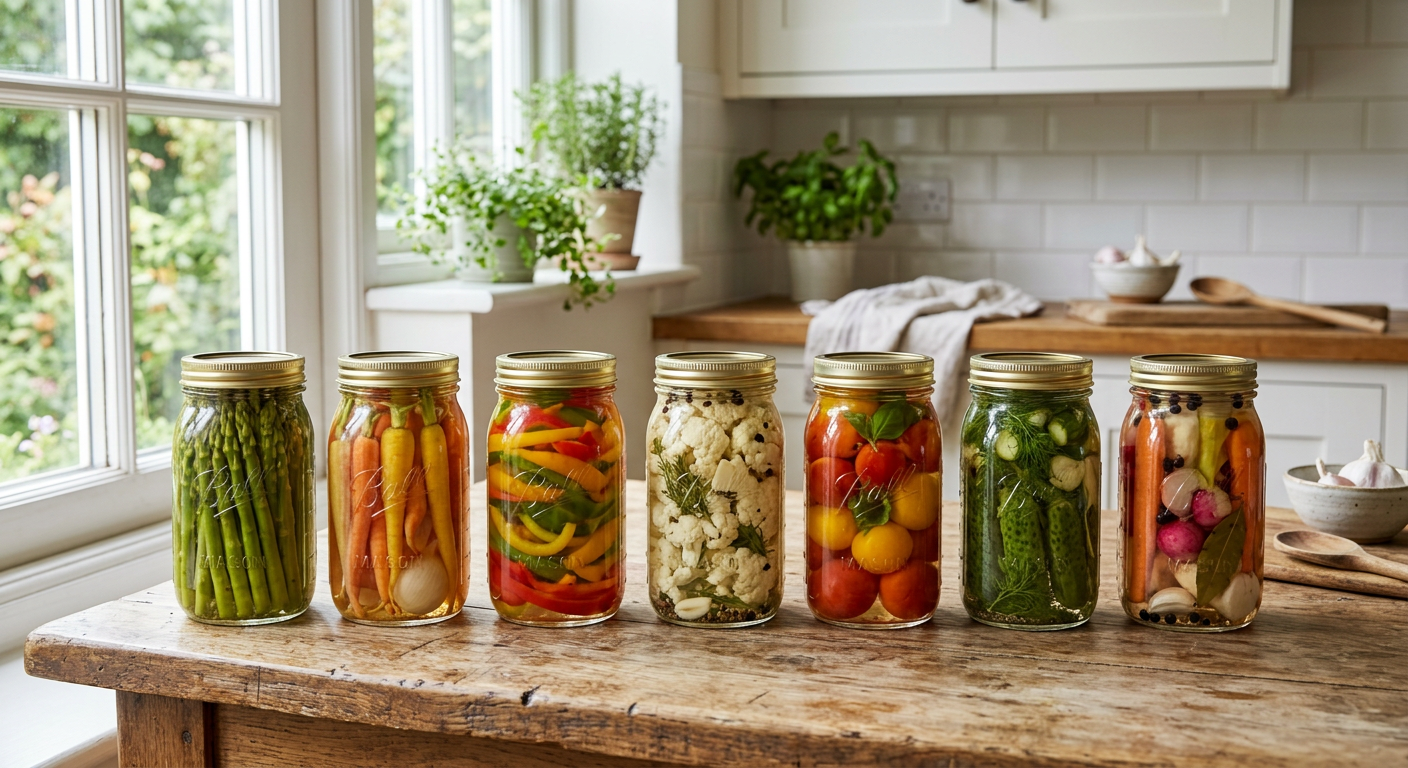
    • Fermenting – Adds probiotics and extends shelf life naturally

    Invest in a quality pressure canner and start with simple water-bath recipes. The National Center for Home Food Preservation is an excellent resource for safe preservation methods.

    3. Raise Chickens First

    If you’re considering livestock, chickens are the ideal starting point. They’re relatively low-maintenance, provide fresh eggs daily, and help control garden pests.

    A small flock of 4-6 hens is perfect for beginners. You’ll need a secure coop, a reliable water source, and quality feed. Many homesteaders find that their chickens quickly become one of the most rewarding parts of their homestead.

    4. Build a Composting System

    Compost is the foundation of a healthy homestead. It reduces waste, enriches your soil, and saves money on fertilizers. Start with a simple three-bin system or even a basic pile in a corner of your yard.

    Layer green materials (kitchen scraps, grass clippings) with brown materials (leaves, cardboard, straw) and turn regularly. In a few months, you’ll have rich, dark compost that your garden will thrive on.

    5. Invest in Quality Tools

    You don’t need every tool on the market, but investing in a few high-quality essentials will save you time, frustration, and money in the long run.

    Essential homesteading tools include:

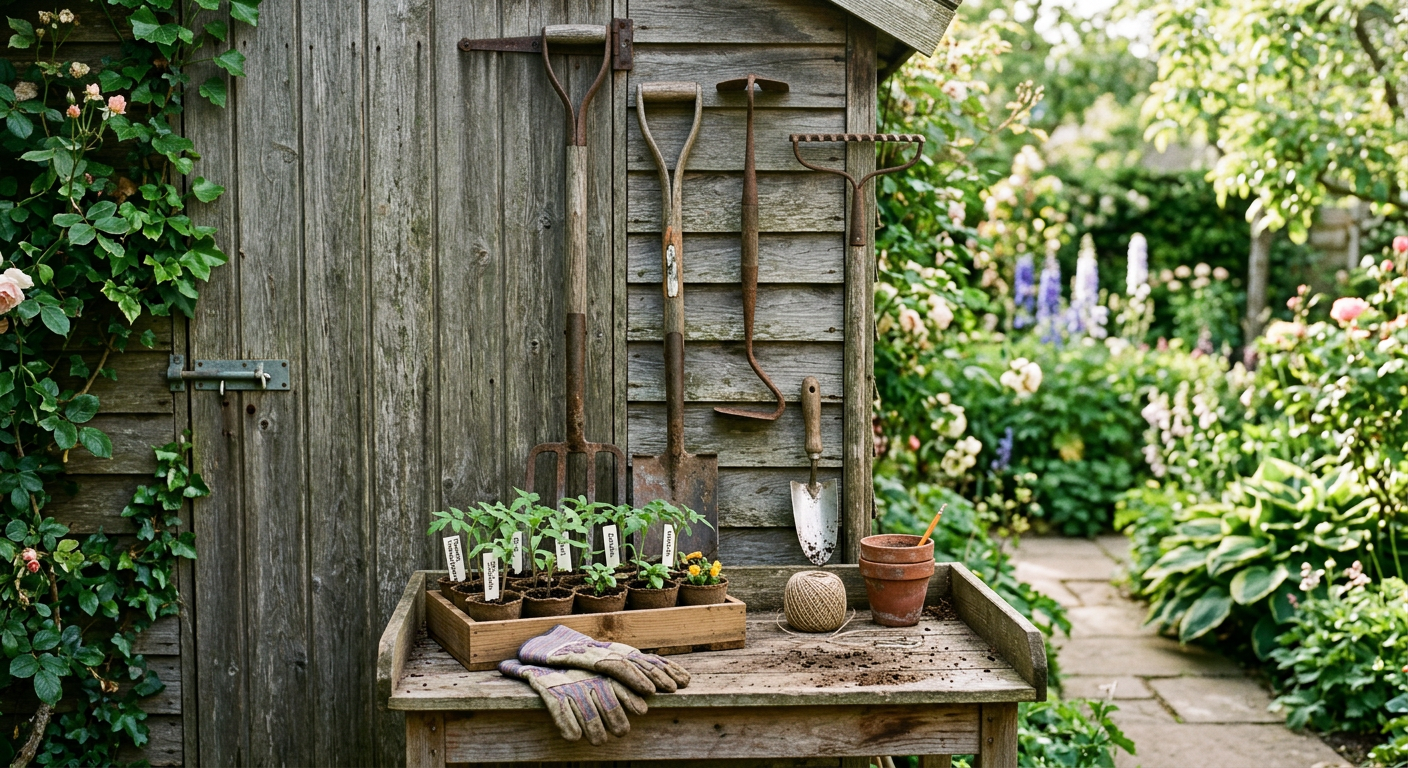
    • A sturdy garden fork and spade
    • Quality pruning shears
    • A reliable wheelbarrow
    • A good hose with adjustable nozzle
    • Hand tools for weeding

    6. Learn Water Management

    Water is one of your most valuable resources on a homestead. Understanding how to collect, store, and efficiently use water will save you money and make your homestead more resilient.

    Consider installing rain barrels to collect runoff from your roof. A single rainfall can fill multiple barrels, providing free irrigation water for your garden. Drip irrigation systems are another smart investment that delivers water directly to plant roots with minimal waste.

    7. Connect with Your Local Homesteading Community

    You don’t have to figure everything out alone. Local homesteading groups, farmers markets, and agricultural extension offices are incredible resources for region-specific advice.

    Join local Facebook groups, attend farm swaps, and visit nearby homesteads. The knowledge you gain from experienced homesteaders in your area is invaluable — they understand your climate, soil, and growing seasons better than any book.

    8. Plan for Passive Income Streams

    A homestead can be more than a lifestyle — it can also generate income. Think about what you can produce and sell locally:

    • Fresh eggs from your chickens
    • Honey from beekeeping
    • Seedlings and plant starts in spring
    • Handmade soaps or candles
    • Preserved goods at farmers markets

    Starting small with one income stream allows you to test the market without overcommitting. Many homesteaders find that their hobby eventually pays for itself.

    9. Embrace Seasonal Living

    Homesteading teaches you to work with nature’s rhythms rather than against them. Each season brings its own tasks and rewards:

    • Spring – Planting, starting seedlings, preparing beds
    • Summer – Growing, harvesting, preserving
    • Fall – Final harvest, preparing for winter, planting cover crops
    • Winter – Planning, repairing tools, studying new skills

    Keeping a homestead journal helps you track what worked, what didn’t, and what to try next year.

    10. Be Patient with Yourself

    Homesteading is a marathon, not a sprint. You will make mistakes — plants will die, projects will fail, and some days will feel discouraging. That’s completely normal.

    Every experienced homesteader started exactly where you are now. The key is to keep learning, stay curious, and celebrate small wins along the way.

    Frequently Asked Questions

    How much land do I need to start homesteading?

    You can start homesteading on as little as a quarter acre. Many self-sufficiency skills like container gardening, food preservation, and composting work even in suburban settings.

    What animals are best for beginner homesteaders?

    Chickens are the most beginner-friendly livestock. They require minimal space, are inexpensive to feed, and provide eggs almost daily. Rabbits are another excellent low-maintenance option.

    How much does it cost to start a homestead?

    You can start with as little as $100-200 for a basic garden setup. Costs scale with ambition — adding chickens might cost $300-500 for a coop and initial flock.

    Can I homestead while working a full-time job?

    Absolutely. Many homesteaders start while working full-time. The key is starting small and gradually adding projects as your schedule allows.

    Start Your Homesteading Journey Today

    The path to self-sufficiency doesn’t require perfection — it requires action. Pick one tip from this list and start this weekend. Whether it’s planting your first seeds or researching chicken breeds, every small step brings you closer to the homestead life you’re dreaming of.

    Ready to take the next step? Visit UseHomesteados.com for more guides, tools, and resources to accelerate your homesteading journey.


    📚 More From Our Homestead

    Ready to Start Your Homestead Journey?

    Free guides, checklists, and tools to help you build your dream homestead.

    Explore Free Resources →

  • Homesteading Hacks: Save Serious Money on Groceries!

    !A lush backyard garden showing how to save money on groceries homesteading by growing produce.
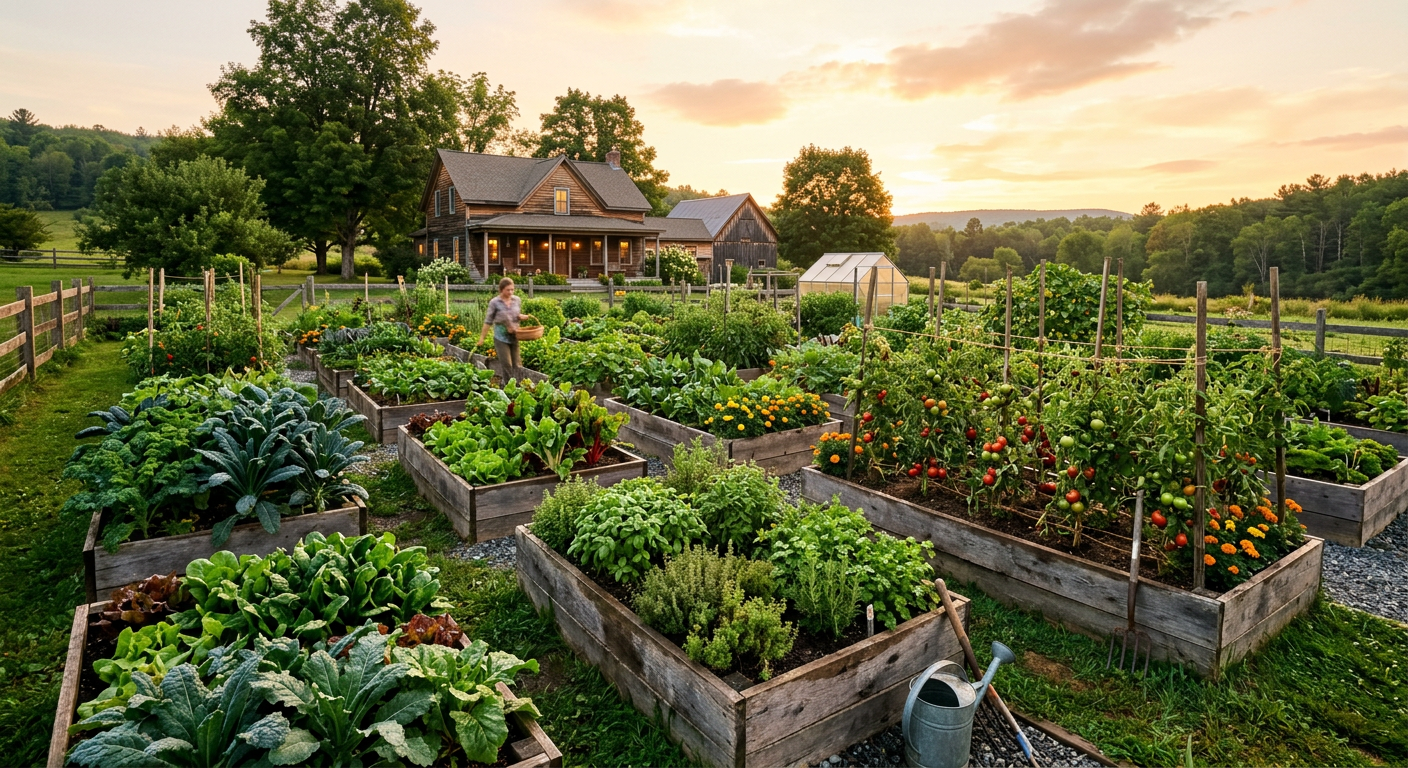
    I remember staring at our grocery bill just five years ago, my jaw practically on the floor. It was over $1200 for a family of four, and we weren’t even buying fancy stuff! That’s when we knew something had to change — saving money on groceries was going to be a non-negotiable part of our homesteading journey.

    🎯 Quick Answer: Saving money on groceries through homesteading involves a multi-pronged approach: grow what you can, preserve your harvests, buy in bulk directly from producers, cook from scratch, and strategically reduce waste. Our family cut our grocery bill by over 60% using these methods.

    🌱 Start Your Homestead Plan →

    🔑 Key Takeaways

    * Garden for Savings: Growing even a small portion of your produce can drastically reduce your grocery expenses, especially for high-cost items like fresh herbs and berries.

    * Preserve Your Harvest: Canning, freezing, dehydrating, and fermenting extends the life of your bounty, making seasonal savings last all year.

    * Strategic Bulk Buying: Purchasing staples, meat, and dairy directly from farmers or co-ops in large quantities offers significant price breaks.

    * Cook from Scratch: Eliminating processed foods means fewer expensive ready-meals and more control over ingredients and costs.

    * Waste Not, Want Not: Smart meal planning and creative use of leftovers prevent food waste, directly impacting your budget.

    * Animal Contributions: Raising chickens for eggs or a few dairy goats can provide fresh, often ‘free,’ protein and dairy, further reducing grocery needs.

    !Fresh harvested vegetables on a table illustrating how to save money on groceries homesteading.
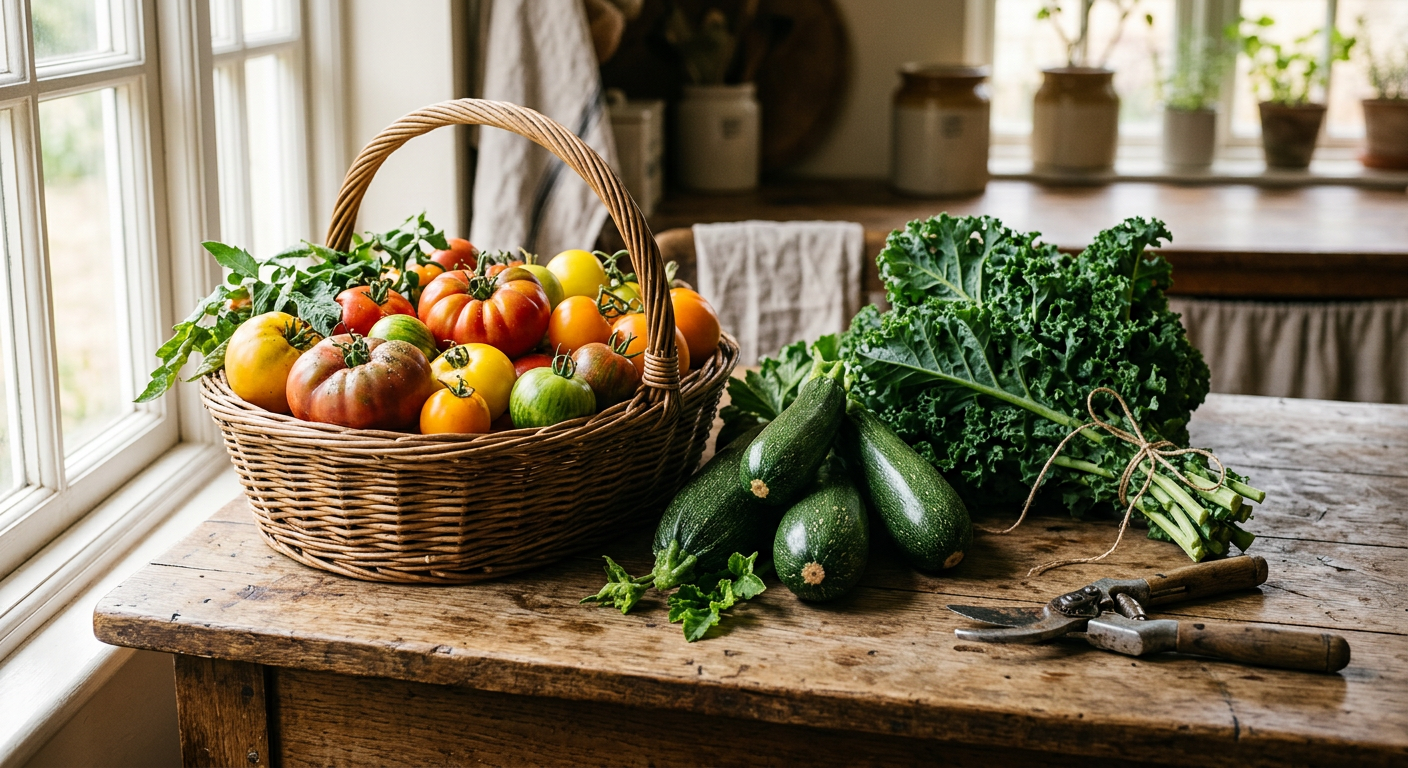
    Our Journey to Saving Money on Groceries Homesteading

    When we first moved onto our little patch of land, we had grand visions of self-sufficiency. But honestly, the initial push wasn’t just about the romantic idea of ‘living off the land’; it was about necessity. That $1200 bill was a wake-up call, and we started looking at how to save money on groceries homesteading as our first major project.

    Our first year, we only managed to shave off about 15% from our grocery expenses. We were enthusiastic but a bit disorganized. We grew too many zucchinis and not enough of what we actually ate frequently. Over the years, refining our methods and focusing on high-impact areas, we now consistently keep our monthly grocery spending under $450 for the same family of four. That’s a savings of over $750 every single month!

    This transformation didn’t happen overnight, but it was incredibly rewarding. The peace of mind knowing where our food comes from, and the extra money in our pockets, has been truly life-changing. Now, let’s dive into exactly how we did it. But before you start, there’s one mistake that ruins everything — I’ll cover it next.

    Grow Your Own: The Ultimate Grocery Hacker

    If you want to know how to save money on groceries homesteading, growing your own food is hands down the most impactful step. We started with a tiny 4×8 raised bed, and it quickly expanded.

    Prioritize High-Cost or High-Consumption Crops

    Don’t try to grow everything at once. Focus on items that are expensive at the store or that your family eats a lot of. For us, that meant.

    * Berries: Fresh raspberries and blueberries are pricey, especially organic ones. Our small patch of everbearing raspberries gives us fresh fruit for months.

    * Herbs: A small herb garden saves a fortune. A bunch of fresh basil can be $3-4; growing it costs pennies. We’ve got rosemary, thyme, oregano, and mint flourishing.

    * Salad Greens: Lettuce, spinach, and kale grow quickly and can be harvested repeatedly. We found that a continuous harvest of greens saved us about $20-30/month in buying pre-washed bags.

    * Tomatoes & Peppers: We go through a lot of these in sauces, salads, and cooking. Growing our own means fresh produce all summer and plenty for canning.

    Start Small, Learn, Then Expand

    We didn’t plant an acre overnight. Our first garden was modest, and we learned a ton about our soil, sunlight, and what thrives here. Each year, we’d add another bed or expand a patch. This gradual scaling prevented overwhelm and helped us enjoy the process. Read our guide on How to Start a Small Backyard Vegetable Garden: Beginner Guide for a great starting point.

    Consider Yield and Space Efficiency

    Some crops give you more bang for your buck. For instance, a single zucchini plant can produce more squash than you know what to do with! But also consider vertical gardening for space-saving. Pole beans, cucumbers, and even small melons can climb, maximizing your harvest in a small footprint.

    Keep reading — this is where most people mess up.

    Preserve the Bounty: Extending Your Savings

    What’s the point of growing all that food if it goes bad? Preserving is crucial for how to save money on groceries homesteading year-round. It means enjoying summer’s sweetness in the dead of winter without paying premium prices.

    Canning for Shelf Stability

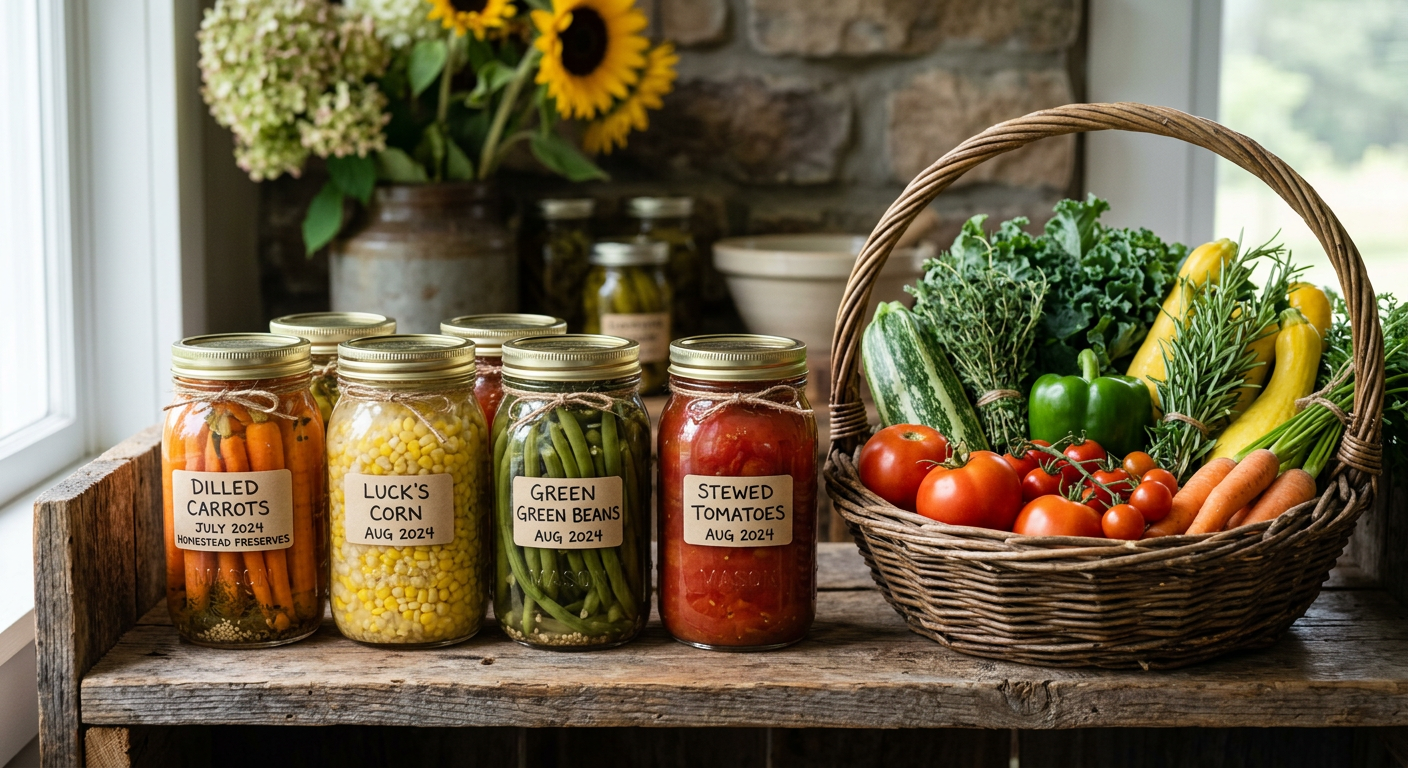
    We started with water bath canning for high-acid foods like jams, jellies, pickles, and tomato sauce. Later, we invested in a pressure canner for low-acid vegetables like green beans and corn, as well as meats. Our pantry now looks like a mini grocery store!

    * Tomatoes: We can diced tomatoes, crushed tomatoes, and salsa. This saves us about $50-70 per month on canned tomato products alone during winter.

    * Green Beans: A bushel of green beans from a local farmer can be bought cheap, then canned for year-round side dishes. We estimate this saves us approximately $100 throughout the off-season.

    * Jams & Jellies: Using homegrown or locally picked fruit, we make all our own preserves. This easily saves us $15-20 per month compared to store-bought.

    Freezing for Freshness and Convenience

    Freezing is often the easiest entry point into food preservation. We freeze berries, chopped vegetables, and even entire meals. Just blanching vegetables for a few minutes before freezing helps maintain their quality.

    * Berries: Wash, dry, and freeze berries on a baking sheet before transferring to bags. Perfect for smoothies and winter desserts.

    * Pesto Cubes: Blend extra basil into pesto and freeze in ice cube trays. Pop one into pasta or soup for a burst of flavor.

    Dehydrating for Light and Long-Term Storage

    Our dehydrator is always humming. It’s fantastic for herbs, fruit leathers, and even emergency food supplies.

    * Herbs: Dry your garden herbs for cooking. They take up little space and retain their flavor for months.

    * Apple Slices: A great healthy snack that saves us from buying expensive fruit snacks.

    Fermentation for Probiotics and Flavor

    Sauerkraut, kimchi, and fermented pickles are not only delicious and healthy but also extremely cost-effective to make. Cabbage is cheap, and fermenting extends its life significantly.

    Consider our post on Crack the Code: Preserving Eggs Long-Term (No Fridge Needed!) for another great preservation method!

    📋 Get the Beginner Checklist →

    This next part? Nobody talks about it, but it changed everything for us.
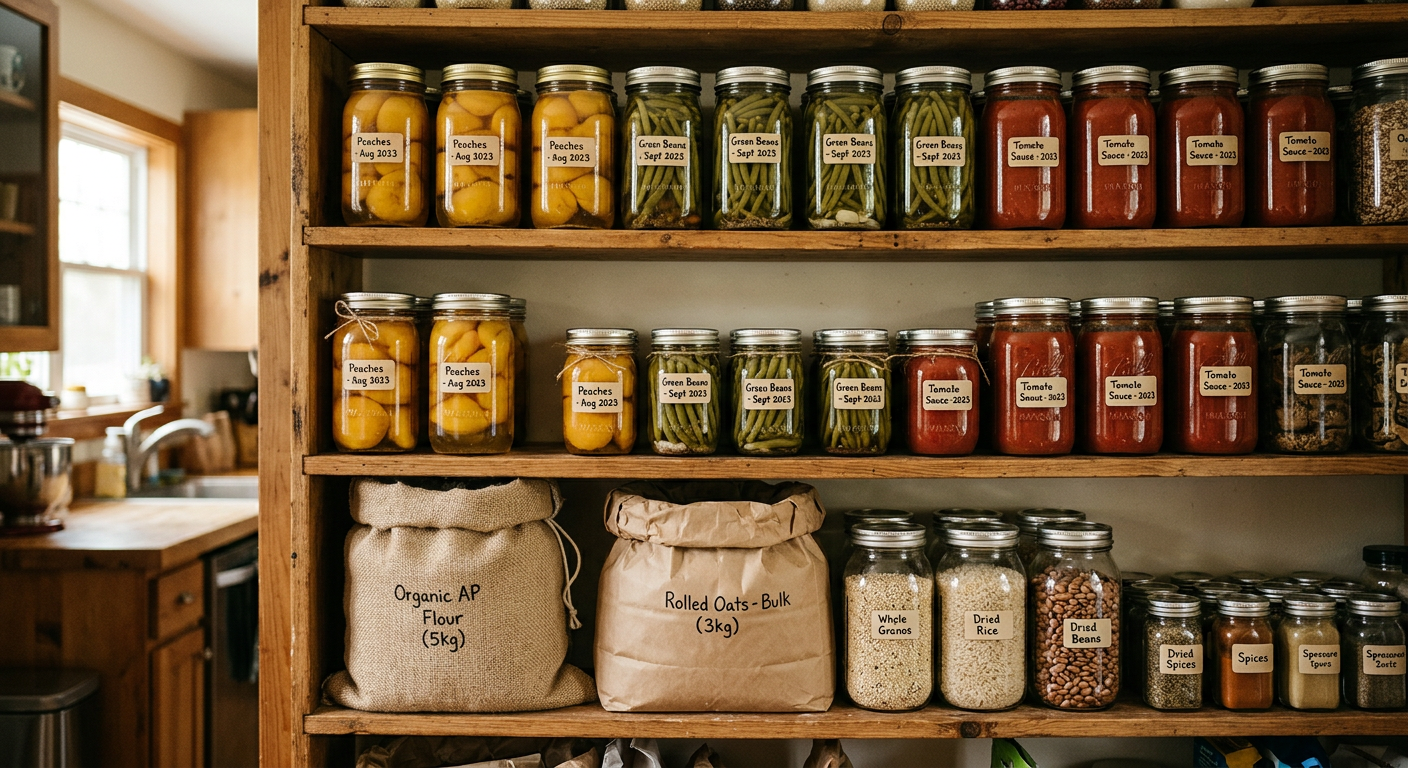
    !Canned goods and bulk staples showing how to save money on groceries homesteading through preservation.

    Smart Sourcing: Beyond Your Homestead

    Even with a thriving garden and a full pantry, we can’t grow everything. That’s where smart sourcing comes in to reinforce how to save money on groceries homesteading.
    Buying in Bulk & Direct from Farmers

    We’ve found incredible savings by cutting out the middleman. This means buying a whole or half animal directly from a local farmer, or joining a CSA (Community Supported Agriculture) program.

    * Bulk Meat: We split a half-cow with friends every year. The upfront cost (around $1200 for us) feels like a lot, but calculated by the pound, it’s significantly cheaper (often $3-5/lb for premium cuts) than buying individual packages at the grocery store. It fills our chest freezer and lasts us 8-10 months.

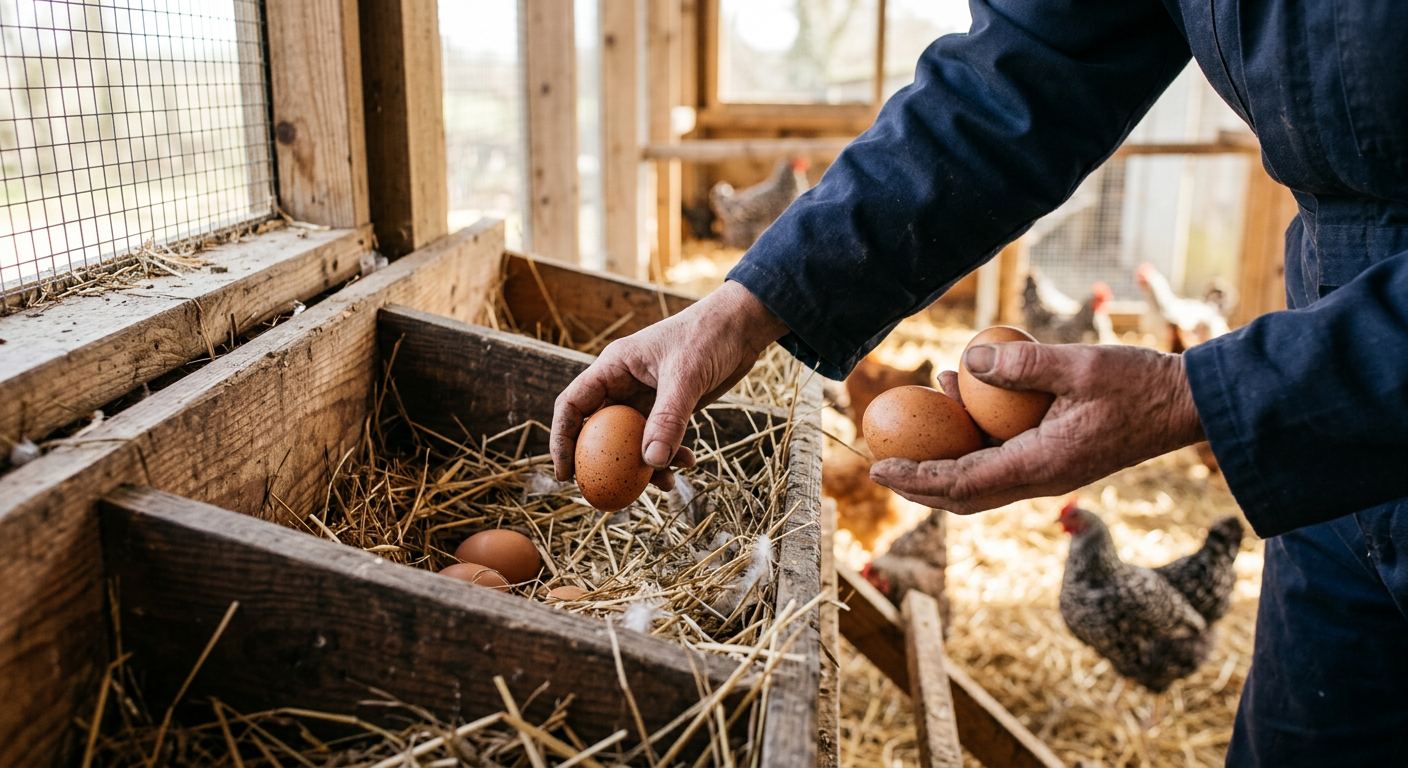
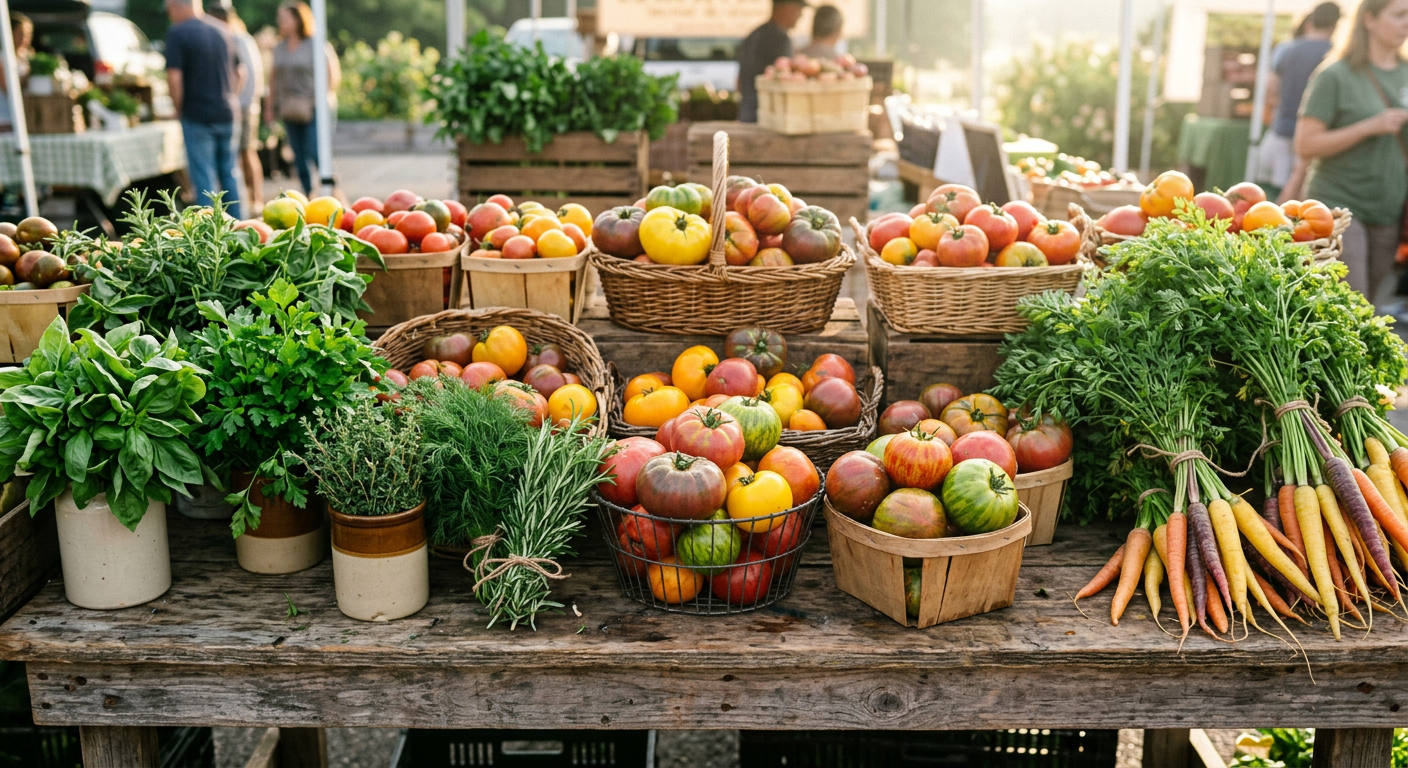
    * Local Produce: During peak season, we visit farmers’ markets an hour before closing and often get deals on ‘ugly’ produce perfect for canning or freezing. We also have a standing order with a local farmer for a bushel of peaches every August for our canning projects.

    * Co-ops & Discount Stores: Membership to a local food co-op or shopping at stores like Aldi/Lidl for non-perishables and pantry staples saves us another 15-20% on those items.

    Foraging for Free Food

    Depending on where you live, wild edibles can supplement your diet for free! We forage for wild berries, mushrooms (only with expert identification!), and even edible greens like dandelion and plantain.

    * Dandelions: Young dandelion greens are great in salads, and the roots can be roasted for a coffee substitute.

    * Blackberries: Our property is edged with wild blackberries, providing gallons of fruit for jams and pies every summer – completely free.

    The Homestead Kitchen: Cooking from Scratch and Reducing Waste

    Our kitchen is the heart of our homestead, and it’s where we truly embody the spirit of how to save money on groceries homesteading.

    Say Goodbye to Processed Foods

    Processed foods are notoriously expensive and often less nutritious. By cooking almost everything from scratch, we eliminate these costs. Breads, sauces, dressings, and snacks – it’s all made here.

    * Homemade Bread: Making our own sourdough bread (flour, water, salt, starter) saves us about $4-5 per loaf compared to artisan bread. Even basic yeast bread is far cheaper than store-bought.

    * Bone Broth: After butchering chickens (which we raise ourselves – see Raising Backyard Chickens: Pros, Cons & What to Expect), we use the bones to make nourishing bone broth. This is basically free, whereas store-bought bone broth can be $5-8 per carton.

    Meal Planning and Leftover Creativity

    Planning our meals around what’s in season, what we’ve preserved, and what’s in the pantry prevents impulse buys and reduces waste. Leftovers are gold!

    * Weekly Meal Plan: Every Sunday, we sit down and plan out 7 dinners, often incorporating ingredients nearing their ‘use by’ date. This helps us empty the fridge before grocery day.

    * ‘Clean Out the Fridge’ Dinners: Once a week, we have a dinner where everyone finds something in the fridge that needs to be eaten. It’s often a hodgepodge but always prevents waste.

    Raise a Few Animals (If You Can!)

    While not everyone can have animals, if you’re serious about homesteading and how to save money on groceries homesteading, they can be a massive asset.

    * Chickens for Eggs: Our flock of a dozen laying hens provides all the eggs we need, plus extras to sell to neighbors. We spend about $30 a month on feed, but we get about 8-10 dozen eggs per week. That’s dirt cheap eggs! (Learn more in Build a Movable Chicken Tractor for Sustainable Pest Control).

    * Dairy Goats: A couple of dairy goats can provide milk, cheese, and yogurt, almost completely eliminating dairy from your grocery list. We have two, and their milk supply is bountiful.

    Don’t skip this — it’ll save you hours (and money).

    💡 Pro Tips

    * Track Your Spending: For a month or two, actually write down every single grocery expense. You’ll be shocked where your money goes. This data helps you target key areas for savings.

    * Invest in Good Tools: A quality pressure canner, dehydrator, or even an extra freezer pays for itself quickly when you’re preserving large quantities of food.

    * Learn a New Skill Every Season: Focus on mastering one new preservation method (canning, dehydrating, fermenting) per gardening season. This keeps it manageable and fun.

    * Barter and Trade: Connect with other local homesteaders or farmers. We often swap excess eggs for berries or help with canning for some of their surplus vegetables.

    * Compost Food Scraps: Instead of tossing vegetable peels and uneaten bits, compost them. This creates rich soil for your garden, reducing the need for expensive soil amendments and closing the loop.

    ⚠️ Beginner Mistakes to Avoid

    * Planting Too Much of One Thing: Our `zucchini overload` the first year taught us this lesson quickly. Diversify your crops, and plant what you truly enjoy eating.

    * Ignoring Preservation from the Start: Don’t wait until you’re drowning in tomatoes to figure out canning. Start learning basic preservation methods before your harvest overwhelms you.

    * Buying All the Gear at Once: It’s tempting to get every gadget. Start with the essentials (pots, basic canning supplies, a good knife) and acquire more specialized tools as your needs grow.

    * Not Meal Planning: Without a plan, you’ll inevitably buy things you don’t need or let fresh produce go bad. A simple weekly plan makes a huge difference.

    * Giving Up Too Soon: There will be failures – pests, crop blights, canning mishaps. Don’t let them deter you. Learn from them and keep going.

    !Collecting fresh eggs from a coop as a way to learn how to save money on groceries homesteading.

    Frequently Asked Questions

    How much can you realistically save on groceries with homesteading?

    Our family saves over $750 a month, which is about 60% of our original grocery bill. However, what you save depends on your dedication, the size of your garden, and your willingness to commit to scratch cooking and preservation. Many homesteaders report saving 30-70%.

    What are the cheapest things to grow to save money on groceries?

    High-yield, fast-growing items like lettuce, spinach, radishes, green beans, and zucchini are very cost-effective. Expensive store-bought items like fresh herbs and berries also offer significant savings when grown at home.

    Does homesteading really save money, or does it cost more in the long run?

    It absolutely saves money in the long run, but there’s an upfront investment in seeds, supplies, and potentially tools or animal enclosures. However, most of these are one-time costs or have long lifespans. The fresh, organic food you produce is far cheaper than buying it, and the skills you gain are invaluable.

    How much land do you need to significantly reduce your grocery bill?

    Not as much as you think! Even urban homesteaders with small backyards or balconies can grow a substantial amount of food. A well-planned 100-200 sq ft garden can provide a significant portion of a family’s produce needs for several months. For more, check out Tiny Space, Big Harvest: How to Start Urban Homesteading Small Space.

    What are good beginner animals to help save on groceries?

    Chickens are a great start for fresh eggs. They are relatively low-maintenance and provide daily protein. Rabbits can be raised for meat fairly easily. Dairy goats are excellent for milk if you have the space and commitment. For more ideas, see Tiny Farm, Big Rewards: Best Low Maintenance Farm Animals.

    Wrapping up this chat, I hope you see that figuring out how to save money on groceries homesteading isn’t just about cutting costs; it’s about building resilience, developing invaluable skills, and putting truly nourishing food on your family’s table. It takes effort, sure, but the rewards—both financial and personal—are immense. We started small, learned as we went, and now our grocery bill is a fraction of what it once was. You can do it too!

    What’s your biggest challenge with reducing your grocery bill? I’d love to hear your story.

    🔧 See Recommended Tools →


    📚 More From Our Homestead

    Ready to Start Your Homestead Journey?

    Free guides, checklists, and tools to help you build your dream homestead.
    Explore Free Resources →


    👉 Related: Basic Food Preservation for Beginners: Our Family’s Go-To Methods

  • Turkey Raising Profit Calculator: Essential Financial Guide

    The Ultimate Guide to Turkey Raising Profit Calculation

    Raising turkeys can be a rewarding way to diversify your homestead or start a small-scale livestock business. However, success depends on more than just healthy birds; it requires a precise understanding of your financial inputs and potential returns. This guide serves as your interactive profit calculator blueprint, helping you project expenses and revenue with confidence.

    How to Calculate Your Turkey Farming Profit

    Calculating your potential profit involves subtracting your total production costs from your total gross revenue. Follow these steps to determine your bottom line:

  • Calculate Initial Acquisition Costs: Total the price paid for your poults (baby turkeys) plus any shipping or travel fees to pick them up.
  • Estimate Feed Expenses: This is your largest variable. Calculate the total pounds of feed required per bird from hatch to harvest (usually 70-100 lbs depending on the breed) and multiply by the price per pound.
  • Account for Infrastructure and Utilities: Divide the cost of your brooders, fencing, and housing over their expected lifespan (e.g., 5 years) to get a per-season cost. Include estimated water and electricity (for heat lamps) usage.
  • Factor in Processing Fees: If you are not processing the birds yourself, get a firm quote per bird from a local USDA-approved facility, including any bagging or vacuum-sealing surcharges.
  • Determine Your Gross Revenue: Estimate your final hanging weight per bird and multiply it by your target price per pound.
  • Subtract and Summarize: Total Expenses (Steps 1-4) subtracted from Gross Revenue (Step 5) equals your Net Profit.
  • Key Factors Affecting Your Profitability

    Several variables can swing your profit margins significantly. Pay close attention to these metrics:

    * Feed Conversion Ratio (FCR): This is the measure of how efficiently a bird turns feed into body weight. High-quality feed may cost more per bag but result in a better FCR, lowering your overall cost.

    * Mortality Rate: Expecting a 5-10% loss is realistic for beginners. Every bird lost represent lost initial investment and feed costs already consumed.

    * Breed Selection: Broad Breasted Whites grow faster (16-20 weeks) but Heritage breeds can often command a higher “gourmet” price per pound, despite taking 24-28 weeks to mature.

    * Marketing and Niche: Selling directly to consumers at a farmers’ market often yields double the profit of selling wholesale to a local butcher.

    * Seasonality: Raising turkeys specifically for the Thanksgiving/Christmas window allows you to capitalize on peak demand, but requires precise timing to hit target weights.

    Example Calculation: Raising 20 Broad Breasted White Turkeys

    Let’s look at a realistic scenario for a homesteader raising a small flock for local sale.

    Expenses (Per Flock of 20)

    * Poults: 20 birds @ $10.00 each = $200.00

    * Feed: 1,600 lbs (80 lbs/bird) @ $0.45/lb = $720.00

    * Bedding & Heat: Shavings and electricity = $60.00

    * Processing: $15.00 per bird @ 18 birds (assuming 10% mortality) = $270.00

    * Total Expenses: $1,250.00

    Revenue

    * Total Birds for Sale: 18 birds

    * Average Harvest Weight: 20 lbs (dressed)

    * Total Pounds: 360 lbs

    * Price Per Pound: $6.50 (Pasture-raised rate)

    * Total Gross Revenue: $2,340.00

    Final Profit

    * Net Profit: $2,340.00 – $1,250.00 = $1,090.00

    * Profit Per Bird: $60.55

    Tips to Maximize Profit

    * Buy Feed in Bulk: Purchasing feed by the ton or half-ton instead of by the 50lb bag can reduce your feed costs by 15-25%.

    * Utilize Pasture: While turkeys cannot live on grass alone, high-quality pasture can provide up to 15% of their diet and significantly reduce the incidence of disease.

    * Pre-Sell Your Birds: Take deposits before you even buy the poults. This secures your market and provides early cash flow to cover feed costs.

    * Reduce Processing Waste: If your local laws allow, sell the “extras” like necks, hearts, and livers to pet food makers or enthusiasts to squeeze every cent out of the carcass.

    * Self-Processing: If you are comfortable and have the workspace, processing the birds yourself can save $10-$20 per bird, adding directly to your bottom line.

    Common Mistakes to Avoid

    * Underestimating Feed Consumption: Many beginners expect turkeys to eat like chickens. Turkeys are massive consumers; failing to budget for the final month’s growth spurt (where they eat the most) can cause a financial squeeze.

    * Ignoring Hidden Costs: Don’t forget the cost of labels, egg cartons (if applicable), fuel for deliveries, and liability insurance. Small costs add up and erode margins.

    * Pricing Too Low: Do not try to compete with supermarket prices. You are selling a premium, locally raised product. If you price like a big-box store, you will lose money.

    Quick Reference Data Table

    | Expense Category | Estimated Cost (Per Bird) | Target Range | Impact on Profit |

    | :— | :— | :— | :— |

    | Poult Purchase | $8.00 – $18.00 | Minimize shipping costs | Low |

    | Feed (Organic) | $0.60 – $0.90 / lb | Focus on FCR | Extremely High |

    | Feed (Conventional) | $0.35 – $0.50 / lb | Order bulk tons | High |

    | Processing | $12.00 – $22.00 | Shop local butchers | Medium |

    | Retail Price | $5.00 – $12.00 / lb | Market your story | Highest |

    Frequently Asked Questions (FAQ)

    1. How much space do turkeys need to be profitable?

    For pasture-raised turkeys, plan for 50-100 square feet per bird. Congested birds lead to higher stress and disease rates, which increases mortality and kills your profit margins.

    2. Is it more profitable to raise Heritage or Broad Breasted breeds?

    Broad Breasted birds are generally more profitable for beginners due to their fast growth and high meat-to-bone ratio. Heritage birds require a very specific high-end market to justify the 8-10 extra weeks of feeding.

    3. What is the biggest risk to my turkey profit?

    Disease and predators. A single mink or raccoon attack can wipe out a flock in one night. Investing in high-quality electric netting or secure housing is non-negotiable insurance for your investment.

    4. Do I need a license to sell my turkeys?

    Laws vary by state and country. Many US states have “Cottage Food” or small-flock exemptions for selling up to 1,000 birds processed on-farm. Always check with your local Department of Agriculture.

    5. When should I start my turkeys for Thanksgiving?

    For Broad Breasted varieties, start them in late June or early July. For Heritage breeds, you need to start them in April or early May to reach a marketable size by November.


    📚 More From Our Homestead

    Ready to Start Your Homestead Journey?

    Free guides, checklists, and tools to help you build your dream homestead.
    Explore Free Resources →


  • Turkey Raising Profit Calculator: Essential Financial Guide

    The Ultimate Guide to Turkey Raising Profit Calculation

    Raising turkeys can be a rewarding way to diversify your homestead or start a small-scale livestock business. However, success depends on more than just healthy birds; it requires a precise understanding of your financial inputs and potential returns. This guide serves as your interactive profit calculator blueprint, helping you project expenses and revenue with confidence.

    How to Calculate Your Turkey Farming Profit

    Calculating your potential profit involves subtracting your total production costs from your total gross revenue. Follow these steps to determine your bottom line:

  • Calculate Initial Acquisition Costs: Total the price paid for your poults (baby turkeys) plus any shipping or travel fees to pick them up.
  • Estimate Feed Expenses: This is your largest variable. Calculate the total pounds of feed required per bird from hatch to harvest (usually 70-100 lbs depending on the breed) and multiply by the price per pound.
  • Account for Infrastructure and Utilities: Divide the cost of your brooders, fencing, and housing over their expected lifespan (e.g., 5 years) to get a per-season cost. Include estimated water and electricity (for heat lamps) usage.
  • Factor in Processing Fees: If you are not processing the birds yourself, get a firm quote per bird from a local USDA-approved facility, including any bagging or vacuum-sealing surcharges.
  • Determine Your Gross Revenue: Estimate your final hanging weight per bird and multiply it by your target price per pound.
  • Subtract and Summarize: Total Expenses (Steps 1-4) subtracted from Gross Revenue (Step 5) equals your Net Profit.
  • Key Factors Affecting Your Profitability

    Several variables can swing your profit margins significantly. Pay close attention to these metrics:

    * Feed Conversion Ratio (FCR): This is the measure of how efficiently a bird turns feed into body weight. High-quality feed may cost more per bag but result in a better FCR, lowering your overall cost.

    * Mortality Rate: Expecting a 5-10% loss is realistic for beginners. Every bird lost represent lost initial investment and feed costs already consumed.

    * Breed Selection: Broad Breasted Whites grow faster (16-20 weeks) but Heritage breeds can often command a higher “gourmet” price per pound, despite taking 24-28 weeks to mature.

    * Marketing and Niche: Selling directly to consumers at a farmers’ market often yields double the profit of selling wholesale to a local butcher.

    * Seasonality: Raising turkeys specifically for the Thanksgiving/Christmas window allows you to capitalize on peak demand, but requires precise timing to hit target weights.

    Example Calculation: Raising 20 Broad Breasted White Turkeys

    Let’s look at a realistic scenario for a homesteader raising a small flock for local sale.

    Expenses (Per Flock of 20)

    * Poults: 20 birds @ $10.00 each = $200.00

    * Feed: 1,600 lbs (80 lbs/bird) @ $0.45/lb = $720.00

    * Bedding & Heat: Shavings and electricity = $60.00

    * Processing: $15.00 per bird @ 18 birds (assuming 10% mortality) = $270.00

    * Total Expenses: $1,250.00

    Revenue

    * Total Birds for Sale: 18 birds

    * Average Harvest Weight: 20 lbs (dressed)

    * Total Pounds: 360 lbs

    * Price Per Pound: $6.50 (Pasture-raised rate)

    * Total Gross Revenue: $2,340.00

    Final Profit

    * Net Profit: $2,340.00 – $1,250.00 = $1,090.00

    * Profit Per Bird: $60.55

    Tips to Maximize Profit

    * Buy Feed in Bulk: Purchasing feed by the ton or half-ton instead of by the 50lb bag can reduce your feed costs by 15-25%.

    * Utilize Pasture: While turkeys cannot live on grass alone, high-quality pasture can provide up to 15% of their diet and significantly reduce the incidence of disease.

    * Pre-Sell Your Birds: Take deposits before you even buy the poults. This secures your market and provides early cash flow to cover feed costs.

    * Reduce Processing Waste: If your local laws allow, sell the “extras” like necks, hearts, and livers to pet food makers or enthusiasts to squeeze every cent out of the carcass.

    * Self-Processing: If you are comfortable and have the workspace, processing the birds yourself can save $10-$20 per bird, adding directly to your bottom line.

    Common Mistakes to Avoid

    * Underestimating Feed Consumption: Many beginners expect turkeys to eat like chickens. Turkeys are massive consumers; failing to budget for the final month’s growth spurt (where they eat the most) can cause a financial squeeze.

    * Ignoring Hidden Costs: Don’t forget the cost of labels, egg cartons (if applicable), fuel for deliveries, and liability insurance. Small costs add up and erode margins.

    * Pricing Too Low: Do not try to compete with supermarket prices. You are selling a premium, locally raised product. If you price like a big-box store, you will lose money.

    Quick Reference Data Table

    | Expense Category | Estimated Cost (Per Bird) | Target Range | Impact on Profit |

    | :— | :— | :— | :— |

    | Poult Purchase | $8.00 – $18.00 | Minimize shipping costs | Low |

    | Feed (Organic) | $0.60 – $0.90 / lb | Focus on FCR | Extremely High |

    | Feed (Conventional) | $0.35 – $0.50 / lb | Order bulk tons | High |

    | Processing | $12.00 – $22.00 | Shop local butchers | Medium |

    | Retail Price | $5.00 – $12.00 / lb | Market your story | Highest |

    Frequently Asked Questions (FAQ)

    1. How much space do turkeys need to be profitable?

    For pasture-raised turkeys, plan for 50-100 square feet per bird. Congested birds lead to higher stress and disease rates, which increases mortality and kills your profit margins.

    2. Is it more profitable to raise Heritage or Broad Breasted breeds?

    Broad Breasted birds are generally more profitable for beginners due to their fast growth and high meat-to-bone ratio. Heritage birds require a very specific high-end market to justify the 8-10 extra weeks of feeding.

    3. What is the biggest risk to my turkey profit?

    Disease and predators. A single mink or raccoon attack can wipe out a flock in one night. Investing in high-quality electric netting or secure housing is non-negotiable insurance for your investment.

    4. Do I need a license to sell my turkeys?

    Laws vary by state and country. Many US states have “Cottage Food” or small-flock exemptions for selling up to 1,000 birds processed on-farm. Always check with your local Department of Agriculture.

    5. When should I start my turkeys for Thanksgiving?

    For Broad Breasted varieties, start them in late June or early July. For Heritage breeds, you need to start them in April or early May to reach a marketable size by November.


    📚 More From Our Homestead

    Ready to Start Your Homestead Journey?

    Free guides, checklists, and tools to help you build your dream homestead.
    Explore Free Resources →


  • How to Make Money From a Small Homestead

    !A thriving [backyard farm showing how to make money from a small homestead with raised garden beds.](https://xlvvlujsctgiorcwbtkv.supabase.co/storage/v1/object/public/blog-images/how-to-make-money-from-a-small-homestead/featured-1776530900600.png)

    Most people think you need 100 acres and a tractor the size of a house to turn a profit, but I’ve seen families clear five figures from a literal backyard. The truth is, your small plot of land is a goldmine waiting to be tapped if you stop thinking like a hobbyist and start thinking like a micro-entrepreneur.

    🎯 Quick Answer: The fastest way how to make money from a small homestead is to focus on high-margin, fast-turnaround products like microgreens, heirloom seedlings, or value-added goods like herbal salves rather than bulk commodities. By niche-marketing to your local community through CSAs or farm stands, you can turn a half-acre into a meaningful revenue stream.

    🌱 Build Your Profitable Homestead Strategy →

    🔑 Key Takeaways

    • Focus on High-Value Crops: Learn why leafy greens and herbs beat corn and potatoes every time.
    • Diversification is King: How to layer multiple income streams so you aren’t reliant on one harvest.
    • Value-Added Secret: Why a $2 jar of jam is worth more than the $0.50 worth of berries inside it.
    • Local Marketing: How to find customers who will pay premium prices for your hard work.
    • Scalability: Starting small ensures you don’t burn out before the profit starts rolling in.

    !Local produce at a farm stand, a great way how to make money from a small homestead.

    The High-Margin Garden: Microgreens and Specialty Herbs

    When you are learning how to make money from a small homestead, space is your most limited resource. You simply cannot compete with industrial farms on volume, so you have to compete on quality and specialty. This is where microgreens and rare culinary herbs come in.

    Microgreens can be grown on vertical racks in a spare room or a small shed. They go from seed to harvest in about 10 to 14 days, allowing for a weekly paycheck. Local chefs rave about fresh pea shoots and radish greens because the grocery store versions are usually wilted and flavorless. If you can deliver them within hours of cutting, you can charge a premium.

    Don’t forget about perennial herbs like rosemary, lavender, and mint. Once these are established, they require almost zero effort but sell for $3-$5 per small bundle at a Saturday market.

    Now that you’ve mastered the soil, let’s talk about the feathered employees that can double your income.

    Keep reading — this next part is where most people skip the math and lose money.

    Ethical Egg Sales and Poultry Profits

    Everyone loves farm-fresh eggs, but if you want to know how to make money from a small homestead with chickens, you have to look beyond the carton. Selling eating eggs usually just covers your feed bill. To actually see a profit, you need to think about “breeding sets” or “hatching eggs.”

    High-end heritage breeds like Marans (who lay chocolate-colored eggs) or Ameraucanas (who lay blue eggs) are in high demand. A dozen eating eggs might sell for $5, but a dozen fertile hatching eggs from a rare breed can fetch $40 to $60.

    If you have the space, consider “chicken tractors” to raise meat birds. Pasture-raised poultry is a completely different product than what is found in a plastic wrap at the store. Your customers will taste the difference, and they’ll be happy to pay for the transparency of knowing how that animal was raised.

    📋 Get the Small Farm Profitability Checklist →

    But wait, what if you don’t want to sell raw products at all? There’s a way to triple your margins through “value-added” goods.

    The Power of Value-Added Products

    This is the secret sauce of successful small-scale farming. A “value-added” product is simply taking a raw material—like a tomato—and turning it into something else—like salsa.

    Think about it: a pound of tomatoes might sell for $3. But a small jar of organic, home-grown sun-dried tomato pesto can sell for $12. You are selling your time and your brand, not just the produce.

    Pro-tip: Check your local “Cottage Food Laws.” In many places, you can sell baked goods, jams, and dried herbs directly from your kitchen without a commercial license. This allows you to turn a surplus of summer berries into a shelf-stable product you can sell all winter long.

    This next part? Nobody talks about it, but it changed everything for our neighbors.

    !Growing microgreens as a high-margin method for how to make money from a small homestead.

    Agritourism: Selling the Experience

    You don’t just have to sell things; you can sell access. People living in the city are hungry for a connection to the land. They want to show their kids where food comes from. This is a massive opportunity for the small homesteader.

    Consider hosting “U-Pick” days for strawberries or pumpkins. You save on the labor of harvesting, and families pay you for the privilege of doing the work for you. Or, try hosting a workshop. If you know how to bake sourdough, make soap, or prune apple trees, you can charge $50 per person for a two-hour class.

    Your homestead isn’t just a farm; it’s a classroom and a sanctuary. Leveraging that atmosphere is a high-profit way to diversify your income without needing more acreage.

    But before you start, there’s one mistake that ruins everything — I’ll cover it next.

    💡 Pro Tips

    • Master Your Packaging: People eat with their eyes first; a professional label makes a $5 product look like a $15 product. ✅
    • Build a Mailing List: Don’t rely on Facebook algorithms. Get your customers’ emails so you can tell them exactly when the tomatoes are ripe. 🔥
    • Track Your Hours: If a product takes 20 hours to make but only profits $10, it’s a hobby, not a business. 💡
    • Focus on One Thing First: Don’t try to sell eggs, honey, soap, and veggies all in year one. Master one, then add the next. 🚀

    ⚠️ Beginner Mistakes to Avoid

    • Underpricing: Don’t try to match grocery store prices. Your quality is higher, so your price should be too.
    • Ignoring Local Laws: Always check zoning and health department rules before selling processed items.
    • Spending Before Earning: Avoid buying that brand-new expensive poultry plucker until you’ve actually sold your first batch of birds.

    !Value-added products like jam and herbs show how to make money from a small homestead.

    Frequently Asked Questions

    Can I really make money on just one acre?

    Absolutely. One acre is plenty for high-intensity vegetable production or a specialized flower farm. Many profitable market gardens operate on less than half an acre.

    What is the most profitable animal for a small homestead?

    Usually, rabbits or honeybees have the best ROI (Return on Investment) for small spaces because they require very little land and produce high-value products like meat, pelts, or honey and wax.

    Do I need a business license to sell at a farmers market?

    It depends on your state and what you are selling. Generally, raw produce requires less paperwork than processed foods or meat. Always check with your local Department of Agriculture.

    How do I find customers for my homestead products?

    Start with local Facebook groups, the Nextdoor app, and your local farmers market. Word of mouth is your most powerful tool in a small community.

    Turning your backyard into a business is one of the most rewarding things you’ll ever do. It turns a “cost center” into a “profit center” and helps you build a more resilient life for your family. Start small, stay consistent, and don’t be afraid to ask for what your hard work is worth.

    What’s your biggest challenge with knowing how to make money from a small homestead? Are you worried about the marketing or the physical work? I’d love to hear your story in the comments!

    🔧 See Our Recommended Homestead Tools →


    📚 More From Our Homestead

    Ready to Start Your Homestead Journey?

    Free guides, checklists, and tools to help you build your dream homestead.
    Explore Free Resources →


    👉 Related: Homesteading Hacks: Save Serious Money on Groceries!

    👉 Related: Basic Food Preservation for Beginners: Our Family’s Go-To Methods

  • Quail Farming Income Guide: Profitable Small-Scale Farming

    The Ultimate Quail Farming Income Guide: From Backyard Hobby to Profitable Enterprise

    Quail farming represents one of the most accessible and high-margin opportunities in the modern homesteading and small-scale agricultural sectors. Due to their rapid growth cycles, minimal space requirements, and high demand for gourmet eggs and meat, a well-managed quail operation can generate significant secondary or primary income in under eight weeks.

    Getting Started: Requirements and Initial Setup

    To launch a successful quail income project, you don’t need a massive acreage. In fact, many successful farmers begin in a garage, shed, or small backyard corner. However, you must prioritize efficiency to ensure profitability.

    Initial Requirements

    • Housing: Vertical cage systems (battery cages) are the most space-efficient for production. Coturnix quail need approximately 0.5 to 1 square foot per bird.
    • Climate Control: Quail are hardy but suffer in extreme heat or drafts. Proper ventilation and a temperature range of 65-75°F (18-24°C) optimize egg production.
    • Lighting: To maintain year-round laying, you require a lighting setup that provides 14-16 hours of light per day.
    • Watering/Feeding Systems: Automatic nipple waterers prevent mess and reduce labor, while gravity feeders minimize feed waste.

    Estimated Startup Costs (Example for 100 Birds)

    • Hatching Eggs or Chicks: $100 – $200
    • Brooder Setup: $50 – $80 (Heat lamp, container, bedding)
    • Vertical Caging System: $250 – $400
    • Initial Feed (High Protein): $50
    • Incubator (for scaling): $100 – $300
    • Total Estimated Startup: $550 – $1,030

    Income Potential: Realistic Revenue Scenarios

    Your income depends heavily on your local market and your ability to sell direct-to-consumer versus wholesale. Coturnix quail begin laying at 6-7 weeks, meaning your ROI (Return on Investment) happens faster than with chickens.

    | Scenario | Number of Birds | Primary Product | Monthly Est. Revenue | Annual Est. Profit (After Feed) |

    | :— | :— | :— | :— | :— |

    | Low (Backyard) | 50 | Eggs & Whole Meat | $200 – $350 | $1,800 – $2,500 |

    | Medium (Urban Farm) | 250 | Eggs, Meat, Chicks | $1,200 – $1,800 | $10,000 – $14,000 |

    | High (Commercial) | 1,000+ | Value-Added & Live Sales | $5,000 – $8,000 | $45,000+ |

    Note: High-end scenarios often include selling fertile hatching eggs online, which command a much higher price than eating eggs ($1.00+ per egg vs $0.30 per egg).

    Comprehensive Cost Breakdown

    To maintain a profitable margin, you must track every cent. Feed is your largest recurring expense, typically accounting for 60-70% of total operating costs.

  • Feed (Game Bird Crumble): Approximately $0.60 – $0.80 per bird per month. High protein (24-30%) is essential for growth and egg production.
  • Bedding/Waste Management: $15 – $30 per month. Using pine shavings or a sand-base under cages.
  • Electricity: $10 – $25 per month (LED lighting and seasonal brooder heat).
  • Packaging: $0.15 per egg carton or $0.30 per shrink-wrap bag for meat. Bulk purchasing reduces this cost.
  • Replacement Stock: If you aren’t hatching your own, budget for $1-$2 per day-old chick.
  • Step-by-Step Process to Launching your Farm

    Step 1: Market Research

    Before buying birds, contact local high-end restaurants, Asian markets, and health food stores. Quail eggs are a delicacy in many cultures and a staple for Paleo/Keto enthusiasts. Determine if there is a demand for “Pasture Raised,” “Organic Feed,” or “Heritage” labels.

    Step 2: Choose Your Primary Breed

    For income, the Coturnix (Japanese Quail) is the industry standard. They grow the fastest, lay the most eggs (up to 300/year), and have the best meat-to-bone ratio. Bobwhite quail are popular for flight-ready hunting preserves but take twice as long to mature.

    Step 3: Setup and Brooding

    Start with day-old chicks if you want to save money, or 3-week-old “started” birds to bypass the fragile brooding phase. Maintain a temperature of 95°F for the first week, dropping it by 5 degrees each week until they are fully feathered.

    Step 4: Maintenance and Collection

    Collect eggs daily. Quail eggs are fragile; handle with care. Clean cages at least twice a week to prevent ammonia buildup, which can damage the birds’ respiratory systems and lower production levels.

    Step 5: Processing and Sales

    If selling meat, birds are reach peak weight at 8 weeks. Learn to process efficiently; with practice, a single bird can be dressed in under two minutes. For eggs, focus on branding. Clean, clear cartons with a professional label can double your asking price.

    Scaling Your Operation

    Once your first 50-100 birds are profitable, scaling is the only way to reach a full-time income.

    Legal & Regulatory Compliance

    Quail regulations are generally more relaxed than chicken or turkey regulations, but they vary by region.

    Success Stories

    Scenario A: The Side-Hustle Pro

    Sarah, an urban gardener, started with 60 Coturnix quail in her garage using a 5-tier rack. She sells 30 dozen eggs a week to a local coffee shop and several neighbors. After feed and bedding costs, Sarah nets $320 per month, which covers her own groceries and gardening supplies.

    Scenario B: The Full-Time Expansion

    Marcus transitioned from a corporate job to a small-scale farm. He manages 1,500 birds. By selling fertile hatching eggs on eBay and shipping them nationwide, he generates $4,000 a month. He supplements this by selling meat to three local farm-to-table restaurants, bringing his total monthly net profit to over $6,500.

    Frequently Asked Questions (FAQ)

    1. Are quail more profitable than chickens?

    Per square foot, yes. Quail mature in 6 weeks compared to 20 weeks for chickens, and they require significantly less feed and space. Their eggs also command a premium price in specialty markets.

    2. How many eggs does a single quail lay?

    A healthy Coturnix hen will lay 250 to 300 eggs per year. Production usually peaks in the first year and declines in the second.

    3. Do I need a rooster to get eggs?

    No. Hens will lay eggs without a male present. However, you will need a rooster (usually 1 male per 4-5 females) if you want to produce fertile eggs for hatching.

    4. Is quail meat in high demand?

    Yes, particularly in the fine-dining industry and among health-conscious consumers. It is seen as a lean, high-protein alternative to chicken with a richer flavor.

    5. Can I keep quail on the ground?

    You can, but for commercial income, wire-floor cages are generally preferred. Ground-raised quail are more susceptible to parasites (coccidiosis) and it is much harder to keep the eggs clean for sale.


    📚 More From Our Homestead

    Ready to Start Your Homestead Journey?

    Free guides, checklists, and tools to help you build your dream homestead.
    Explore Free Resources →


  • Quail Farming Income Guide: Profitable Small-Scale Farming

    The Ultimate Quail Farming Income Guide: From Backyard Hobby to Profitable Enterprise

    Quail farming represents one of the most accessible and high-margin opportunities in the modern homesteading and small-scale agricultural sectors. Due to their rapid growth cycles, minimal space requirements, and high demand for gourmet eggs and meat, a well-managed quail operation can generate significant secondary or primary income in under eight weeks.

    Getting Started: Requirements and Initial Setup

    To launch a successful quail income project, you don’t need a massive acreage. In fact, many successful farmers begin in a garage, shed, or small backyard corner. However, you must prioritize efficiency to ensure profitability.

    Initial Requirements

    • Housing: Vertical cage systems (battery cages) are the most space-efficient for production. Coturnix quail need approximately 0.5 to 1 square foot per bird.
    • Climate Control: Quail are hardy but suffer in extreme heat or drafts. Proper ventilation and a temperature range of 65-75°F (18-24°C) optimize egg production.
    • Lighting: To maintain year-round laying, you require a lighting setup that provides 14-16 hours of light per day.
    • Watering/Feeding Systems: Automatic nipple waterers prevent mess and reduce labor, while gravity feeders minimize feed waste.

    Estimated Startup Costs (Example for 100 Birds)

    • Hatching Eggs or Chicks: $100 – $200
    • Brooder Setup: $50 – $80 (Heat lamp, container, bedding)
    • Vertical Caging System: $250 – $400
    • Initial Feed (High Protein): $50
    • Incubator (for scaling): $100 – $300
    • Total Estimated Startup: $550 – $1,030

    Income Potential: Realistic Revenue Scenarios

    Your income depends heavily on your local market and your ability to sell direct-to-consumer versus wholesale. Coturnix quail begin laying at 6-7 weeks, meaning your ROI (Return on Investment) happens faster than with chickens.

    | Scenario | Number of Birds | Primary Product | Monthly Est. Revenue | Annual Est. Profit (After Feed) |

    | :— | :— | :— | :— | :— |

    | Low (Backyard) | 50 | Eggs & Whole Meat | $200 – $350 | $1,800 – $2,500 |

    | Medium (Urban Farm) | 250 | Eggs, Meat, Chicks | $1,200 – $1,800 | $10,000 – $14,000 |

    | High (Commercial) | 1,000+ | Value-Added & Live Sales | $5,000 – $8,000 | $45,000+ |

    Note: High-end scenarios often include selling fertile hatching eggs online, which command a much higher price than eating eggs ($1.00+ per egg vs $0.30 per egg).

    Comprehensive Cost Breakdown

    To maintain a profitable margin, you must track every cent. Feed is your largest recurring expense, typically accounting for 60-70% of total operating costs.

  • Feed (Game Bird Crumble): Approximately $0.60 – $0.80 per bird per month. High protein (24-30%) is essential for growth and egg production.
  • Bedding/Waste Management: $15 – $30 per month. Using pine shavings or a sand-base under cages.
  • Electricity: $10 – $25 per month (LED lighting and seasonal brooder heat).
  • Packaging: $0.15 per egg carton or $0.30 per shrink-wrap bag for meat. Bulk purchasing reduces this cost.
  • Replacement Stock: If you aren’t hatching your own, budget for $1-$2 per day-old chick.
  • Step-by-Step Process to Launching your Farm

    Step 1: Market Research

    Before buying birds, contact local high-end restaurants, Asian markets, and health food stores. Quail eggs are a delicacy in many cultures and a staple for Paleo/Keto enthusiasts. Determine if there is a demand for “Pasture Raised,” “Organic Feed,” or “Heritage” labels.

    Step 2: Choose Your Primary Breed

    For income, the Coturnix (Japanese Quail) is the industry standard. They grow the fastest, lay the most eggs (up to 300/year), and have the best meat-to-bone ratio. Bobwhite quail are popular for flight-ready hunting preserves but take twice as long to mature.

    Step 3: Setup and Brooding

    Start with day-old chicks if you want to save money, or 3-week-old “started” birds to bypass the fragile brooding phase. Maintain a temperature of 95°F for the first week, dropping it by 5 degrees each week until they are fully feathered.

    Step 4: Maintenance and Collection

    Collect eggs daily. Quail eggs are fragile; handle with care. Clean cages at least twice a week to prevent ammonia buildup, which can damage the birds’ respiratory systems and lower production levels.

    Step 5: Processing and Sales

    If selling meat, birds are reach peak weight at 8 weeks. Learn to process efficiently; with practice, a single bird can be dressed in under two minutes. For eggs, focus on branding. Clean, clear cartons with a professional label can double your asking price.

    Scaling Your Operation

    Once your first 50-100 birds are profitable, scaling is the only way to reach a full-time income.

    Legal & Regulatory Compliance

    Quail regulations are generally more relaxed than chicken or turkey regulations, but they vary by region.

    Success Stories

    Scenario A: The Side-Hustle Pro

    Sarah, an urban gardener, started with 60 Coturnix quail in her garage using a 5-tier rack. She sells 30 dozen eggs a week to a local coffee shop and several neighbors. After feed and bedding costs, Sarah nets $320 per month, which covers her own groceries and gardening supplies.

    Scenario B: The Full-Time Expansion

    Marcus transitioned from a corporate job to a small-scale farm. He manages 1,500 birds. By selling fertile hatching eggs on eBay and shipping them nationwide, he generates $4,000 a month. He supplements this by selling meat to three local farm-to-table restaurants, bringing his total monthly net profit to over $6,500.

    Frequently Asked Questions (FAQ)

    1. Are quail more profitable than chickens?

    Per square foot, yes. Quail mature in 6 weeks compared to 20 weeks for chickens, and they require significantly less feed and space. Their eggs also command a premium price in specialty markets.

    2. How many eggs does a single quail lay?

    A healthy Coturnix hen will lay 250 to 300 eggs per year. Production usually peaks in the first year and declines in the second.

    3. Do I need a rooster to get eggs?

    No. Hens will lay eggs without a male present. However, you will need a rooster (usually 1 male per 4-5 females) if you want to produce fertile eggs for hatching.

    4. Is quail meat in high demand?

    Yes, particularly in the fine-dining industry and among health-conscious consumers. It is seen as a lean, high-protein alternative to chicken with a richer flavor.

    5. Can I keep quail on the ground?

    You can, but for commercial income, wire-floor cages are generally preferred. Ground-raised quail are more susceptible to parasites (coccidiosis) and it is much harder to keep the eggs clean for sale.


    📚 More From Our Homestead

    Ready to Start Your Homestead Journey?

    Free guides, checklists, and tools to help you build your dream homestead.
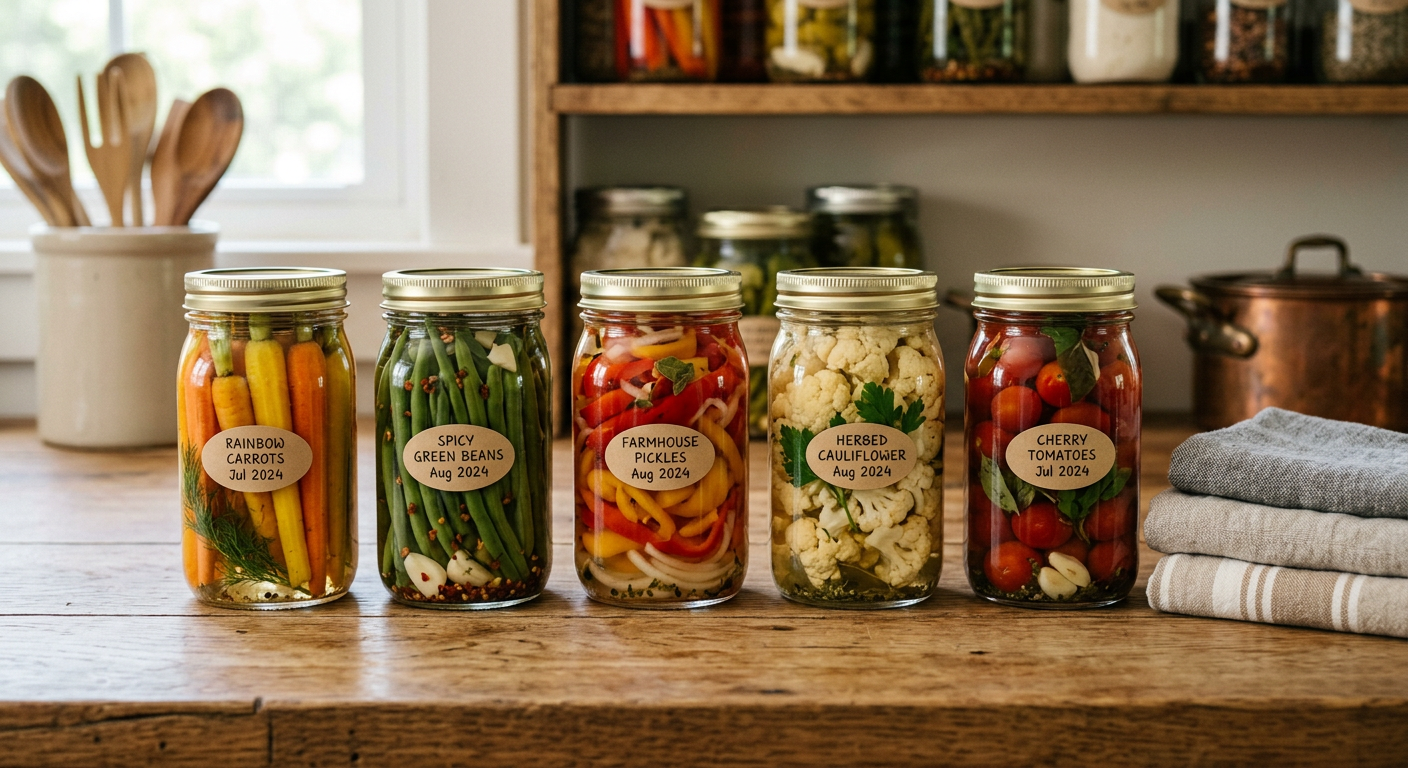
    Explore Free Resources →