!A golden-brown loaf ready for selling homemade sourdough bread cottage industry customers.
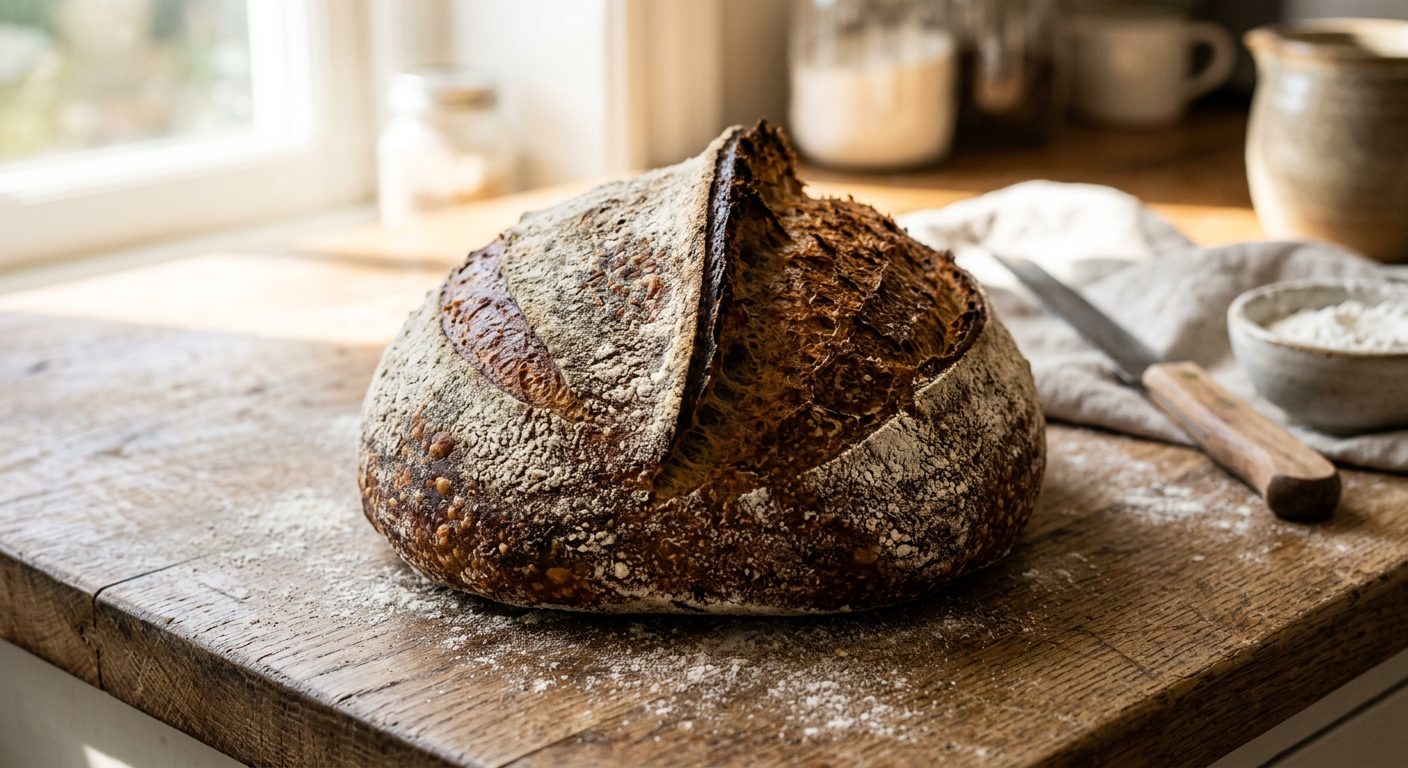
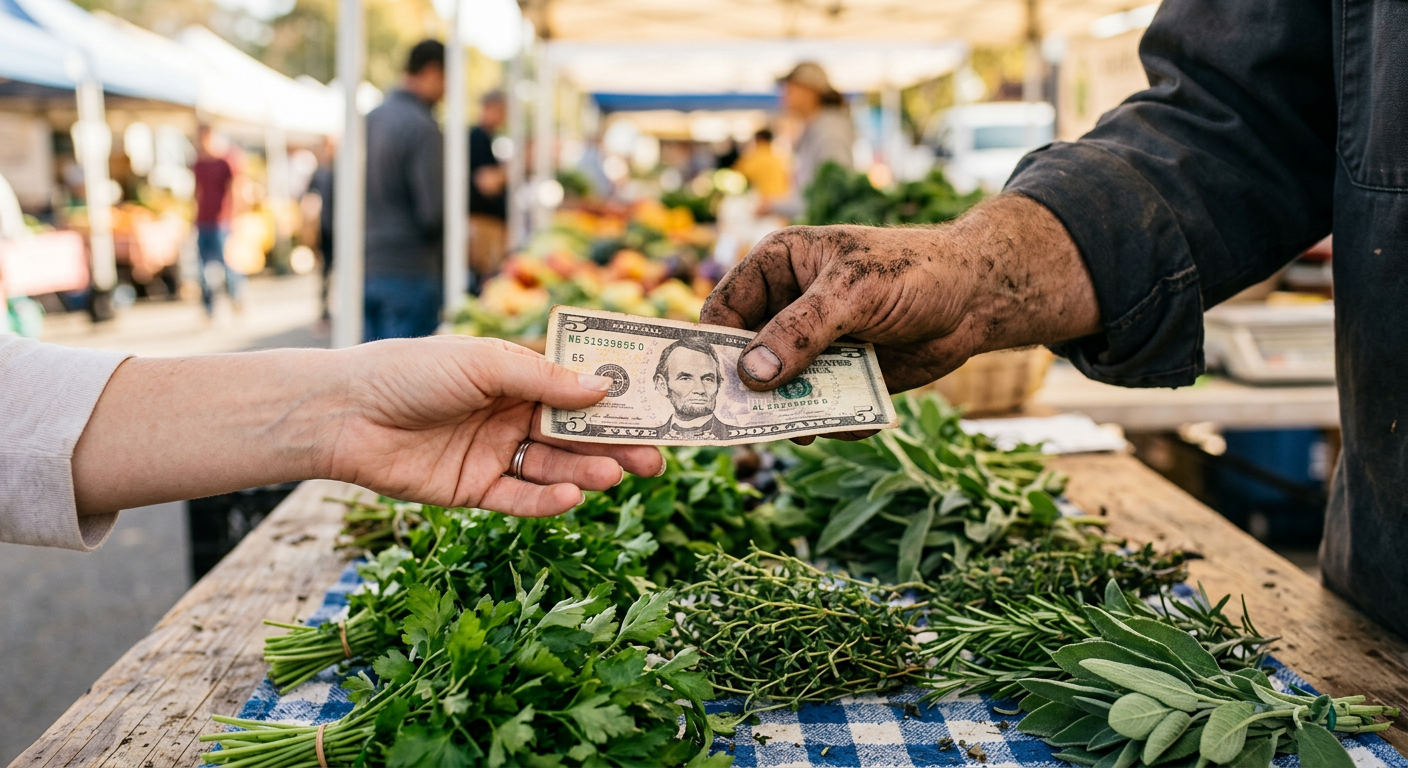
The first time I sold a loaf of bread, my hands were shaking. It wasn’t to a friend; it was to a complete stranger who found me through a local Facebook group. I remember the weight of the warm, paper-wrapped loaf in my hands and the crisp $10 bill she gave me—the first money our little homestead had truly earned that didn’t come from eggs. That moment, standing in a dusty church parking lot, transformed baking from a hobby into a real, legitimate part of our family’s income.
🎯 Quick Answer: Yes, you can absolutely create a profitable cottage industry by selling homemade sourdough bread. Success hinges on understanding your local cottage food laws, accurately pricing your loaves to cover costs and time, and creating a consistent, high-quality product that builds a loyal customer base.
🔑 Key Takeaways
* Laws First, Bake Later: Before you sell a single crumb, you MUST understand your state’s specific cottage food laws. This is non-negotiable.
* Price for Profit, Not Popularity: You are running a business. We’ll show you how to calculate your exact cost per loaf so you aren’t just breaking even.
* Consistency is King: Customers return for a reliable product. Nailing your schedule and your recipe is more important than fancy scoring.
* Start Small, Sell Local: Don’t try to launch a national brand overnight. Your first 20 customers will likely live within a five-mile radius.
* Your Story Sells: People buy from people. Sharing your homesteading journey is a powerful marketing tool.
—
!The first sale of a loaf for a selling homemade sourdough bread cottage industry business.

The Legal Maze: Are You Allowed to Sell Bread From Your Kitchen?
This is the first, most important hurdle. Before you dream of flour-dusted aprons and stacks of cash, you have to get clear on the rules. For us, that meant digging into our state’s Department of Agriculture website. It felt like studying for an exam I didn’t sign up for.
Every state in the U.S. has different regulations. These are generally called Cottage Food Laws. They dictate what you can sell, how much you can sell (often there’s a revenue cap), where you can sell it, and what you have to put on your labels.
Finding Your Local Rules
Don’t just Google it and click the first link. You need official information. A fantastic resource is the Harvard Law School Food Law and Policy Clinic’s interactive map, which provides links and summaries for each state. Find your state and read the actual legislation.
For us, the key requirements were:
* A revenue cap of $25,000 per year.
* Sales must be direct-to-consumer (no shipping, no selling to coffee shops to resell).
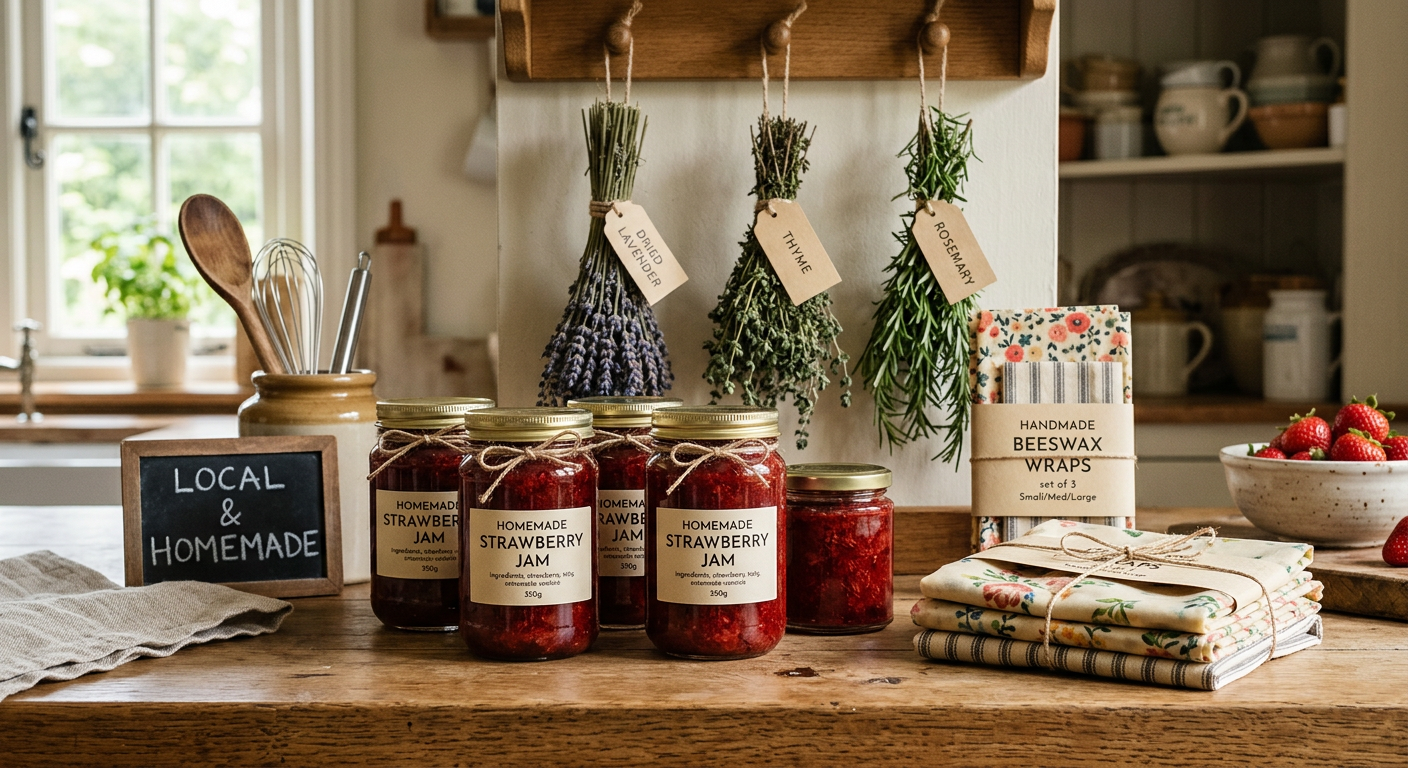
* A specific label with our name, address, a list of ingredients, and the phrase: “This product was produced in a home kitchen that is not subject to state licensure or inspection.”
We spent about $20 on a pack of Avery labels and designed a simple one on our computer. That was our entire legal startup cost.
My Story: The Labeling Mistake
I’ll never forget the panic. We had been selling for about a month, just a few loaves a week. A well-meaning customer messaged me, “Hey, I think your label needs to have your physical address, not just your business name.” My heart sank. I had misread the rules. We had to pull all our labels, reprint them, and I spent that night re-bagging and re-labeling the next day’s bakes, terrified we had broken the law. It was a simple mistake, but it taught me to read the rules three times. The details matter.
Once you get the legal side sorted, the real fun begins.
Keep reading — this is where most people mess up.
—
Pricing Your Sourdough: How to Not Work for Free
Okay, let’s talk money. It feels weird to put a price on something you create with your hands, but this is a business. When we started our selling homemade sourdough bread cottage industry, I almost priced our loaves at $5. Thank goodness my husband, who is much better with spreadsheets, sat me down.
We had to calculate our Cost of Goods Sold (COGS) for one loaf. It’s the only way to know your profit margin.
The Real Cost of One Loaf
Here’s our actual, no-fluff breakdown for a standard 900g boule:
* Flour: We use King Arthur Bread Flour ($8.99 for 5 lbs) and a bit of whole wheat. This comes out to about $1.85 per loaf.
* Salt & Water: We use fine sea salt and our well water. Essentially negligible, but let’s say $0.05.
* Electricity: Running our standard home oven at 475°F for 45 minutes isn’t free. Based on our electricity rate, it’s about $0.52 per bake.
* Packaging: A simple parchment-lined paper bag and our label. About $0.35 per loaf.
* Starter Maintenance: The flour to feed our starter daily. We calculated this to be about $0.10 per loaf produced.
Total Direct Cost Per Loaf: $2.87
This doesn’t even include your time! If we sold that loaf for $5, we’d be making $2.13 for hours of work. That’s less than minimum wage. We decided to price our classic sourdough at $10. At that price, we make $7.13 per loaf. Selling 20 loaves a week brings in a gross profit of $142.60. It’s real money.
Being smart with your costs is a key part of homesteading on a budget, and this is a prime example.
Now you have a price. But can you actually make enough bread to make it worthwhile?
—
Scaling Up: From One Loaf to a Batch
Baking one perfect loaf is an art. Baking ten identical loaves on a tight schedule is a manufacturing process. This was our biggest learning curve. Your home kitchen has limits, and you’ll find them fast.
When we decided to get serious, we had to streamline everything. It started with getting organized. We used a simple system in a notebook, but quickly realized we needed something more robust. Planning out our bake days, customer orders, and ingredient inventory became crucial. We discovered that a tool like Homestead OS can be a lifesaver for tracking not just your garden and animals, but also your cottage food production schedules and sales.
Our Equipment Upgrades
You don’t need a commercial bakery. But you will need more than a single Dutch oven if you want to make more than a few loaves.
The Bake Day Grind
A typical bake day for us now means starting the process two days before delivery. The day before, I’m mixing, stretching, and shaping dough for hours. On bake day, my alarm goes off at 4:30 AM. The ovens are preheated by 5:00 AM, and the first loaves go in. It’s a frantic, hot, and exhausting ballet of loading, unloading, and cooling. By 8:00 AM, I have 16 loaves cooling on racks all over my kitchen, and the whole house smells incredible.
It’s hard work, but there’s a rhythm to it that I’ve come to love.
Ready to find people to buy all this bread? Let’s talk about that.
—
!Legal requirements for starting a selling homemade sourdough bread cottage industry at home.

Finding Customers for Your Sourdough Cottage Industry
We had the bread, the legal label, and a price. Now we just needed people. Marketing felt like a dirty word to me. I’m a homesteader, not a salesman. But I learned that you’re not selling as much as you are sharing.
Start with Your Circle
Your first customers are your friends, family, and neighbors. We gave away the first 5-10 loaves for free. I’d just say, “Hey, I’m practicing my sourdough. Would you try a loaf and give me some honest feedback?” This did two things: it helped me perfect my recipe based on real opinions, and it created my first evangelists. Soon, their friends were asking, “Where did you get that amazing bread?”
The Power of Local Online Groups
This was our goldmine. Every town has a local Facebook group or two. I took a beautiful photo of a sliced loaf, the crumb open and airy, with butter melting on it. My post went something like this:
“Hi neighbors! I run a tiny sourdough bakery from my homestead kitchen just off Miller Road. I’m doing a bake for Friday pickup. I’ll have 10 classic sourdough boules available for $10 each. They’re made with organic flour and a long, 24-hour fermentation. Comment below to claim one!”
I sold out in 30 minutes. The key was being personal, local, and clear. No complicated website, no fancy ordering system. Just a simple post. We’ve grown from there, but that simple method still works.
Learning these simple business skills is just as important as learning to bake. It’s one of those essential homesteading skills beginners need to thrive.
—
💡 Pro Tips
After a few years of selling, we’ve learned a few things the hard way.
* Offer a Subscription: We have about 10 customers on a “Bread Club” subscription. They pay upfront for a month and get a loaf every single week. This creates predictable income, which is a godsend for cash flow.
* Create a “Menu”: After a few months, we added a second option: a Rosemary & Sea Salt loaf for $12. This simple addition boosted our average sale price. Think about adding a seeded loaf, a cheese loaf, or even sourdough bagels.
* Set a Firm Schedule: We only sell for pickup on Fridays. That’s it. In the beginning, I was trying to accommodate everyone’s schedules, baking on random Tuesdays and running loaves into town on a whim. It was exhausting. Set boundaries. Your time is valuable.
* Use Your Discard: Don’t throw away your sourdough discard! We make crackers, pancakes, and waffles with it. We even sold “Sourdough Cracker Kits” for a while. It’s another potential revenue stream from a waste product.
* Track Everything: You need to know your numbers. How many loaves did you sell last month? Who are your repeat customers? What’s your most popular item? A dedicated homestead management system like Homestead OS is built for exactly this kind of small-scale farm and food business tracking.
—
⚠️ Beginner Mistakes to Avoid
I’ve made all of these. Please, learn from my soot-covered face and flour-dusted tears.
—
!A successful setup for selling homemade sourdough bread cottage industry from a family homestead.

Frequently Asked Questions
How much money can you realistically make selling sourdough?
It varies wildly. If you sell 20 loaves a week at a $7 profit margin, that’s over $560 a month in profit. Some micro-bakers scale to 50-100 loaves a week and make a serious part-time income, but that requires more space and dedicated equipment.
Do I need a special license for a sourdough cottage industry?
This depends entirely on your state and local cottage food laws. Most states do not require a kitchen inspection or a special license as long as you stay under a certain revenue cap and follow labeling rules. But you MUST check your specific local regulations.
What’s the best flour to use for selling sourdough?
For consistency and strength, a high-protein bread flour is your best bet. We almost exclusively use King Arthur Bread Flour. It’s predictable and strong. Avoid all-purpose flour for selling; it can lead to less consistent results and a less open crumb.
How should I package my homemade sourdough for sale?
Paper is best. It allows the bread to breathe and keeps the crust from getting soggy. Simple, unbleached paper bread bags with a window are a great professional-looking option. Make sure your legally required label is affixed securely to the bag.
How do I handle payments and orders?
Keep it simple to start. For our first year, we just used Facebook comments to take orders and accepted cash or Venmo at pickup. As you grow, you can explore simple online store options like Square or Shopify, but don’t overcomplicate it at the beginning.
—
Starting our little sourdough business was one of the best things we’ve done on our homestead. It connected us with our community, brought in a steady stream of income to fund other projects (like our chicken coop!), and gave me a skill that I’m incredibly proud of. It’s not easy, but holding a warm loaf that you know is going to be the centerpiece of a family’s dinner is a satisfaction that’s hard to beat.
We share a lot of the day-to-day grind and wins of our sourdough business and other homestead adventures over on our Facebook page – we’d love to see you there!
What’s the one thing holding you back from starting your own cottage food business? Let me know in the comments below!
📚 More From Our Homestead
- 5 Essential Skills for a Self-Sufficient Homestead
- Breeding Rabbits for Meat Production: Our Max Yield Guide
- Introduce New Chickens to Your Flock Peacefully
- Building a Raised Garden Bed: Our No-Fail Guide
- Apartment Vertical Gardens: Our Tiny Balcony Wins
Ready to Start Your Homestead Journey?
Free guides, checklists, and tools to help you build your dream homestead.